Schools
Dealing With Teen Relationship Abuse
A community forum in Durham tackles an issue few talk about publicly.


About one in three teenagers will become involved in an abusive romantic relationship, approximately 80 percent of them will remain with their abuser and only about 33 percent of them will tell an adult about the problem.
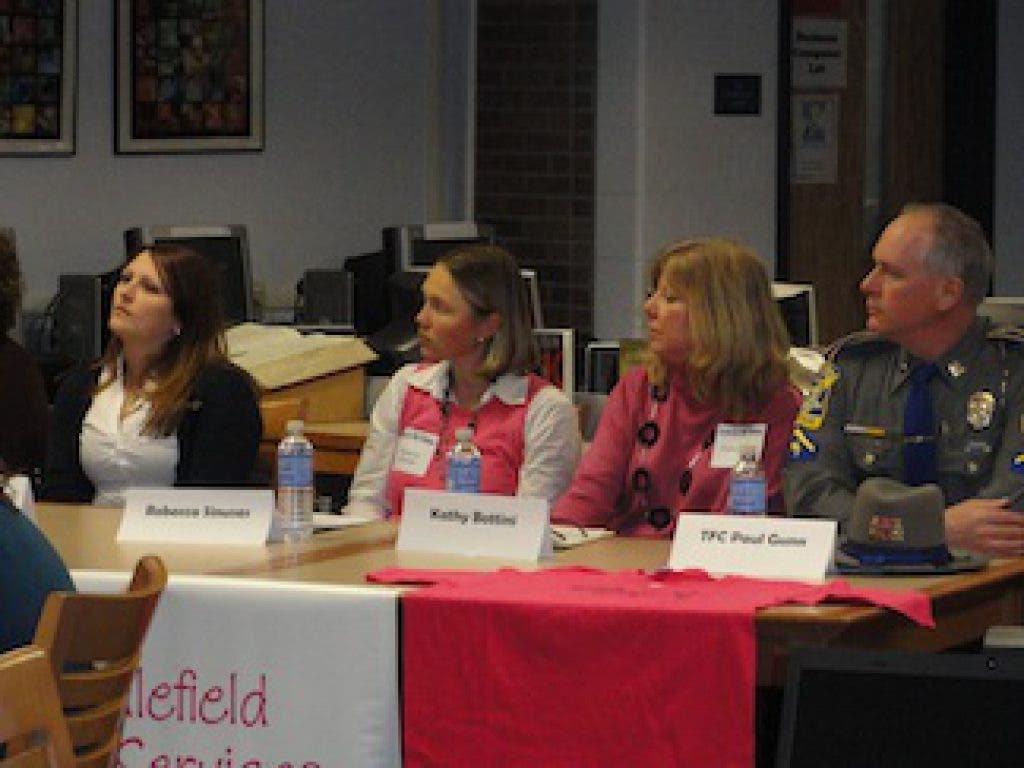
Those were a few of the statistics provided during a community forum on abusive teen relationships, called Love is Not Violent, at Coginchaug Regional High School on Wednesday night and sponsored by the Durham-Middlefield Youth and Family Services.
The forum, which drew about 25 people, was intended to raise public awareness about the problem of abusive relationships among youths and provide information on how parents and teens can avoid them or get out of one.
Find out what's happening in Durham-Middlefieldfor free with the latest updates from Patch.
“What’s really important is that we get a dialogue going,” said Jane Moen, program director of family services.
The forum included a dramatic account by one young woman of how she was emotionally and physically abused by her then-16 year-old boyfriend when she was 14 and a freshman in high school.
Find out what's happening in Durham-Middlefieldfor free with the latest updates from Patch.
She recounted how her abuser showed all the typical signs of an abusive personality shortly after she started dating him when she was in the eighth grade and how the abuse culminated in daylong beatings she endured one day when she refused her boyfriend’s demand that she quit school and let him take care of her.
She finally told someone and her abuser was arrested. Despite having bruises over much of her body from the beating she endured, she said she fought against having her boyfriend prosecuted. She broke up with him after her parents enrolled her in a different school district, but started dating him again during her senior year of high school, keeping the relationship secret.
He again abused her, she told a rapt audience, and she finally realized he was intent on killing her one night when he drove more than 100 miles an hour while she was in the car.
He was arrested again after the incident, she said, and spent a year in jail. She hasn’t seen him since.
She tries to share her story with parents and other teens, she said, to educate them about how pervasive such relationships can be.
“It can happen to anyone and people need to hear it,” she said.
The forum included presentations from a panel of experts, including two CRHS students who have conducted workshops at the middle school to educate young teens on the dangers of relationship abuse.
“A relationship becomes abusive over time, it happens slowly,” said Parker Dumont, a CRHS senior.
Some of the warning signs of abuse, he said, include a boyfriend or girlfriend who exhibit controlling tendencies, who want to know where their boyfriend or girlfriend is at all times and who engages in excessive texting, calling or emailing to their boyfriend or girlfriend.
Rebecca Sinusas, a guidance counselor at Strong Middle School, said modern technologies have made it easier for abusers to exhibit such behaviors.
“The new technology kids are using in this day and age cause different kinds of abuse,” she said, such as negative postings on Facebook, excessive text messaging or emailing and spreading rumors online.
“That’s something we see at both the middle school and high school level, not just in dating relationships,” she said.
Most teens who are being abused won’t talk to adults about it, so parents and other adults need to be aware of the warning signs of abuse, such as if your teen’s behavior changes suddenly or dramatically.
Kathy Bottini, a school social worker at the middle school and CRHS, said parents should ask questions about their teen’s life, be supportive of them if they come to you with a problem, open up a clear channel of communication with teens, promote good self esteem, monitor some of the television programs that they watch and set a good example for them by maintaining healthy relationships in your own life.
Paul Gunn, Durham’s interim resident state trooper, gave a brief history of Connecticut’s family violence law, passed after a Torrington woman was nearly stabbed to death by her husband in the early 1980s. Teenagers, Gunn said, now fall under that law.
He said the law requires police to arrest someone who has committed family or relationship violence, even if the victim does not want him or her arrested.
Get more local news delivered straight to your inbox. Sign up for free Patch newsletters and alerts.