Arts & Entertainment
Postcards from the Past: 4th of July
Penny postcards were widely used 100 years ago for holiday greetings during the 'golden age' of American postcards.
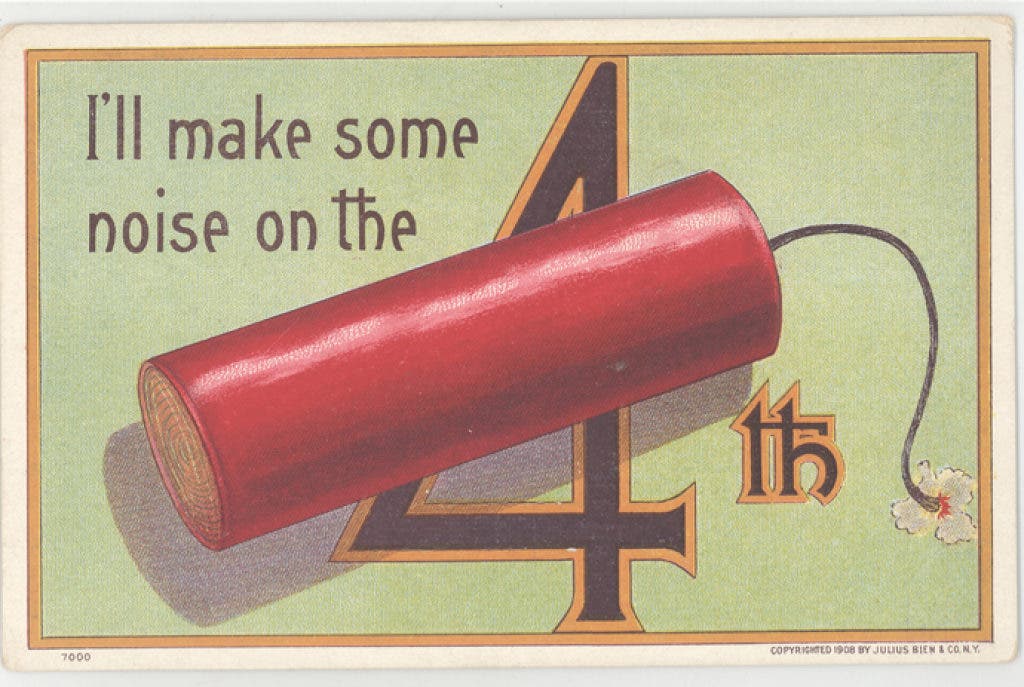


The first known picture postcards appeared around 1870 in France. The first known commercially available picture postcards were developed around 1873 in Springfield, MA.
Until March 1, 1907, the postal system did not allow for a divided back on the reverse side of the postcard, with the address appearing on the right and a message on the left. This date marked the beginning of the golden age of postcards. In 1908 more than 677 million postcards were mailed in the United States alone.
Cards designed by artists such as Ellen Clapsaddle, Raphael Tuck, Frances Brundage, E. Nash, and Esther Howland today command from $10 to over $100, depending on condition and subject matter.
Find out what's happening in Durham-Middlefieldfor free with the latest updates from Patch.
Holiday cards were commonly mailed by all Americans during this time. The most abundant cards are for Christmas, Easter, Thanksgiving, and the 4th of July.
Cards for Labor Day are the rarest holiday cards of all, often bringing over $100 each. Old Halloween cards in good condition are also prized by collectors.
Find out what's happening in Durham-Middlefieldfor free with the latest updates from Patch.
The 4th of July cards presented here are typical of the type mailed between 1907 and 1915. Iconic 4th of July images—Uncle Sam, the flag, fireworks, George Washington, the Liberty Bell—are all present in abundance.
Fireworks first appeared in China in the 7th century. July 4, 1777, marked the first anniversary of the issuance of the Declaration of Independence. Americans celebrated the occasion with fireworks then and continue to do so today. It is a deeply rooted tradition associated with the 4th of July.