Arts & Entertainment
Seed Business: Another Connecticut First
Shaker village in Enfield the first to market seeds; Wethersfield: The center of the seed universe


So common is UConn’s success in NCAA basketball in both the men’s and women’s divisions that in early to mid March the word “seed” to Connecticut residents usually is thought of in basketball terms, as Nutmeggers busily fill out their basketball brackets. As the month wears on, however, spring officially arrives, the weather warms up, UConn wins, and “seed” takes on a more conventional meaning, as thoughts turn to gardening at April’s approach. Connecticut’s Central Valley, rich in alluvial soil, has a long and interesting agricultural history. One town, Wethersfield, has a particularly strong association with spring planting, as two of the oldest seed companies in the country are still located there; in addition, Enfield, strongly associated with an active Shaker village since the early 19th century, actually began the practice of packaging seeds for sale.
As of December 2009, there were officially only 3 Shakers left in America, down from about 40,000 in 1840. Though small in number, nevertheless, their impact on American culture was large. Shaker leaders such as “Mother” Ann Lee and Joseph Meacham preached the value of hard work and the need to strive for perfection in all that they did: "Labor to make the way of God your own; let it be your inheritance, your treasure, your occupation, your daily calling." As a consequence of such beliefs, Shaker products, such as buildings and furniture, are known and valued for their high quality and durability. They were also known for the high quality of their seeds. In fact, the Shakers of Enfield, CT, were the first people ever known to put seeds into an envelope and to sell them (see photos). The general trend in the 19th century toward industrialization, their central belief in celibacy, and disruptive historical events such as the Civil War took a toll on their seed business. Others, however, picked up where the Shakers left off.
The oldest seed company in Connecticut is the Comstock Ferre Company located on 263 Main St. in Wethersfield. This year marks the 200th anniversary of the company; in fact, the exact date of the anniversary celebration is June 5, 2011, and the company is planning for a big celebration that day. Comstock Ferre is known as an heirloom seed company. Heirloom seeds are “open-pollinated” seeds (i.e., without human intervention) known for their better quality, tastier fruit and vegetables. William Comstock, 19th century founder of the company, wrote what was the gardening bible of his time: Order of Spring Work. The early method of seed distribution was to hire sales reps who carried boxes of seeds in wagons to stores throughout the region. Later, Comstock adopted the Shaker method of marketing seeds by placing them in envelopes and selling them. Today, their colorful catalogs are distributed worldwide.
Find out what's happening in Durham-Middlefieldfor free with the latest updates from Patch.
The Charles C. Hart Seed Company is located on 304 Main St. in Wethersfield. The company has been in business since 1892. After its original building was destroyed by fire in 1943, the company’s current brick office and warehouse complex was built there in Old Wethersfield. At the time of its formation, the Hart Seed Company was the sixth seed company located in Wethersfield—amazing! Consolidation and buyouts have reduced that number substantially. The Hart Company began its mail order business in 1913. Fourth and fifth generation members of the Hart family currently run the business, supplying quality seeds throughout outlets in the Northeast.
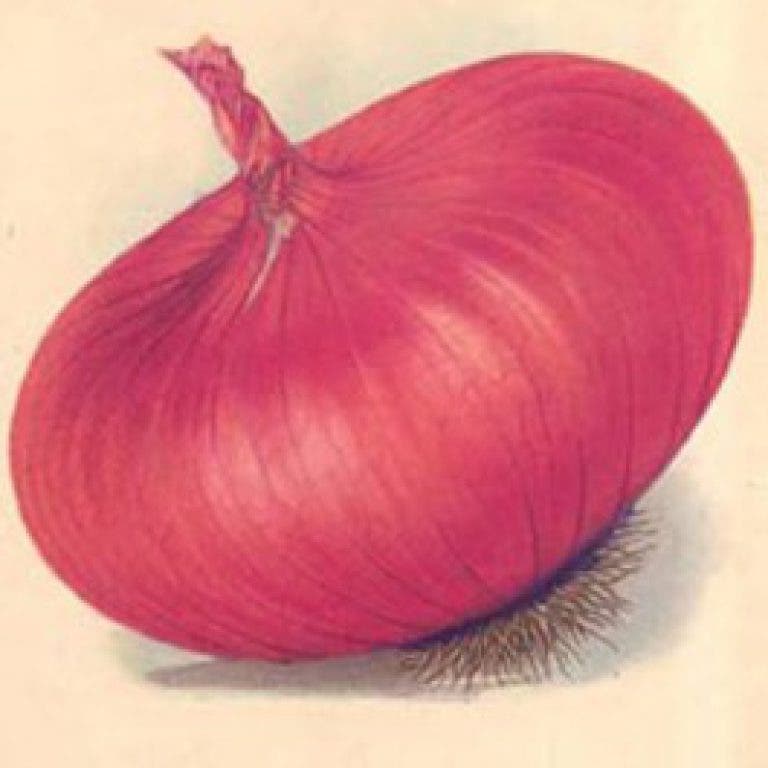
The red onion has had a close historical association with Wethersfield. It is a symbol of the town’s agrarian past, and gardeners annually still seek out the seeds for its world famous red onion. Here is Comstock Ferre’s 2011 catalog description of the famous Wethersfield Red Onion:
Find out what's happening in Durham-Middlefieldfor free with the latest updates from Patch.
This onion is legendary in Conneticut’s “most ancient town” and traces its development to the 1700’s. Today it is celebrated as an icon and logo of Wethersfield. We may have been the first company to sell seeds for it commercially, but before we offered it, this onion was already popular from New York to Bermuda and brought much wealth to the onion growers of the town. Our 1856 catalog states, “It is the kind mostly grown at Wethersfield. It grows to large size, deep red, thick, approaching to round shape, fine-grained, pleasant flavored, and very productive. It ripens in September, and keeps well.” It is a slightly flattened onion of renowned quality and is sure to become a tradition in your garden this year.
Comstock Ferre charges $3 for 300 of this heirloom seed. It is regarded as a “good keeper” and will mature in 100 days from transplant. President Thomas Jefferson grew the Wethersfield Red Onion at Monticello. Besides its desirable eating and storage qualities, the Wethersfield Red Onion was thought to have medicinal qualities as well. The adolescent classic The Witch of Blackbird Pond is set in 17th century Wethersfield, CT. In chapter 17, the novel’s main character, Kit Tyler falls ill. She is treated with an onion poultice and soon recovers.
As April approaches with hopes of warmer weather and thoughts of seedlings are dancing in your head, consider growing the “Wethersfield Red” this year. Keep in mind that if those red onion seeds come in an envelope that the first seeds ever marketed in this fashion originated right here in a Shaker village in Connecticut and that those red onions you’re planting make you part of a long and storied Nutmeg tradition dating back to the 1700s!
Notes, Sources, and Links:
- Connecticut Firsts: Revised and Updated Edition by Faude and Friedland: 1985.
- Cherrygal Heirloom Seeds website
- comstockferre.com
- hartseed.com
- The Witch of Blackbird Pond
- Four vendors in Middlefield carry Hart seeds: Country Flower Farm, Agway, Uncle Bob’s Flower and Garden, and Lyman Orchards.
- “The Shakers”: pbs.org