Politics & Government
Map: Nearly 100 Pedestrians Killed on Connecticut Roads Between 2011-2013
An East Hampton pedestrian was among the victims. The Tri-State Transportation Campaign is calling for greater road safety measures.


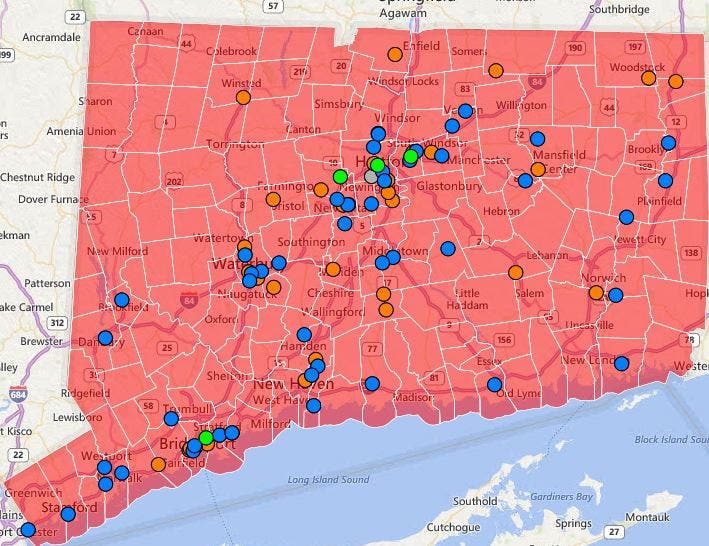
What do you think is the most dangerous road in your town and what can be done about it? Comment below.
A new study by the Tri-State Transportation Campaign found that 99 pedestrians were killed on Connecticut roads between 2011 and 2013.
A 58-year-old was killed on CT 66 in East Hampton on Sept. 10, 2011.
Find out what's happening in East Hampton-Portlandfor free with the latest updates from Patch.
The number is a decrease from 111 killed between 2010 and 2012, but one thing that has remained the same is that U.S. Route 1 has been the deadliest road in the state for pedestrians.
“For seven consecutive years, Route 1 has held the top spot as Connecticut’s most deadly road for pedestrians,” said Veronica Vanterpool, executive director of the Tri-State Transportation Campaign. “While our annual analysis has noted variability in the most dangerous roads in the other states from year-to-year, without long-overdue safety improvements, it’s unlikely Route 1 can shed this label.”
Find out what's happening in East Hampton-Portlandfor free with the latest updates from Patch.
One in three pedestrian deaths between 2011 and 2013 were adults age 60 and older.
“We can improve pedestrian safety and make our communities more livable by designing and building roadways that accommodate all users,” said AARP Connecticut State Director Nora Duncan.
Throughout this region of the country the deadliest roads tend to be arterial ones like Route 1, according to the Tri-State Transportation Campaign. They often have speed limits of 40 mph or greater and there is little infrastructure that can keep pedestrians and bicyclists safe.
Breakdown of pedestrian deaths by county between 2011 and 2013:
Hartford: 28
New Haven: 24
Fairfield: 21
Middlesex: 8
Tolland: 7
New London: 5
Windham: 5
Litchfield: 1
Only about 15 percent of total lane miles in New York, New Jersey and Connecticut are classified as arterial roads, but in Connecticut half of pedestrian deaths happened on arterial roads.
“It’s hard to get around in Connecticut if you don’t own a car, not only because of inadequate transit options, but also because so many roads are designed without the needs of pedestrians in mind,” said Joseph Cutrufo, Connecticut advocate for the Tri-State Transportation Campaign.
“Connecticut must get serious about implementing the Complete Streets law that was enacted six years ago,” said Bike Walk Connecticut Executive Director Kelly Kennedy. “Continuing to bow to car culture and making walking and biking an afterthought is killing people, hurting our economy and our environment and driving away the young people we need in our workforce.”
The Tri-State Transportation Campaign applauded Connecticut’s passage of the Vulnerable User law that fines motorists who injure or kill pedestrians, highway workers, bicyclists and similar people.
Still the campaign urges state leaders and lawmakers to do the following to increase safety:
- Implement recommendations of existing studies on Route 1, such as those completed by the South Western Regional Planning Agency and the Greater Bridgeport Regional Council.
- Complete the upcoming Highway Design Manual update in a manner that is consistent with the state Complete Streets law and ConnDOT Complete Streets policy.
- Fully fund and implement the $101 million pedestrian and bicycle capital program in the state’s 5-year transportation “ramp-up” plan.
- Prioritize pedestrian safety near transit hubs, including new Hartford Line rail stations and CTfastrak bus rapid transit stations.
- Create and fund a Safe Routes for Seniors program that implements pedestrian safety improvements in areas with high concentrations of senior pedestrians.
Image via Tri-State Transportation Campaign.
Get more local news delivered straight to your inbox. Sign up for free Patch newsletters and alerts.