Community Corner
Riverside Neighborhood a Secluded Piece of History
The Riverside area has been home to rum runner Nellie Green, Colonial smugglers and one busy firehouse.


Editor's Note: This is part of an ongoing series about . Foxon was previously featured.
Sitting atop a rocky outcropping in the southeast corner of East Haven is a secluded group of heavily wooded streets named Vera, Hilda, Vernon, Ray, Cliff and Meadow. They crowd up against the Farm River, which circles them on the east and north, and they spill out onto Short Beach Road. Together, they form the original settlement known as Riverside Terrace Annex.
The land was originally owned by the Chidsey family. They had named Cliff Street because it sits on a boulder-strewn cliff that winds down to the marshy valley of the Farm River some 65 feet below. Meadow Street was named for the lush farm land that bordered the river and was planted annually with hayfields.
Find out what's happening in East Havenfor free with the latest updates from Patch.
They sold their land to Edward J. Buell in 1904 for development. He named the other streets for his relatives and friends. Tiny Ray Street still exists in the development, but it is so small it's not found on any map.
"It was a great place to grow up," said Fire Chief Doug Jackson. "There was a ravine and woods across from Dad's house. A bunch of us used to swing into the ravine on vines hanging from the trees. It's a wonder we didn't kill ourselves."
Find out what's happening in East Havenfor free with the latest updates from Patch.
His dad is retired Fire Marshall Bill Jackson, whose family was among the earliest to build on Hilda Street. His grandfather, Arthur Hitchcock, bought two lots in 1923, establishing a home that would serve three generations of his family. He built his home on one lot and, in 1927, his new son-in-law, Amos Jackson, built on the second lot. This became home for Bill Jackson and his brother, Robert.
At 84 years of age, Jackson has seen most of the events unfold in his neighborhood since Riverside Terrace got its name. During his time with the East Haven Historical Society, he’s learned more about what happened prior to his birth in 1927.
Because of its isolated location, the neighbors banded together in 1922 to form a neighborhood association with officers and action committees. One of the first considerations was to bring in mail service, followed closely by electric light poles. By 1924, the gas company also brought in gas – but only in the summer.
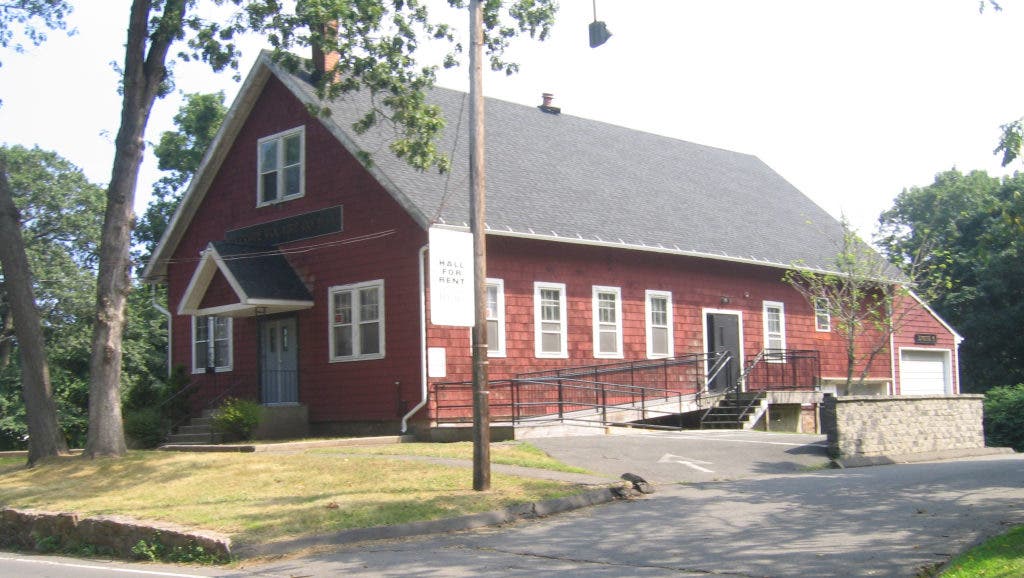
What is noteworthy about the addition of all these amenities is that they were paid for by the fund-raising efforts of the neighbors. Even the Riverside firehouse, now the only place still carrying the name Riverside, was built by the residents in 1927. Not only did they raise money for materials through chicken dinners and musical productions, but they also dug the cellar and raised the walls.
“My grandfather and father both worked on the firehouse,” Jackson said. “They were skilled at things like carpentry and masonry. Later, when we put the addition on the firehouse, my son and I worked on that together.”
Jackson grew up playing ball with the neighbor kids in the meadows, or in the streets, since there was little traffic. In 1937, he and his brother joined the Short Beach Boy Scout troop. It had an equal number of members from both Riverside and Branford.
“We had one of the best troops in the state,” Jackson said. “We’d win state competitions. I was working mostly with our communications section and learned the semaphore code. It came in handy later, when I signed up with the Navy in WWII.”
Kids from Riverside went to school at the old Union School on Thompson Avenue. In order to get there, they had to cross the meadows and hook up with the trolley lines that would take them to the center of town.
“The schools gave us strips of tickets that the trolley company provided for students. Since we’d have to wait a while for the trolley, my father and some other men built a small house for the kids by the tracks. That was sure needed in the winter,” Jackson said.
After his service with the Navy in WWII, he returned to Riverside to live with his widowed grandmother. He became a volunteer for the Riverside fire company in 1946. The Riverside station, home to Company #6, remains the only all-volunteer company in East Haven. By 1953, he was a paid firetruck driver, working in all the stations around town.
He married in 1958, demolished the house his grandmother had left him, and built the one he still lives in at 33 Hilda Street. The fire department became a way of life for him and his family as he moved from fireman to drill instructor and up the ladder to battalion chief and to Fire Marshall.
Doug Jackson remembers when his father, the new Fire Marshall, came home with a white Pontiac station wagon, “It had a light and a siren. Did I ever think that was cool.”
Life for the kids of Riverside hadn’t changed dramatically from Bill Jackson’s time as his son, Doug, grew up; although they no longer had to cross the meadow to ride the trolley to school. There was now a bus stop in front of the firehouse for them.
“We played tackle football in the firehouse parking lot. There was a good deal of damage to the clothes and skin, but we didn’t mind,” Doug Jackson said. “We also had friends across the Farm River Bridge in Branford. We’d go to a park over there where we’d play baseball on their field.”
“We spent a lot of time around the water,” Doug Jackson said. “We’d fish for snapper off the bridge. Someone always had a boat, so we learned to water ski on the creeks around there. We’d go crabbing and were just always outside. We only went home for dinner.”
Bill Jackson also remembers the 60s and 70s for the close interaction of the Riverside neighbors. “Every New Year’s Eve, we’d walk through the neighborhood visiting from house to house to toast in the new year,” Jackson said. “We knew everyone in the area and there were always social events at the firehouse.”
When talking about the Riverside area, it's hard to ignore the stories of its past as a smuggler’s haven. In Colonial times, smugglers landed contraband at Bradford Creek, came up along Mansfield Grove Road and then across to New Haven. They did this to avoid the tax collector at the New Haven Harbor entrance. The route became known as “Smuggler’s Path” and people like Bill Jackson still remember the name.
Nellie Green raised smuggling to an art form. She and her husband, William Talmadge, owned the Hotel Talmadge on the Farm River beside the drawbridge. In order to keep from losing their business during Prohibition, she assembled a fleet of fast boats that met ships out in the Sound to offload liquor.
Always the lady, Nellie didn’t allow the crews of her nine boats to carry weapons. She simply outran all pursuers. No local or federal lawmen were ever able to catch her speed boats or to locate liquor on her premises, even though she stored vast amounts for her New York customers.
With the passing of Prohibition, she returned the hotel to legitimate business. It became a famous nightclub that attracted the likes of John Barrymore, Rudy Vallee, Tyrone Power and Bing Crosby. Many famous bands played the night away for the rich and famous who visited Riverside’s “Nellie Greens”.
“I was a friend of her son, Charlie,” Bill Jackson said. “Out back of the hotel was a small building where they made flavored soda. They called it ‘Old Bridge Beverage’ and Charlie would sell it to stores around town. Sometimes I went with him.”
The social interaction between Short Beach Road residents on each side of the Farm River Bridge continues to the present with Short Beach Days every Labor Day weekend. The celebration consists of three days of family activities, sports events, contests, and an upbeat parade featuring original floats. The Short Beach Hose, Hook & Ladder Co. 4 in Branford organizes and runs the athletic events on Saturday while the Riverside Fire Company runs the Sunday Family Day.
It is an indication of how they feel about their corner of the town that this is considered a neighborhood event for both sides of the Farm River Bridge – and it’s been going on for 64 years.