Community Corner
Stoddard Road Summer Haven to Rich and Poor
Before Stoddard Road existed, the land was owned by Louis E. and Rebecca Darlington Stoddard. Their East Haven property made a difference in the lives of hundreds of children.




At the turn of the 20th century, the Stoddard Road area was a summer haven for both the tenement children of New Haven and the family of the fabulously wealthy Rebecca Darlington Stoddard. Both groups would leave their imprint on the street that lies on ’s southwestern shoreline.
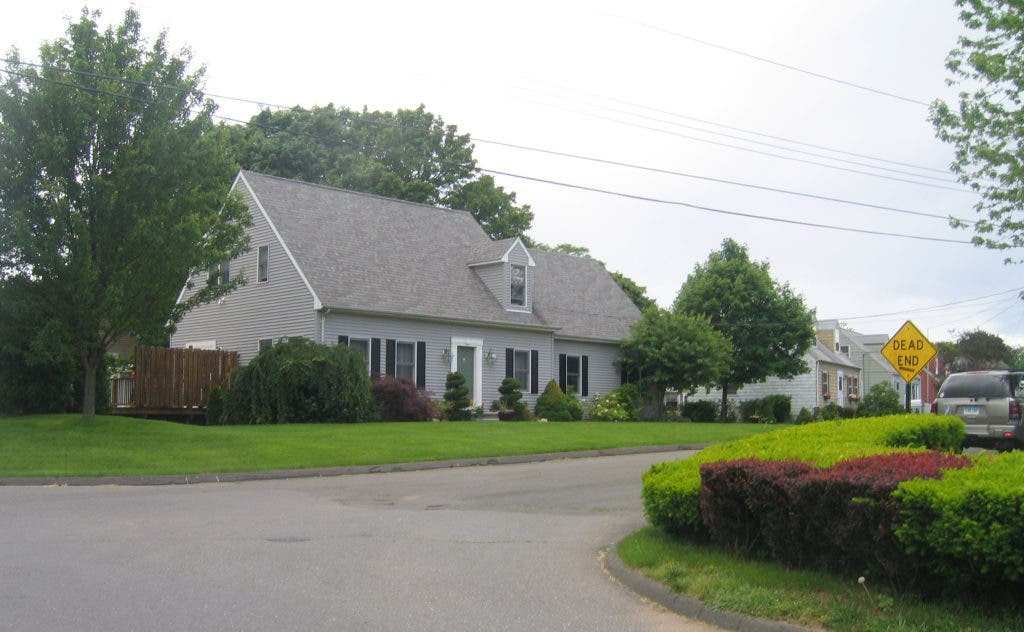
By 1951, both the children and Rebecca were long gone and a new street had been created bearing the Stoddard name. Long-time resident Ann Sarno Hamillton can claim to be among the first to live on Stoddard Road. She moved to the charming, dead-end street off South End Road in 1952.
“I moved here with my parents as a teenager,” Hamilton said. “It was a great place to grow up since it was so close to the beach. I ended up moving back here after I was married and raised my children. I’ve lived here a long time, but there are probably six other residents on the street who are also original owners.”
Find out what's happening in East Havenfor free with the latest updates from Patch.
Hamilton married Thomas Hamilton, who worked for the old Finast Super Market for 40 years, and they had three children. Two of them, Thomas and Michael still live in East Haven, as well.
“We were living in an apartment for a while and when the children came along, it got too crowded,” Hamilton said. “My parents were delighted to have us move back with them. As they got older, I took care of them, since I was an only child. While my children were growing up, they played with the Guidone kids who lived in the big house across the street.”
Find out what's happening in East Havenfor free with the latest updates from Patch.
Hamilton remembers that Mr. Guidone was a talented artist and his wife was a pianist who gave lessons. But she also remembers the beauty of the old house they occupied — the house that had given the street its name — The Rebecca Darlington Stoddard Vacation Home for Children. It was a summer home for 30 years to the children served by the Leila Day Nursery program.
The Leila Day Nursery program is still active and is the second oldest day nursery organization in the United States. It began in 1878 as the Mothers’ Aid Society of New Haven to give employment to impoverished women while providing day care for their children.
In 1885, the name was changed to Leila Day Nursery to honor the niece of one of the Board of Managers. These Managers oversaw the nursery’s daily operation and carried on major fundraising for the tenement-dwelling 4 and 5 year-olds. The program expanded to the East Haven beachfront when the Stoddard house was donated in 1924.
Jackie Campbell Silva, now living in Bremmerton, WA, recently recalled her summer there as a junior counselor.
“My mother was the cook in the big house, so she got my sister and I jobs as junior counselors in 1944 when I was 15,” Silva said. “There were also two college girls who helped take care of about 20 kids in our wing. The other wing had the same number of kids. I’ll never forget how happy the kids were to there all week. They would go home on the weekend and then come back. We’d all spend hours at the beach, playing in the fields around the house and having great meals my mother would prepare.”
Silva said the children in the nursery program would each get two weeks at the beach for swimming, playing in the sand and enjoying life on the shore. An immense poplar tree shaded the side of the house and in the back, behind the apple tree, golden wheat fields stretched to the horizon. In front, a path hemmed in by reeds and cattails led to the beach.
Silva later wrote a memoir of her days there and the affection she felt for these children. She also visited the area years later, looking for the big white house that had provided lasting memories for her and her young charges.
The Stoddard family had used the house as a summer retreat during the years of 1904 to 1913. Rebecca Stoddard was a member of the Board of Managers of the nursery and worked for the children in many capacities. She made numerous contributions to their welfare, not knowing that her years of philanthropy were about to come to an end, or that her death in 1913 would trigger a rippling of events that would affect institutions around the area.
Rebecca McCullough Darlington was born in Pittsburg in 1879, the daughter of wealth and privilege. Her father, Harry Darlington, listed himself in the 1900 census as a financier and capitalist, while her mother, Mary Elizabeth McCullough, was the daughter of a railroad tycoon who left an estate of $14,000,000 in 1891. The 1900 census also showed they had 18 servants.
She attended Miss Porter’s School in Farmington, and that may be how she met Louis E. Stoddard, of New Haven, who also knew something about wealth. His family was active in the local banking industry, and he built the Shubert Theatre and the Taft Hotel.
They married in 1904, when Rebecca was 24 years old; then moved into the Stoddard family mansion on East Rock Road. Shortly afterward, Rebecca’s father breezed into town and started building her a new home at 700 Prospect Street. He wanted her to have a home based on the original drawings of the White House. The 50-room edifice he created was called Ten Acres, and became her home in 1906.
During her time in the house, Rebecca had two daughters, became immersed in good works around the community and patronized the arts. In 1913, she became pregnant with her third child. That same spring she agreed to donate $25,000 to Yale University to purchase a collection of rare Greek and Etruscan vases in Paris. The family spent time that summer at the house in East Haven.
In December, she gave birth to her son, Louis Stoddard Junior, at her mansion, but this time something went wrong. She lapsed into unconsciousness and died two days later. The collection of vases she’s looked forward to seeing went on display in the Yale President’s Reception room a few weeks later.
Shortly after Rebecca’s death, Louis Stoddard applied to the courts for permission to administer the estate his wife had left to their children — a sum of more than $2,000,000. In today’s economy, that would equal around $50,000,000. Most of this large estate was comprised of real estate that would increase in value so much that even during the Depression her son was able to claim $1.5 million as his share of the bequest when he came of age.
Stoddard then took his three children and moved to Long Island where he remarried and became very active in the American Polo Association. Before leaving, he gave the Leila Day Nursery Program $5,000 to buy a summer cottage to be named the Rebecca Darlington Stoddard Vacation Home for Children.
Then, in 1924, Louis Stoddard gave his East Haven summer home to the Leila Day Nursery program to replace the smaller house and accommodate more children. To this day, many older residents remember the house but thought it was an orphanage.
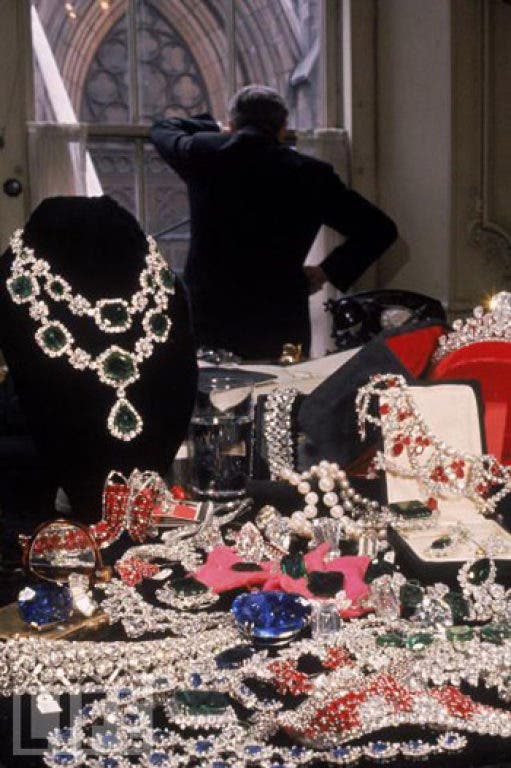
Rebecca’s death also benefited other institutions. She left a jewelry collection valued at $1,000,000 that was purchased by a young New York jeweler named Harry Winston. Winston removed the stones from the settings for his modern creations and sold the collection for a huge profit, providing the basis for his company, Harry Winston Inc. Later, of course, he was known for handling jewels such as the Hope Diamond and Charlemagne’s Crown.
The Prospect Street family home was sold in 1924 by Louis Stoddard to the Dominican nuns who were founding Albertus Magnus College for women. For many years it was their main classroom, and today houses the college library. The estate’s carriage house and stables have become the college’s Act II Theatre. Stoddard used the stables to raise polo ponies on the Ten Acres estate. Much of his life was dedicated to playing and organizing that sport until his death in 1951.
The house on Stoddard Road served the children of the Leila Day Nursery for many years. It was closed briefly during WWII, but reopened in 1944. Jackie Silva remembers being given the day off when peace was declared on VE Day.
By 1950, though, expenses were too high, and the house was closed. The property reverted to the Stoddard family, who then sold it to East Haven developer James Canna. Canna Road, that runs parallel to Stoddard Road, was named for him. He was the first in the state to initiate all-electric homes. His father, Guiseppe Cannavacciuolo, a builder and talented stonemason, worked on many East Haven homes.
The Guidone family occupied the house until 1992 when it was burned irreparably on Dec. 2. It was suspected that arson was responsible for loss of Rebecca’s house 79 years after her death.
“That was a terrible fire,” Ann Hamilton said, “I remember that we were all concerned that someone might be inside. Some of the Guidone family still lived there, but it was empty at the time.”
While photos of Louis Stoddard are plentiful, no photos have been found of Rebecca. Although Yale University printed a catalog of the fabulous collection she donated, they have no photo. Albertus Magnus College occupies her former home, but they found no photo.
The Leila Day Nursery has early annual reports stored at the New Haven Colony Historical Society, but no photo. However, the search continues for a face to go with the story of a woman who, according to her obituary, “endeared herself to the community by good acts.”