Neighbor News
Canning Tomatoes: There is a Right Way
Do you have an abundance of tomatoes in your garden? UConn Extension's food safety educator Diane Hirsch offers these home canning tips.

By Diane Wright Hirsch, MPH, RD
UConn Extension Educator – Food Safety
In the recent past, the tomato crop has not been so great, but thankfully, this year looks like a winner. The tomato plants in my garden are pulling the stakes over; they are so laden with fruit. Next year, it will be back to cages, I think!
Find out what's happening in Enfieldfor free with the latest updates from Patch.
An abundant harvest may mean that you want to can some of your tomatoes this year. If you are new to the task (or maybe even more importantly, if you are a long time tomato canner), it is essential that you learn the safest techniques for canning. Over the thirty plus years that I have been canning, recommendations for the safe home canning of tomatoes have evolved. Here is what you should NOT be doing anymore:
• Canning tomatoes without processing them in a water bath or pressure canner
Find out what's happening in Enfieldfor free with the latest updates from Patch.
• Processing tomatoes without adding lemon juice to each jar as added “safety insurance”
• Processing quarts of tomatoes in a water bath canner for 30 minutes
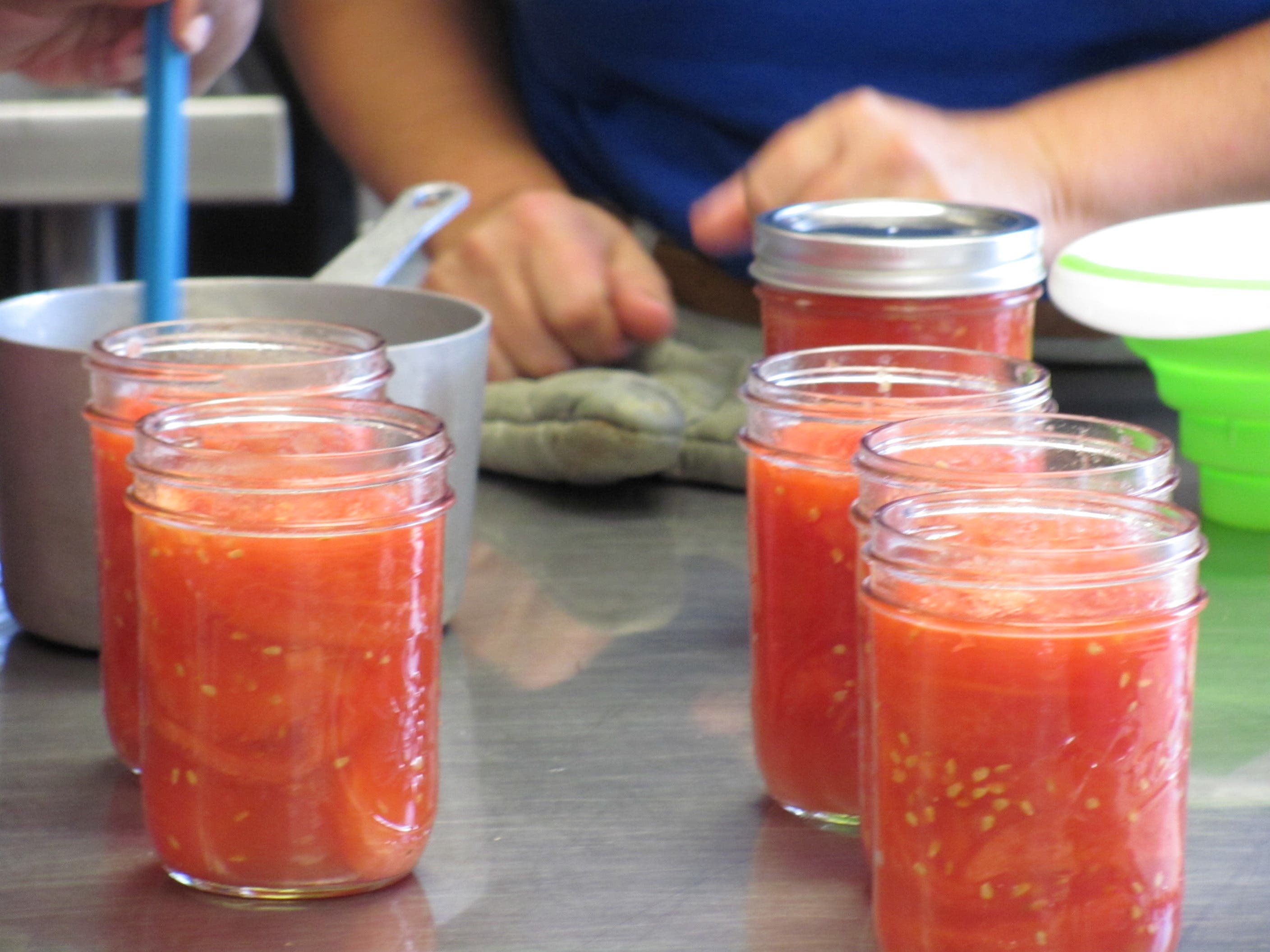
So rather than risk the chance of botulism at worst or spoilage, a less ominous outcome, but still one that results in the waste of food and a lot of hard work, why not just learn to can tomatoes using tested, safe methods? The go-to source for up to date information on canning tomatoes is the National Center for Home Food Preservation (www.uga.edu/nchfp). You will find directions for canning tomatoes and tomato products in a water bath canner and a pressure canner. For any tomato products, be sure to add a tablespoon of lemon juice or ¼ teaspoon of citric acid to pints and two tablespoons of lemon juice or ½ teaspoon of citric acid to quart jars.
Some folks are nervous about using the pressure canner. New pressure canners are easy to use and have many built in safety features. And using one makes sense for canning tomatoes. If you want to can tomatoes using no added water, you will need to process quarts in a water bath canner for 85 minutes. If you have lots of tomatoes, that’s a lot of minutes! And a lot of electricity or gas is used in the process. The same tomatoes will only take 25 minutes in a pressure canner at 11 pounds of pressure. It just makes sense to consider the pressure canner in this case.
In addition, if you want to make tomato products that contain significant amounts of low-acid ingredients such as meat, garlic, onions, peppers, or mushrooms, the pressure canner is essential for producing a safe product. All of these low-acid ingredients will surely bring the pH of your sauce or other tomato mixture well above 4.6 even if you start with acidic tomatoes.
The National Center also has tested recipes for canning some tomato products that have a lesser amount of low-acid ingredients. There are recipes for salsa, a tomato-vegetable juice, ketchup, and barbecue sauce. For each of these products, vinegar or lemon juice are important ingredients, adding the acidity needed to safely can in a water bath canner. Never add any additional ingredients or an extra pepper or two as this will likely make these products unsafe to can in the water bath canner.
For more information on home food preservation, contact the UConn Home and Garden Education Center at ladybug@uconn.edu or 1-877-486-6271.