Politics & Government
Kiner's Korner: Bid Farewell to the Death Penalty
Bill Kiner believes the House will pass the repeal bill and it will become law.

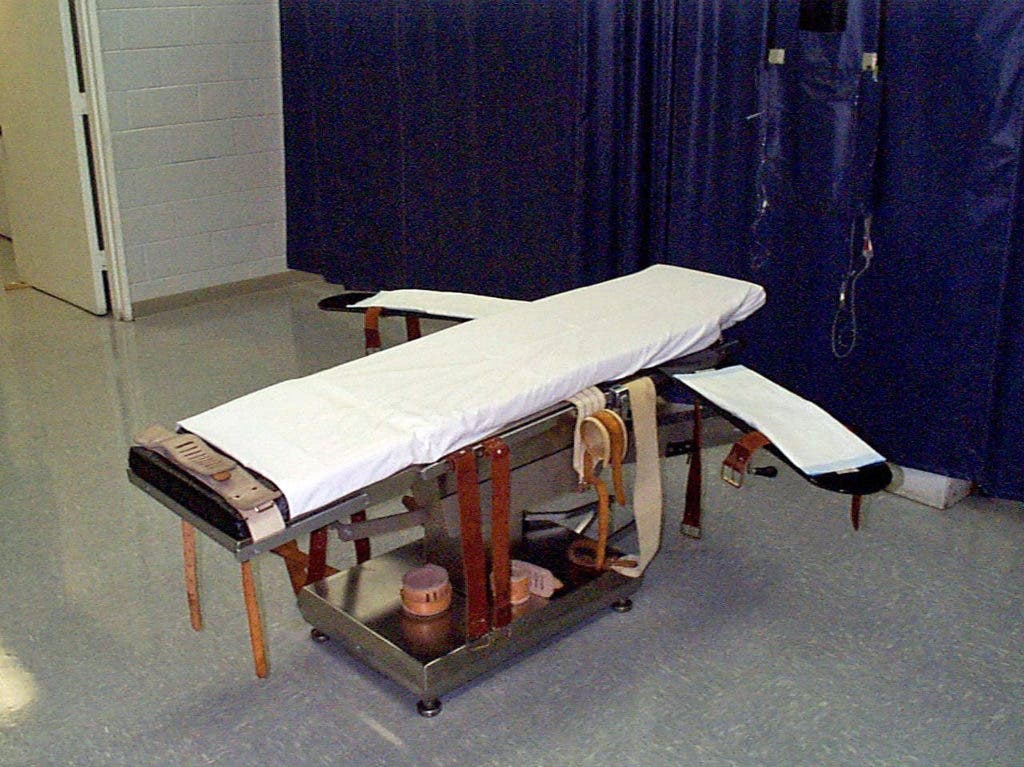
If all goes according to plan, Connecticut will soon be joining those states that no longer have a death penalty. The bill that abolishes the death penalty should be taken up this Wednesday. And my sources tell me that there are enough votes in the House to pass the bill and that the Governor will sign it into law.
Last week's vote by the Senate, and the marathon debate that preceded the vote should give us an idea of what can be expected in the State House this week. The vote in the Senate was 20-16, in favor of abolishing the death penalty. I am told that the margin of victory in favor of eliminating the death penalty should even be greater in the House of Representatives.
I remember teaching a course at Fermi High School entitled Law, Crime, and Society. In one of the lessons we discussed the most basic of questions-what is the purpose of criminal sentencing? The four rationales that my classes came up with were to: act as a deterrence, protect society through incapacitation( jail or death), rehabilitation, and retribution.
Find out what's happening in Enfieldfor free with the latest updates from Patch.
Even those who want to keep the death penalty agree that this penalty does not serve as a deterrence. If it did, Governor Rick Perry would not have presided over 234 executions. Apparently the ultimate punishment of death did not deter the 234 who committed crimes deemed to be worthy of the death penalty.
Executing an individual certainly prevents the person from harming society. Murderers who serve life in prison, with no chance of parole, are also no longer a danger to society.
Find out what's happening in Enfieldfor free with the latest updates from Patch.
Rehabilitation is really not a factor when dealing with the death penalty versus life in prison. There is no need to think about this since the prisoner will never be out in society again and prove that he has been rehabilitated.
And then there is retribution. Now we have hit a raw nerve. "An eye for an eye" does make some in our society happy. He who murders should also be murdered (legally by the state). Those who seek retribution claim, and perhaps rightfully so, that closure is obtained with a sentence of death. But at what cost? Connecticut's death penalty is just about unworkable. Just look at the Michael Ross case. Though the families of the victims of Michael Ross eventually saw Michael Ross put to death, it was done so only because Ross wanted to die. All those years on death row and all those appeals did not give any closure until years later when Ross was finally put to death. Sentencing a murderer to life in prison with no chance of ever being free hopefully ends the ordeal for most families of murdered victims. The endless and costly appeals in death penalty proceedings, forcing families to relive the heinous act over and over, will be a thing of the past.
Some would respond to that argument by saying that since our death penalty prolongs closure because of the appeals, then perhaps we should cut down on the appeals process. The best argument that can be mustered against this is James Calvin Tillman who served sixteen years in prison and who was finally exonerated using DNA testing. Our system of justice is not infallible. Mistakes are made, as was true in the Tillman case. The history teacher in me is once more coming forth when I quote founding father Ben Franklin: ".....it is better 100 guilty persons should escape than one innocent person should suffer."
The Senators did want to make sure that there was a true form of retribution built into life imprisonment. The bill, as amended and sent to the house provides that there will be no "cushy life" for the inmate.
State Senator Gayle Slossberg's speech on the Senate floor, minutes before the final vote, is worth repeating here. Her transformation from a death penalty supporter to one who opposed it is worth reading.
"A few years ago, I was waiting for the train to New York and I sat down on a bench next to an elderly man. We started to chat. Elections were coming up, so our conversation naturally turned to politics and the state of our country. We ran through the usual topics and then he turned to me and said something I have thought about over and over again ever since: He said that between the tough economy, the rise of hate crimes, the vilification of this group or that by otherwise good, moral people and the seemingly chronic need to blame someone for society’s problems, he said he was afraid—not for himself, but for our children. It is only a short step from here to there, he said—to think of some people as less than human. And once we think of people as less than human, it becomes okay to kill them and then what kind of society do we have?
For me, that is really the question of today’s debate: What kind of society do we have and what kind of society do we want for our children?
Like many of the people in this circle, I have agonized over the issue of the death penalty. I have thought about it, debated it, researched it, talked to friends, family and strangers about it. I have listened to the debate here today. I appreciate and respect all of the different points of view that have been expressed. I have spent a lot of time soul searching and lying awake at night thinking about all the facets of this issue. Like Sen. Prague, it plagues me to think we could put an innocent person to death? Does a moral society execute people? As I have confronted this issue, and advanced my understanding and thinking, I have come to the conclusion that both the realities of the death penalty as it is applied and the moral issues it raises dictate that it be abolished.
Benjamin Franklin said “ . . . it is better 100 guilty Persons should escape than that one innocent Person should suffer.” The good news is that by eliminating the death penalty, we are not letting any guilty person go free, but we are making sure that we do not execute someone who is innocent. We know the criminal justice system makes mistakes. We need only look to James Tillman right here in Connecticut to remember that innocent people are wrongly convicted. We know that hundreds of people have been released from death row with evidence of their innocence. While we would like to believe that the criminal justice system is fair, that all the appeals will prevent an error, we know that is not the truth. In Florida, where there is a death penalty, Former Florida Chief Justice Gerald Kogan stated after 45 years of working in the system, “There is no question in my mind . . . that convinces me that we certainly have . . . executed those not guilty of the crime for which they have been executed.” Is that the society we want? Where we execute innocent people? And if our society executes an innocent person, there is no possibility of fixing that error. We can’t go back. Haven’t we then become the evil we are trying to eliminate?
The death penalty is not a deterrent. With all the studies that have been done, I am not convinced that criminals consider the death penalty when they are committing crimes. In fact, states without a death penalty statute have significantly lower murder rates than their counterparts with the death penalty. If you look at regions, the disparity becomes quite pronounced. The South implements 80 percent of all executions in the country and has the highest murder rate, whereas, the Northeast implements less than 1 percent of all the executions and has the lowest murder rate in the nation.
In order to have a just society, we must have laws that apply equally to everyone yet the death penalty is meted out arbitrarily. And if you don’t think that is the case in Connecticut, think again. Last month, a few of us from the circle visited death row and the maximum security prison that houses the criminals who were sentenced to life without the possibility of parole. On our way there, we were handed a list of criminals and the crimes they had committed. They were heinous, horrible, unspeakable acts—and I thought surely each of them deserved to die- and then I looked at the heading on the paper—these were the criminals who had gotten life without the possibility of parole! The people on death row had also committed heinous, horrible crimes but there was virtually no way to predict who would have gotten death and who would have gotten life without the possibility of parole. It was completely arbitrary, based on the luck of the draw; race, economic status, geography, ethnicity, a good lawyer . . . some unknown factor that made the jury more or less sympathetic. Is that justice?
The death penalty isn’t necessary for public safety. The criminal has already been caught and tried. He is removed from society and no longer a threat to anyone’s safety. The death penalty doesn’t bring back the victims of their crimes. We certainly can punish criminals and protect the public safety without a death penalty. And please don’t get me wrong, these people have committed horrible crimes and they deserve to be punished. With the amendment offered at the beginning of this debate, we will have a harsh, severe punishment, so horrible atleast one person chose to die instead.
While these arguments alone call for repeal of the death penalty, for me, the most compelling issue is the one people don’t like to talk about—the moral question—the question the old man on the train asked—What kind of society to do we have and what kind of society do we want to be?
Last September, I watched the Republican presidential primary debates. The moderator asked Governor Rick Perry how he felt about the 234 executions that he had presided over in Texas, more executions than any other Governor in modern times and before the Governor had even had a chance to respond, the crowd cheered. The crowd cheered. What kind of society cheers death? I understand people who believe that the death penalty is justice—but to cheer? And then to add insult to injury, Governor Perry was asked—do you ever struggle to sleep at night? to which Perry responded—No struggle. I do not struggle to sleep at night because the system is fair. Again the crowd cheered. Even if the criminal justice system was without error which we know it is not, what kind of society allows the systematic execution of people without even a second thought?
I believe that the death penalty calls to our basest instincts. You only need to think about the crowd cheering at the debate about executions to know that the death penalty degrades our society. Imposing the death penalty is really not about the criminal. It is about how it makes us feel. Like Sen. Musto, I can imagine that if someone harmed my family, I would want to harm them, too, but I want my public policy to be better than me. Like the old man at the train, I fear for our society when we people can cheer at an execution or we feel nothing or we feel like it just doesn’t matter if society kills , even when that person is no longer a threat to our safety. When we go down that path, we lose something as a society.
Last month, I received an angry letter from a man suffering from a fatal disease. He wrote that he had never done anything wrong, yet because of his illness, he was sentenced to death and no one could commute his sentence. Then he wrote, it isn’t fair that he, an innocent man, should get a death sentence and the legislature would consider eliminating the death penalty for murderers. I could understand his anger and his belief that repealing the death penalty meant that we were showing compassion for murderers whereas no one could really show the same compassion for him. I thought a long time about that letter until I realized that repealing the death penalty has nothing do with compassion or the criminal. It has everything to do with what the act of killing does to US, the law abiding members of society. Killers kill and they don’t feel bad about it. What separates the good from evil is when most good, moral people do something bad, it makes them feel bad. Most people are good, moral people, trying our best to abide by the laws and rules of our society. We teach our children to be kind, to be honest, to reject violence. So when we also say it is okay for us to kill when there is no longer any threat to our safety, we erode the very morals to which we aspire. It is a small step from here to there, said the old man. It is like a smoldering ember that slowly burns a hole in all that is good in our society.
So what kind of society do we want for our children?
We know our criminal justice system is broken. We know all the arguments that logically support repeal. But for me, the most compelling reason to reject the death penalty is to set ourselves on the path to the kind of society we want for our future.
I never saw the old man from the train again, but if I did, I would like to tell him this: I want something better for our families. I want to know that in the face of terrible evil, we will hold on tighter to our humanity; that when our faith in each other is challenged, we will work harder to fulfill our obligations to one another as human beings; that we will stand for justice for all; that we will raise each other up, and not descend to the level of criminals. We cannot confront darkness with darkness and expect to have light.
I hope that one day, when my children look back on this vote, they will view it with pride and know that today we took a step towards being a more civilized and just society for all. I am proud to support the repeal of the death penalty."