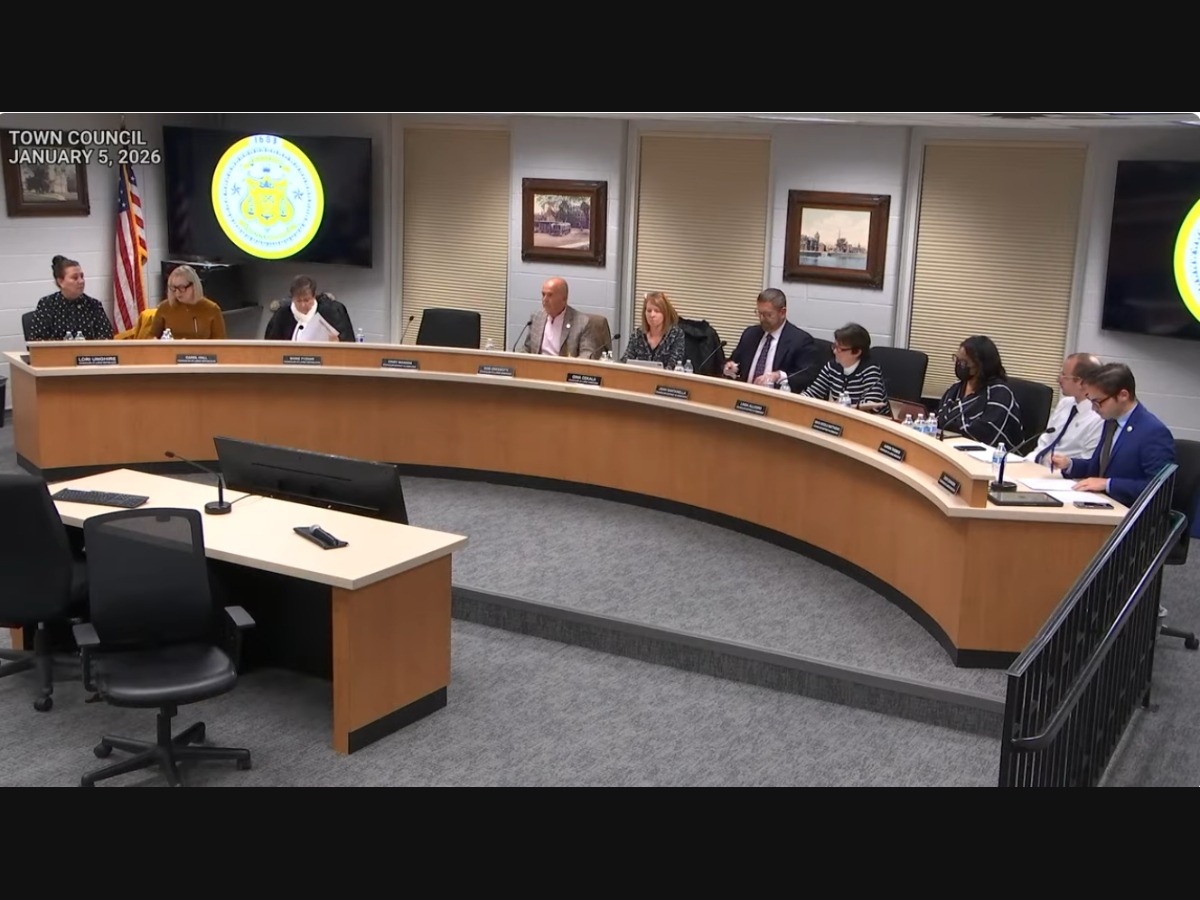
At Monday night’s Town Council meeting on January 5, Deputy Mayor John Santanella attempted to add two significant financial resolutions to the agenda from the floor—measures with a combined impact of just over $1.6 million on Enfield taxpayers.
Under Robert’s Rules of Order, adding items to an agenda requires a two-thirds vote and is historically reserved for true emergencies—matters so urgent they cannot wait until the next scheduled meeting. These resolutions did not meet that standard.
The proposals included forgiving the balance of $1.328 million tied to a Board of Education memorandum of understanding and approving an additional $285,000 in expenditures. These were not clerical adjustments or time-sensitive emergencies. They were substantial fiscal decisions that directly affect taxpayers and should have been introduced with proper notice, full transparency, and an opportunity for public input.
Find out what's happening in Enfieldfor free with the latest updates from Patch.
During discussion, Councilor Maya Matthews dismissed the $285,000 expenditure as “not an exorbitant amount of money.” Deputy Mayor Santanella went further, stating that the action was “going to happen.” Statements like these are troubling. They suggest that outcomes are predetermined—regardless of process, debate, or public involvement.
Republican Councilor Carol Hall rightly pushed back, noting that the issues were neither urgent nor appropriate for last-minute action. She emphasized that decisions of this magnitude belong in the formal budget process, where residents expect transparency, accountability, and the opportunity to be heard.
Find out what's happening in Enfieldfor free with the latest updates from Patch.
Republican Councilors Marie Pyznar and Lori Unghire echoed those concerns, emphasizing that good governance depends on a process that informs residents and allows them to be heard.
Deputy Mayor Santanella later explained that the council had asked the superintendent to identify expenses that could be immediately impacted mid-year. That statement deserves clarification. The Town Council, as a body, did not make such a request outside of the established budget process. When the Deputy Mayor uses the pronoun “we,” it is essential to distinguish between individual members and formal council action.
Even with a Democratic majority, decisions that affect the town’s finances and taxpayers’ pockets must be discussed openly, on the record, and with public participation. Compounding the concern was the absence of the superintendent at the meeting—leaving no opportunity for explanation or questions. More troubling still, the $285,000 expenditure had not been discussed or approved by the Board of Education as a body.
After the motions failed, the Deputy Mayor addressed the public and stated that at the next meeting the council would forgive the $1.328 million and approve the $285,000—suggesting no further discussion was necessary and implying that voters expected this outcome.
That attitude should concern every resident, regardless of political affiliation. Elections do not eliminate the obligation to follow established process, respect fiscal safeguards, or encourage public participation. Nearly $1.6 million in spending decisions should never be handled through last-minute resolutions from the floor.
This is not about opposing education funding. It is about process, transparency, and respect for taxpayers. The appropriate venue for decisions of this size is the budget process—where impacts can be evaluated, alternatives considered, and residents heard.
Good governance is not about expediency or certainty. It is about accountability. And Enfield residents deserve nothing less.