Politics & Government
Residents Vocalize Opposition to Zoning Change Allowing Truck Stop
The Planning and Zoning Commission played to a packed house Thursday evening as residents voiced concern over zoning changes seeking to bring a truck stop to Enfield.
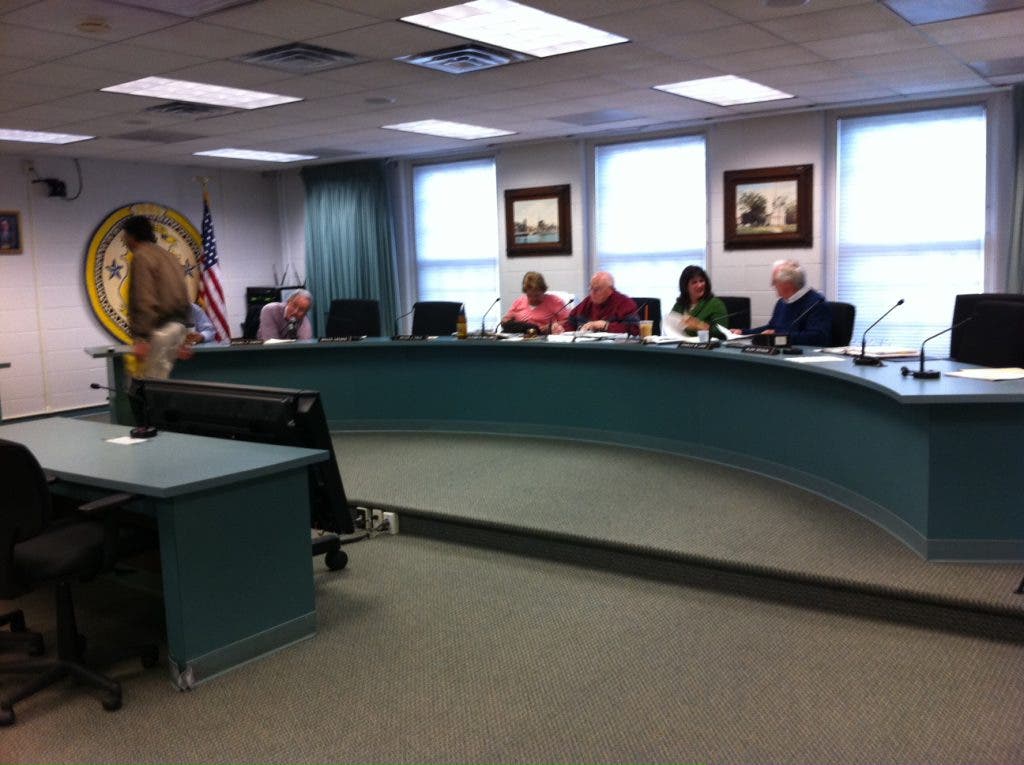
A large crowd gathered at the Enfield Planning and Zoning commission meeting Thursday evening, as a proposed text change to zoning regulations opened the possibility of truck stops off the city's highways. Residents were passionate and almost universally against the zoning change.
The text change proposes to creat a Highway Sevice Zone (HSZ) for Enfield, a designation not currently existing in the zoning regulations. The zone would have many of the features of an industrial (I1) zone, but would allow fuel sales as a use, as well as expanded signage for higher visibility.
Other features of the text change include a minimum parcel size of 17 acres and expanded rules for set asides and buffers. Eight parcels in Enfield could conceivably qualify for the new zoning if adopted.
Find out what's happening in Enfieldfor free with the latest updates from Patch.
Attorney Leonard Jacobs of Manchester spoke in favor of the changes and cited several benefits for Enfield should the change be adopted. A truck stop of the scope proposed by the applicant would have a capital outlay in the range of $6.5 to $7.5 million in improvements alone, not counting the value of the land. The project would also create between 60-75 new jobs. He also insisted the HSZ was consistent with the recently adopted plan of development.
The public hearing, which was opened at the April 21, 2011 meeting of the commission was limited to the text change, and all testimony was required to address the proposed changes and not any specific parcels and plans.
Find out what's happening in Enfieldfor free with the latest updates from Patch.
Robert Olsen said, “first of all, I want to congratulate the attorney...who has put us in a hole about what we can speak about.”
Commission Chairman Charles Duren responded quickly, “no sir, its the state statute.”
This limitation proved a point of contention with the audience, whose interest was with the possible project for the truck stop located near exit 46 on Interstate 91. That parcel is near St. Patrick's Cemetery and many felt development near this site would be inappropriate.
The applicant for the proposed zoning change is a representative of Love's Travel Stops and Country Stores, an Oklahoma based company which owns and operates many truck stops throughout the country. Their plan calls for fast food restaurants, fueling stations, and other services for truckers.
Residents voiced displeasure with the proposed zoning change on several grounds. Traffic flow was repeatedly brought up, with the fear that a truck stop would become a popular destination for long haul truckers and create a danger for local as well as interstate traffic. Concern over the increase in air and noise pollution was brought up many times. Most of the residents speaking against the plan were concerned about the effects of this type of development on the residential neighborhoods near the potential sites.
Glen Galbraith, a resident of King Street boiled the objection down to its emotional essence, “we know what it brings, it's gonna bring drugs and prostitution...its not good for the neighborhood...it's still 'We the People' and we are opposed to it.”
As the night wore on, tensions and frustrations intensified while chairman Duren tried to keep the hearing focused on the zoning change and not descend into an emotional debate.
The commission granted a request by the applicant to keep the public hearing open until the June 2, 2011 meeting of the Planning and Zoning Commission. Commissioners asked for more information about the possible impact of the zoning change on fire department and police services in advance of the continued public hearing.
After the hearing is closed, a decision on the proposed change must be voted on within 65 days. Once the hearing is closed, no more testimony can be heard or information submitted to the commission for consideration on the issue of the zone change.
“We residents have to be vigilant from this point on,” said Anne Marie Olsen, insisting that just voicing opposition at this hearing was not the end of the battle.
All data, testimony, and back up material concerning the proposed change is part of the public record and can be accessed by any resident seeking further information.