Politics & Government
Fairfield Contamination Costs Projected At $2 Million
The Board of Finance received the new numbers at a meeting dominated by confusion over the town's contracting processes.


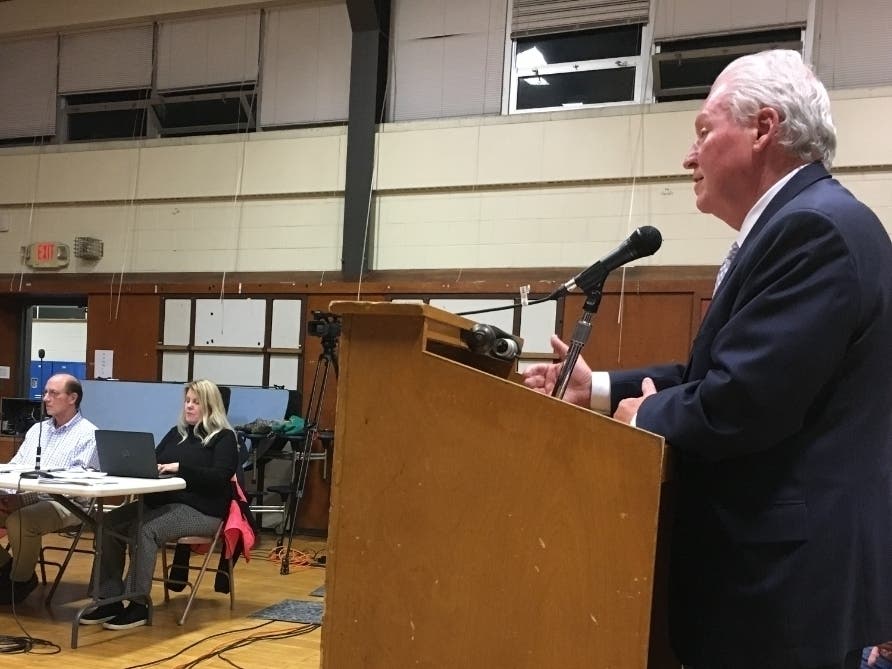
FAIRFIELD, CT — Fairfield's contamination controversy has cost the town nearly $1.6 million, the Board of Finance learned Monday, after a nearly three-hour meeting dominated by confusion over the town's contracting processes.
The new number came following the board's transfer of $1.8 million earlier in October for expenses related to the fallout after two town employees and an ex-contractor were charged in connection with illegal dumping at the public works yard fill pile and contamination was uncovered at sites all over town.
Of the over $1.5 million in expenses, about $956,000 are related directly to the pile and Julian Development, the company hired to run it. Costs include legal services; soil testing and remediation; and erosion, sediment and dust control, according to town documents. About $213,000 consists of in-house expenses.
Find out what's happening in Fairfieldfor free with the latest updates from Patch.
The town has accrued another roughly $609,000 in costs connected to environmental consulting, remediation and additional expenses for sites other than the fill pile, town documents said. Approximately $406,000 in similar services is projected, bringing the potential total to nearly $2 million.
Charter confusion
A recurring theme at Monday's meeting, which was held to address items related to the finances of the fill pile, was uncertainty and conflict about who can and should approve contracts for the town.
Find out what's happening in Fairfieldfor free with the latest updates from Patch.
Among the topics discussed was a section of Article 6 in the Town Charter, which says all contracts are subject to approval by the Board of Selectmen unless they are made on behalf of the Board of Education. Contracts expected to last less than one month or cost under $10,000 can also be delegated to other town officials, according to the charter.
While addressing the decision to hire a communications specialist in response to the arrests of town employees and discovery of contaminants at a Fairfield park, First Selectman Mike Tetreau, a Democrat, said the relevant section of Article 6 has not historically been followed.
"Past practice is not to do this," he said. "We've got innumerable examples."
Tetreau hired consultant Chris Gidez to assist with communications about the controversies. Over the course of three months, Gidez billed the town for just under $20,000. His contract did not go before the Board of Selectmen. Gidez operates a reputation management firm called G7 Reputation Advisory but was hired by the town as an individual.
Twice, while being questioned by board member James Walsh, Tetreau became visibly upset, calling Walsh's inquiries "outrageous," "totally uncalled for" and a violation of Robert's Rules of Order. Walsh, a Republican, was asking about a draft communication from Gidez that suggested using surrogates to "call out" people who raised public fears about contamination.
Earlier in the meeting, Tetreau said he did not originally expect Gidez's work to exceed 30 days or $10,000, but added he should have updated selectmen when the services extended beyond the parameters for exceptions in the charter.
Chief Fiscal Officer Bob Mayer said the town has not followed the charter's contract policy since 1975.
Vice Chair James Brown, a Republican, said the charter must be either followed or changed. Chair Tom Flynn was absent due to a medical issue, and Brown chaired the meeting in his place.
Town Attorney Stanton Lesser said there is a conflict in the charter, and a section of Article 12 grants purchasing authority for all contracts that are not for professional services to Tetreau and Purchasing Director Gerald Foley.
"It's not well drawn," Lesser said.
During public comment, Representative Town Meeting Minority Leader Pamela Iacono, a Republican, took issue with Lesser's point.
"All of these processes are very clearly laid out," she said. "... It needs to go to the Board of Selectmen."
Another source of confusion Monday was how the town handles emergency purchases. Fairfield policy dictates the town may exempt purchases from bidding requirements when faced with emergency conditions requiring an immediate response under federal, state or local law. But Mayer said he had only recently learned of the rule and it has not been followed.
"This has to be changed, this language," said board member John Mitola, a Democrat.
In practice, Fairfield uses an emergency purchase request form that does not require a law to be cited, Mayer said. Tetreau filled out the form for the Gidez contract more than a month after Gidez began work for the town.
Board member Christopher DeWitt, a Republican, questioned the characterization of Gidez's services as an emergency expense.
"There's got to be some common sense applied," he said.
Background
Fairfield's contamination crisis started after the town hired Julian in 2013 to operate its public works yard and reduce the fill pile by 40,000 cubic yards. Over the next three years, the pile more than doubled in size, and days before the agreement was set to end, PCBs and lead were discovered on the property.
After conservation officials said the transportation and dumping of contaminated material could have violated state or federal law, police opened an investigation in 2017.
Former director of public works Joe Michelangelo, former superintendent of public works Scott Bartlett and Julian Companies Owner Jason Julian were arrested this summer in connection with the pile and face charges including larceny, forgery and dumping.
Since then, at least 60 areas in Fairfield have been tested for contamination amid concerns about misuse of town fill. At least 50 areas have been deemed safe, but sites that tested positive for contamination were found to contain asbestos, arsenic and other contaminants. Tests are possible or pending for more than 40 additional locations.
Fairfield has sued Julian for millions in damages and Julian has sued the town for defamation.
Get more local news delivered straight to your inbox. Sign up for free Patch newsletters and alerts.