Neighbor News
Let’s End the Surveillance State in Fairfield
We don't need warrantless surveillance to be safe.

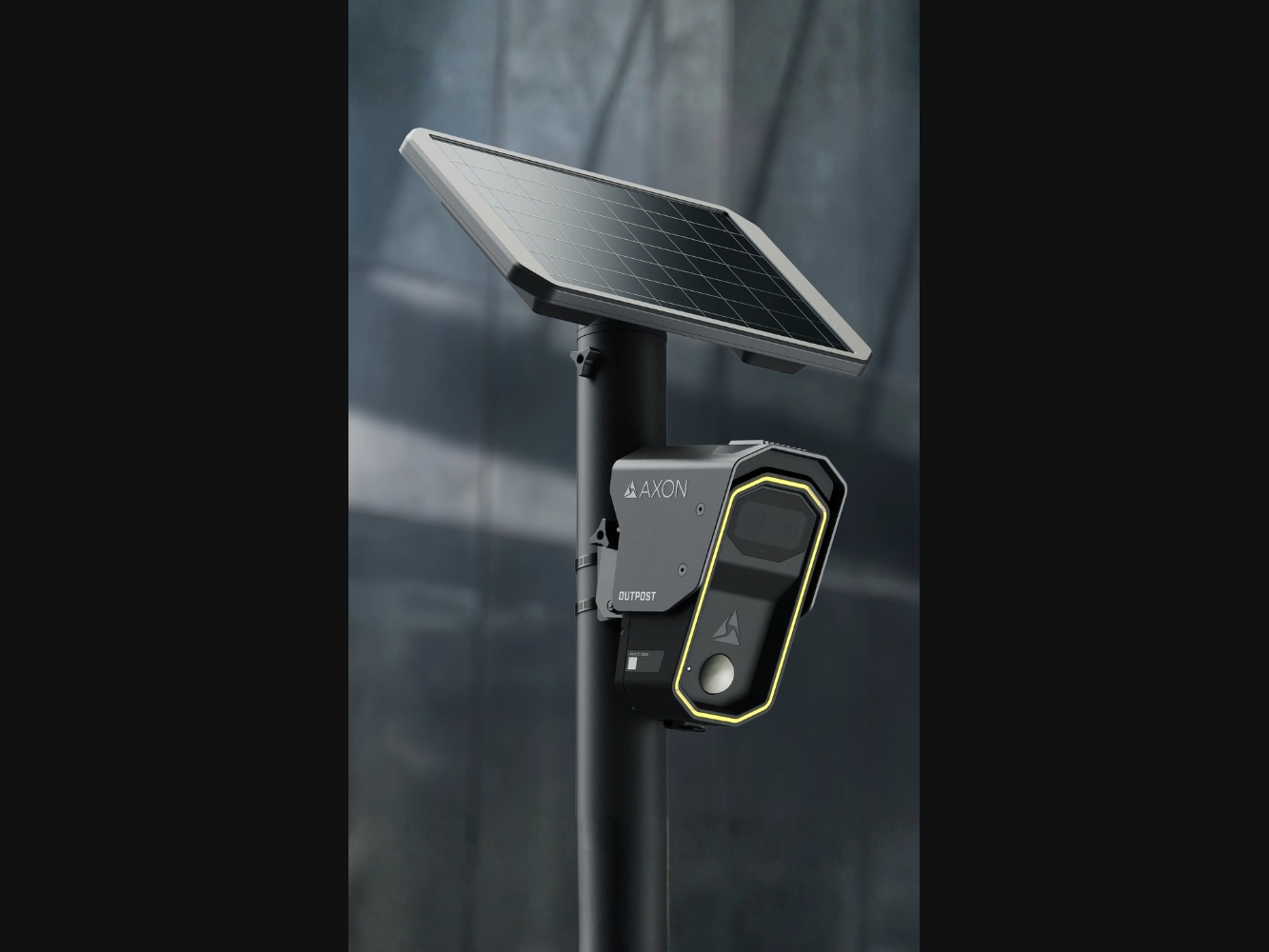
On Wednesday, Police Chief Michael Paris will brief the Board of Selectpersons on the town's automated license plate reader, or ALPR, program.
The department states it's "committed to transparency regarding the technology used" and has published a website with new disclosures about ALPRs, including a map of each camera (now 46), a usage policy and a transparency portal. This is an important first step for any community that decides this technology is worth implementing.
Unfortunately, Fairfield residents have had little say in why this technology is needed here at all. And what little is disclosed raises a number of important questions that need to be answered.
Find out what's happening in Fairfieldfor free with the latest updates from Patch.
Let's start with the why. If you ask any police officer whether they welcome technology that helps them solve crimes, they'll, of course, say, "yes please." But that’s the wrong question to ask.
Instead, we should ask: what type of community do we want to live in? Should it be one where we move freely, or one where our movements are studied, recorded and potentially accessed by someone with a nefarious purpose?
Find out what's happening in Fairfieldfor free with the latest updates from Patch.
The Washington Post published an investigative story in early August that detailed how rogue officers used ALPRs to stalk ex-girlfriends and other women. Last year, CBS detailed how a mother and her children were held at gunpoint because the cameras wrongly flagged their car as stolen. Earlier this year, the Kansas patrol division used ALPRs to track an innocent citizen because he wrote a critical op-ed about the department. And just last week, a Federal judge in Oklahoma ruled that a deputy sheriff violated a woman's fourth amendment rights by using ALPR technology without a warrant before a traffic stop, writing, "This is a type of indiscriminate mass surveillance."
Besides the obvious potential for abuse and the violations of our rights, I'm deeply skeptical of any system that records the movements of everyone and stores them in the cloud. For decades we've been asked to give up some privacy for the promise of safety, and are we any safer for it? Based on the public outcry over the installation of these cameras and the growing national backlash against them, I think many of our residents agree.
I urge Chief Paris and the Police Commission to pause the program and give residents a chance to weigh in on the type of community we're building. If they aren't ready to do that, they should be prepared to address the issues with the current approach.
Evidence. The randomized and quasi-randomized tests of ALPRs in patrol that I found showed no clear crime-prevention effect, though one showed more stolen vehicles recovered without more arrests. I haven't found rigorous evidence that fixed networks like ours deter crime. If deterrence is the goal, has anyone studied where stolen cars enter and leave town? The map shows few cameras near the Merritt Parkway interchanges.
Locations. By my analysis of the department's published map and public mapping data, 28 of the 46 mapped cameras sit within 1,000 feet of a school, house of worship, medical facility, child care center, playground or community center. Thirteen are within 500 feet, 10 within 300 and five within 150. Distance doesn't show what a camera can see, which is why the department should publish each camera's field of view. It's also why the public should weigh in on sites before they're installed.
Hotlists. The department's transparency portal shows about 1,830 retained hotlist hits in 21 days. Of those, 143, about 8%, carry the label "unknown category." The public can't tell why those plates were flagged. Who entered them, and why are they uncategorized?
Searches. The portal says each search needs a reason or case number. I can't find any description of anyone approving a search beforehand, or of who reviews them afterward. Elsewhere, an analysis of 11.4 million searches on a comparable system found more than 14% listed only the word "investigation." Who audits Fairfield's searches? Why not an independent third party, with results published?
Sharing. The department hasn't disclosed whether Fairfield data has gone to out-of-state or federal agencies, or to whom and how often. State law will require that reporting beginning Jan. 31. Why wait?
Patrol cars. The contract also licenses plate reading on 39 patrol cars, which can scan wherever they drive or park. State law keeps fixed cameras from collecting near certain registered health and immigrant-serving sites, but not patrol-car readers. I can't find any department policy limiting where they collect. Why?
The contract. What the department posted is a sales quote that incorporates Axon's master agreement, and the department hasn't posted that agreement or any Fairfield-specific terms. What protections does the full agreement contain against misuse or a data breach? Axon also holds federal contracts, including a Department of Homeland Security agreement worth up to $370 million with orders from Immigration and Customs Enforcement. Fairfield's roughly $635,000 a year is a tiny fraction of a company with $2.8 billion in annual revenue. We need to see the fine print instead of taking assurances on trust.
Drones. The same purchase order lists Skydio drones, docks and an FAA waiver application. I haven't seen any public policy or discussion of a new Fairfield police drone program. Milford, which touted a "Drone as First Responder" program, recently paused most of its cameras and created a committee to review the broader program, including drone usage. Is Fairfield planning an expanded drone program, and how do we know it'll be limited to emergency response instead of surveillance?
Given the open questions and public interest in this topic, it's more than reasonable that the police chief and the Police Commission suspend the ALPR program until everyone has a chance to weigh in. If we do so, I think we’ll find the public wants this program to end.
If I’m wrong and the residents decide they’re OK with this type of warrantless surveillance, then we should codify and strengthen the policy to ensure it has proper guardrails in place. That's why I, along with several of my RTM colleagues, have requested a resolution at this month's meeting to form an ordinance drafting committee on the topic. That way, whatever we decide as a town is written into law instead of left to department policy.
Scott Bisang
Democrat, RTM District 2
(views my own)