Community Corner
DEEP, AAA Send Out Deer, Moose Warning For State Roads
Glastonbury having the most deer crashes is an example of no road being immune to animal activity.


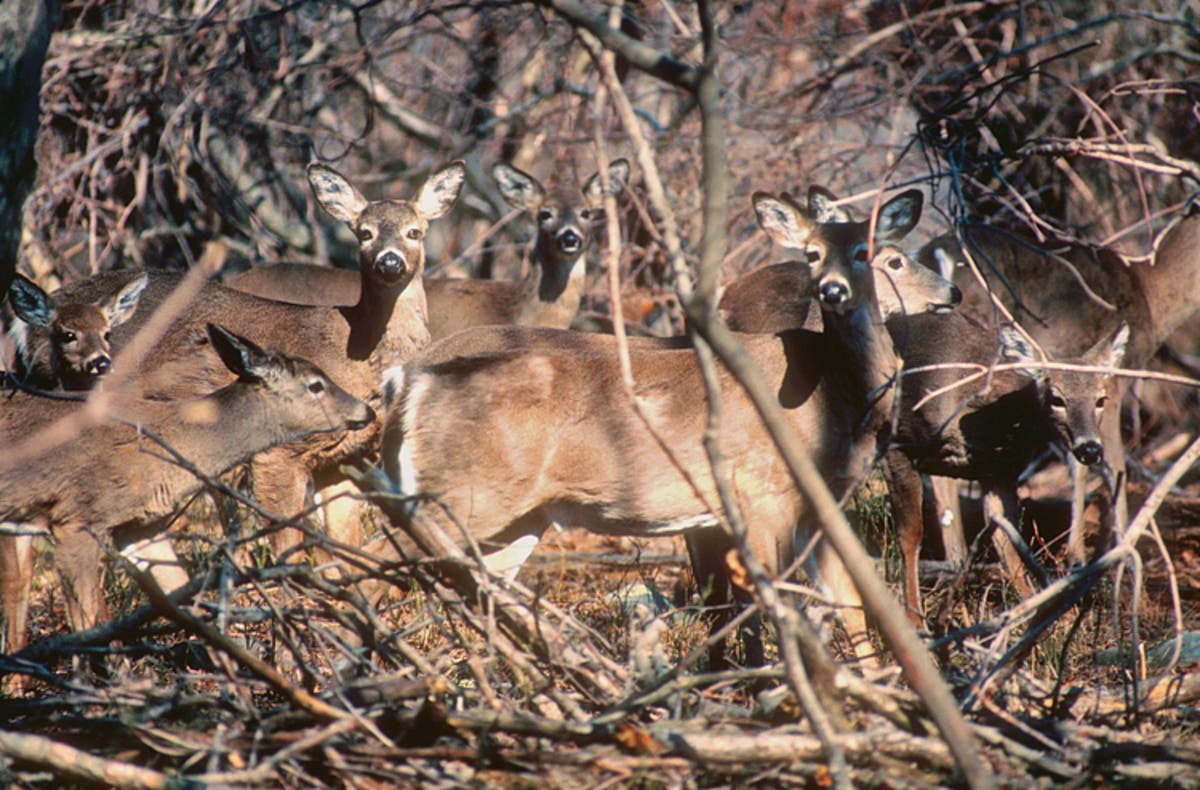
GLASTONBURY, CT — The town with the most "deer strike" crashes in Connecticut — Glastonbury — is a perfect example on why motorists should be aware of deer and moose on the roads no matter where they travel in the state, officials from AAA and the state Department of Energy and Environmental Ptrotection said Wednesday.
The DEEP and AAA said the animals have increased activity during early morning and evening hours.
Fall is the peak of the breeding season for Connecticut's moose population in the northern part of the state, officials said. The breeding season (also known as "the rut") for white-tailed deer closely follows the moose breeding season, running from late October through late December.
Find out what's happening in Glastonburyfor free with the latest updates from Patch.
Officials from the DEEP’s Wildlife Division say motorists should be aware of and heed “Deer Crossing” signs along state highways. Motorists are bein advised to "slow down and drive defensively," should a deer or moose be spotted on or by the road.
Because moose are darker in color and stand much higher than deer, observing reflective "eye-shine" from headlights is infrequent and, when struck, moose often end up impacting the windshield of vehicles. All moose and deer vehicle collisions should be reported to local, state, or DEEP Environmental Conservation Police Officers (860-424-3333), officials said.
Find out what's happening in Glastonburyfor free with the latest updates from Patch.
According to the DEEP, there were more than 4,000 deer strikes in Connecticut last year, though most go unreported.
“During 2017, approximately 4,122 deer were killed in the state due to collisions with vehicles, which is down considerably from 10 years ago,” said Andrew LaBonte, a deer program biologist for the DEEP Wildlife Division. “While the number of collisions has fallen over the past 10 years motorists should remain vigilant this time of year as to the presence of deer near roadways.”
“Hitting a deer can be costly, even fatal” said Amy Parmenter, the spokesperson for AAA in Greater Hartford. “According to UConn crash data, deer strikes resulted in a driver’s death last year and the year before.”
According to the latest DEEP data Glastonbury had the greatest number of reported deer strikes.
“The fact that the greatest number of reported deer strikes was in Glastonbury clearly illustrates that where deer and drivers intersect, there’s a greater risk to both,” Parmenter said.
In the event of a collision with an animal, AAA recommends:
- Call the police.
- Avoid making contact with the animal because of a frightened or wounded animal can hurt a person
- Put the vehicle’s hazard lights on; whether it’s light or dark outside.
- If possible, immediately move the vehicle to a safe location, out of the roadway, and wait for help to arrive.
- Contact an insurance agent or company representative as quickly as possible to report any damage. Collisions with a deer or other animals is covered under the comprehensive portion of an automobile policy.
AAA offers some tips to help prevent a crash or to reduce damage from an animal collision:
- Pay attention to road signs. Yellow, diamond-shaped signs with an image of a deer indicate areas with high levels of deer activity.
- Continuously sweep the eyes across the road for signs of animals and movement. Animals may also be alongside the road, so make sure to look to the right and left, as well. While the most likely crash is a vehicle hitting an animal, on occasion the animal might running into the side of a car.
- Many animals, especially deer, are most active from 5 to 8 a.m. and from 5 to 8 p.m. – prime commuting times for many people.
- The use of high beams when there is no oncoming traffic can help spot animals sooner. Sometimes the light reflecting off their eyes will reveal their location.
- Deer rarely travel alone, so if you see one, there are likely to be more nearby.
- Slow down around curves because its harder to spot animals when going around curves.
- A long blast of the horn may frighten animals away from a vehicle.
- Resist the urge to swerve, because swerving away from animals can confuse them.
- If a crash is imminent, take a foot off off the brake because, during hard braking, the front end of a vehicle is pulled downward and that can cause the animal to travel over the hood toward a windshield.
- The chances of getting injured when hitting an animal are much higher without a seat belt on.
While rare, moose strikes do occasionally occur in Connecticut, and because of their size can result in significant damage to a vehicle.
More than 40 moose-vehicle accidents have been reported in Connecticut between 1995 and 2017, with an average of two per year since 2002, according to LaBonte. One moose versus vehicle accident was recently reported in late September on Route 20 in Hartland, where the majority of the moose versus vehicle accidents have been reported over the years, officials said.
Most of Connecticut is not considered ideal habitat for moose because the state’s landscape is fragmented, roadways have high traffic volume, and moose have large home ranges (approximately 10 to 15 square miles). Moose venturing into southern Connecticut, with high population density, road networks, and traffic volumes, pose an increased potential for human fatalities from accidents as compared to deer-vehicle accidents.
Residents throughout the state are encouraged to report moose sightings on the DEEP website at www.ct.gov/deep/wildlife.
Photo Credit: Paul Fusco/DEEP Wildlife Division
Get more local news delivered straight to your inbox. Sign up for free Patch newsletters and alerts.