Community Corner
Employment and the Worker in 19th Century Granby
Unemployment and wage issues in 1850 Granby were not as favorable as one would find today.


With headlines about jobs in America almost daily, and today with more than half of Granby’s residents employed in the service industry, I thought a discussion of how people made their living 150 years ago might be of interest.
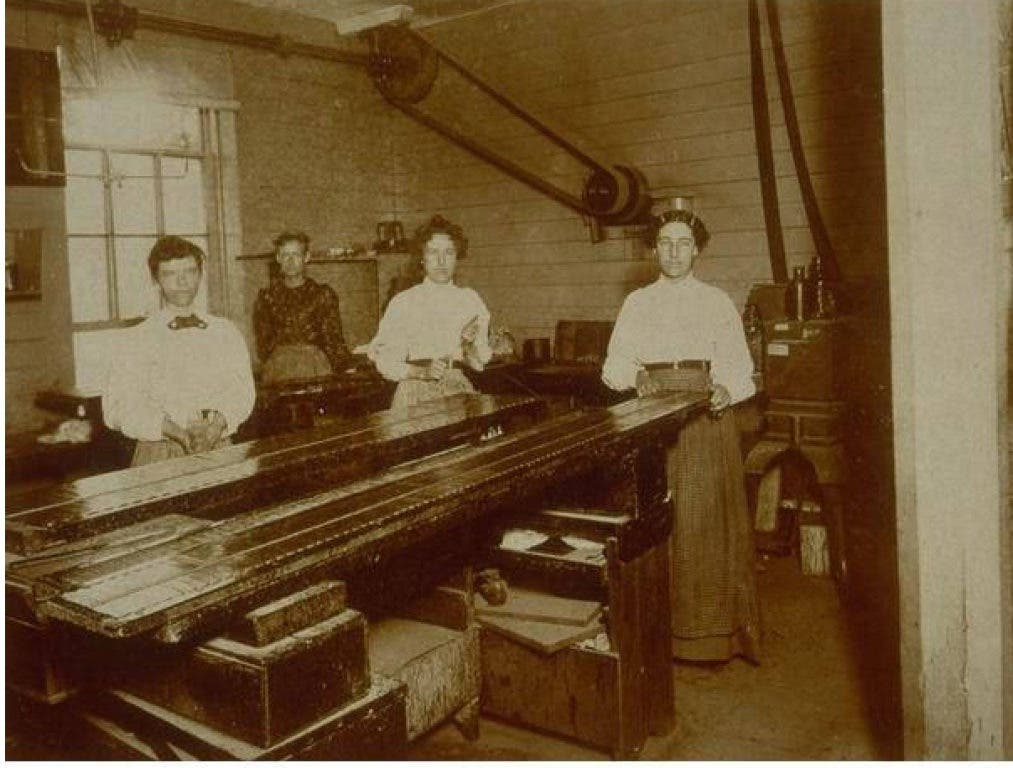
Granby in the 1850s was primarily a farming community, however statistics for industry in the mid-19th century tell a fascinating story. Most of the businesses were one-man operations that were powered by hand or water power. The highest paying industry was the Cornwell and Brewer twine manufactory located in the Mechanicsville section of Granby. They employed four men and five women, paying the men $32.50 per month and $13 to the women.
A typical working day in 1850 was 10 hours. People worked 6 days a week and there were no paid vacations, sick leave or holidays. The average male employee earned $20 to $25 per month while most women were paid only $5 per month, regardless of the type of job.
Find out what's happening in Granby-East Granbyfor free with the latest updates from Patch.
Granby had three shoemakers in town. Carlton Holcomb of West Granby employed four men and two women. They produced 1,525 pairs of shoes and boots per year. In North Granby, Hezekiah Goodrich made 1,000 pairs with just two men and a woman. But by far, the major employer was Allen and Pratt, located on Wells Road in the Pegville section of town. Here they employed 23 men and 12 women, who made more than 30,000 pairs of shoes annually.
Just up Wells Road, Lewis Holcomb had a whip lasher business with eight men and over 30 women. The male whip lasher earned more than his shoemaker counterpart, making up to $26; however, women were paid the standard $5 per month. In Turkey Hills, Simeon Viets employed five women, and also paid them just $5 per month, to roll 36,000 cigars a year.
Find out what's happening in Granby-East Granbyfor free with the latest updates from Patch.
In 1850, water wheels powered four grist mills and nine sawmills, where the average wage was $20 a month. Blacksmiths made a little more, closer to $25. They also made extra money for “custom work.” David Latham made 40 ploughs at the same time Silas Cone in West Granby made 60 dozen scythes that year.
Carriage making was a big business in Granby. Watson Dewey of North Granby employed 13 men and built more than 100 carriages per year. In West Granby, Sherman Fancher employed nine workers who made 60 carriages in 1850. These vehicles sold for about $1,000 each.
Another major industry was silverware, and while we recently considered the production in the Spoonville section of Turkey Hills, in Granby, Addison Harger employed 45 men and 10 women. These skilled male workers earned $26, although the women received the usual $5 per month!
So with all we have to complain about in 2011, I think we can all agree, we would not be willing to switch places with our forefathers of the 19th century.