Home & Garden
Sen. Bye Meets With DEEP Officials Regarding Bear
DEEP officials recommend euthanizing the animal; protestors are signing an online petition to save the bear.


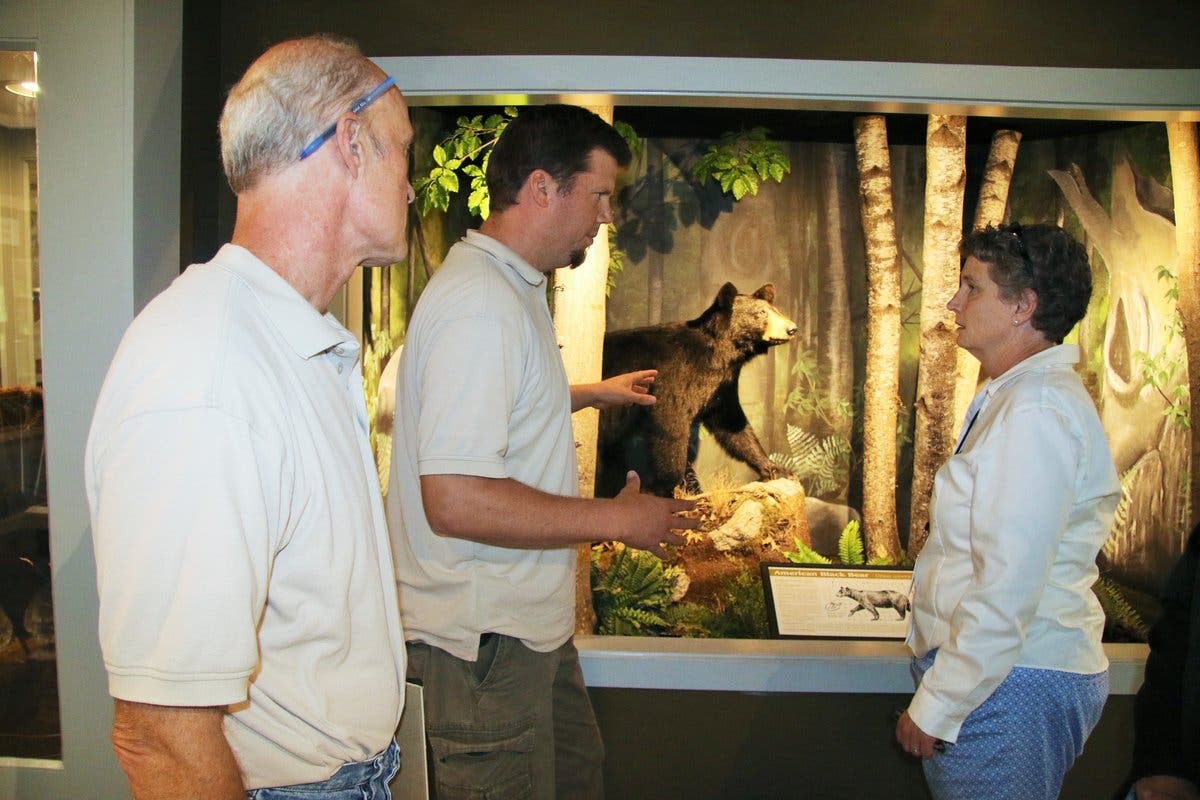
State Senator Beth Bye (D-West Hartford) met Tuesday at the Session Woods Wildlife Management Area with biologists from the state Department of Energy and Environmental Protection (DEEP) to learn more about a recent human-bear encounter here, and to raise awareness of the vast number of black bear sightings in Connecticut and how residents should handle them.
After learning about multiple, troubling incidents involving this particular bear, Bye said she endorses DEEP’s plan to euthanize the problem bear when it is found.
“This is not the bear’s first encounter with humans,” Bye said. “I have conferred with state biologists to determine how dangerous this bear is, and whether it’s a danger to hikers and homeowners. On average, there is a bear sighting reported every two hours – day and night – in Connecticut, over 4,400 sightings in the past year. The public needs to be aware of how to react when they see a black bear, because we want to avoid measures of last resort such as euthanization, which is a very rare occurrence.”
Find out what's happening in Granby-East Granbyfor free with the latest updates from Patch.
DEEP officials say this particular bear has exhibited a history or troubling behavior in just the past three months, including being trapped at Bradley International Airport and relocated in June; following a person in Windsor later that same month who entered a commercial building, with the bear then pushing against the glass door after the person was inside; and entering a home in Granby in July by breaking through a glass and screen door.
DEEP officials said this same bear exhibited “aggressive and predatory” behavior toward a woman on a walking trail at Session Woods on Aug. 28, following her for a prolonged distance, circling her, approaching her when her back was turned and “testing” her by putting its mouth on her leg. The bear exhibited similar behavior toward a DEEP employee in a recent, subsequent search of the area.
Find out what's happening in Granby-East Granbyfor free with the latest updates from Patch.
DEEP said there are an estimated 600-700 bears living in Connecticut; they euthanize two or three bears a year for aggressive behavior and trap and relocate another 30. As many as 40 black bears are killed by automobiles every year in Connecticut.
“I appreciate DEEP’s commitment to Burlington and Session Woods,” Burlington First Selectman Theodore Shafer said. “I realize this is a very challenging time for DEEP biologists, and I’m sure they will handle this situation with sensitivity and thoughtful action to ensure public safety.”
Bye is uniquely concerned about human-bear encounters: seven of the top 10 towns in Connecticut with bear sightings in the past year are either in her 5th State Senate District, or border her Senate district.
According to DEEP, from Sept. 2, 2014 until Aug. 30, 2015 – this past Sunday – there were 4,421 black bear sightings in the state.
The Connecticut towns with the top 10 largest number of black bear sightings include three towns in Bye’s Senate district: Burlington (315 sightings in the past year), Farmington (243) and Bloomfield (100).
Other top 10 towns include: Avon (373), Simsbury (197), Torrington (169), Canton (153), Windsor (130), Southbury (128) and Winchester (113). Bye’s hometown of West Hartford had 88 black bear sightings in the past year.
On the opposite side of the fence, a group called “Keep Burlington Bear Alive” has posted a petition on change.org.
The petition reads, in part:
“Thankfully, the hiker was not harmed. However, she did not respect the animals in their habitat. Hikers are encouraged to never interact with wild animals, and to wave their arms when a bear is near to encourage the animal to leave.
Any reasonable individual would chastise the hiker for recklessly interacting with wildlife, and move the bears to a more remote area. Instead, Connecticut Department of Energy and Environmental Protection is planning on euthanizing the animal once he is found.
It is high time that we protect the innocent wildlife in our beautiful state that has less and less land to live on as time goes by. We can not force animals to pay with their lives for the consequences of visitors to their habitat.”
The DEEP website dedicated to black bears notes that bear populations are increasing, particularly in northwestern Connecticut towns.
“Bears cannot be relocated to another state because no other state allows it. Bears that have persistent, serious, negative behavior, such as killing protected livestock or entering buildings, may have to be destroyed,” DEEP notes. “As bears become more regular residents of Connecticut towns, it is important that people learn to adapt to the presence of bears and take measures to avoid damage and problems. If people do not take precautions, problem behavior by bears can increase, possibly leading to bears being removed or destroyed.”
Bear-avoidance maneuvers for hikers/walkers and homeowners include:
- Bears normally leave an area once they’ve sensed a human. If you see a bear, enjoy it from a distance. Aggression by bears towards humans is exceptionally rare.
- DO make your presence known by making noise and waving your arms if you see a bear while hiking.
- DO keep dogs on a leash and under control. A roaming dog might be perceived as a threat to a bear or its cubs.
- DO walk away slowly if you surprise a bear nearby.
- DON’T climb a tree, but wait in a vehicle or building for the bear to leave an area.
- Bears are attracted to the garbage, pet food, compost piles, fruit trees and birdfeeders around houses.
- DO remove birdfeeders and bird food from late March through November.
- DO eliminate food attractants by placing garbage cans inside a garage or shed. Add ammonia to trash to make it unpalatable.
- DO clean and store grills away after use.
- DON’T intentionally feed bears. Bears that become accustomed to finding food near your home may become “problem” bears.
- DON’T leave pet food outside overnight.
- DON’T add meat or sweets to a compost pile.
Photo: State Senator Beth Bye talks with two DEEP wildlife biologists in front of a black bear exhibit at the Sessions Woods Wildlife Management Area exhibit hall in Burlington. Photo courtesy of Senator Bye’s office.
Get more local news delivered straight to your inbox. Sign up for free Patch newsletters and alerts.