Politics & Government
The Turkey Hills Ecclesiastical Society
The first form of what we know today as East Granby
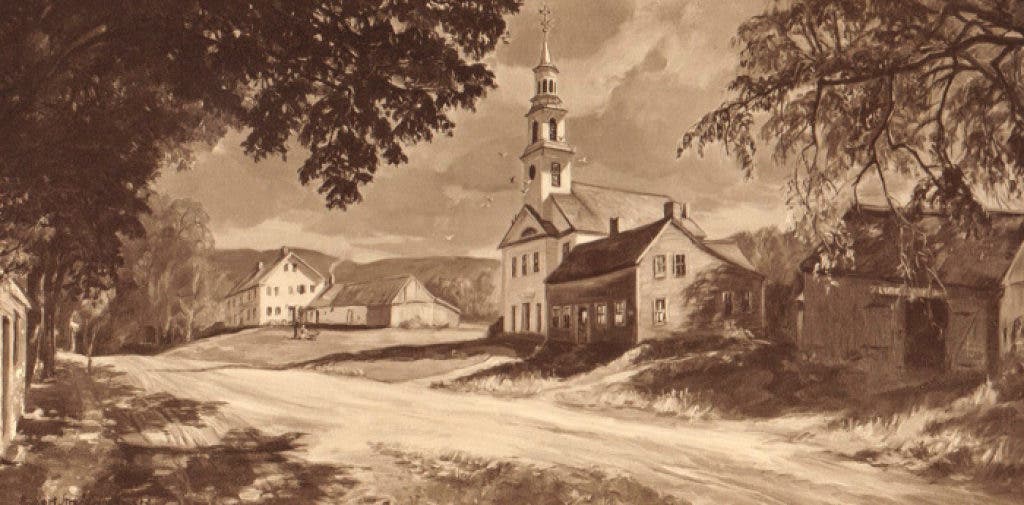
The folks of present-day East Granby first petitioned Simsbury in 1712 to be freed from taxes for two years for several reasons including being remote from meeting and mill.
Their petition was denied.
This group of early residents must have persisted because nine months later, Simsbury reversed its ruling.
Find out what's happening in Granby-East Granbyfor free with the latest updates from Patch.
When their first petition was made they referred to themselves as inhabitants of the north-east part of the township of Simsbury.
When the decision was reversed, the town clerk referred to this area of Simsbury as This would be the name this new settlement would have until it became an over 146 years later.
Find out what's happening in Granby-East Granbyfor free with the latest updates from Patch.
Turkey Hills was the first name for Peak Mountain, which is the north-south mountainous range, east of Holcomb Street, referred to by the early residents as simply the Mountain.
Large flocks of wild turkeys gathered on its slope to the east to feed on nuts in the fall. Eventually land on both sides of the Mountain would fall within the bounds of the Turkey Hills Ecclesiastical Society.
As the number of settlers east of the Mountain grew and began to prosper, a restless spirit grew in hearts of those who lived there. The Simsbury meetinghouse, the sanctuary of their church and the seat of the government, was 9 miles away from some of their homes.
In early New England, horses were scarce and oxcarts were slow, so most families walked to day-long church services and town meetings in every season.
They crossed mountains and streams and followed paths that would one day become Holcomb and Hopmeadow Street. The trip was too arduous to be easily tolerated. This dissatisfaction led the people of Turkey Hills, in due course, to petition to have their own minister and to form their own ecclesiastical society.
Early New England families could not elect to stay home from church. In those days, Connecticut law required every citizen to attend religious services each Sunday and fast day.
Anyone caught neglecting to attend service was brought before a magistrate and fined.
Until the Toleration Act of 1669, people in the Colony of Connecticut were required to attend a Congregational Church whether they were a member or not.
By the time the settlement in Turkey Hills began, people of other religions had increased in number though out the colony and had begun to organize. But until the St. Andrews parish, an Anglican church which was founded in 1740, the Congregational Church was the only option for local townspeople.
Until 1727, by law all Connecticut citizens, whether church members or not, had to pay taxes to support the Congregational Church. All inhabitants of an ecclesiastical society voted on church doctrine. All members participated in setting the local rates or taxes, choosing the minister, fixing his salary and building and maintaining the meetinghouse.
By 1712 the congregation in Simsbury was fast outgrowing its little meetinghouse on Hopmeadow Street.
The decision of whether to add on or build new, where the location should be and other issues could take a decade or more to decide. It was not uncommon for a decision to be made at one meeting and have in rescinded at the next.
So after 13 years of discussions and votes, the townspeople desperately turned to the Connecticut General Assembly. At one point the Assembly suggested that the town of Simsbury be divided into two parts, a north and a south. This idea was summarily rejected by the town as well.
In May of 1729, the Turkey Hills settlers asked to be allowed to hire their own minister who would hold services in various homes. At that time there were 13 families, the minimum number the General Assembly would normally recognize as sufficient to support a new parish.
This small group petitioned the town of Simsbury, explaining that the distance they needed to travel put an undue hardship on both their old and their young. They went on to say that though their numbers were small, they felt they could support a minister and would like to be freed from paying their portion of the minister’s salary in Simsbury.
The town meeting of Simsbury objected to the Turkey Hills request, as it would mean a loss of members and revenue for the existing congregation. Many felt, quite rightly, that gaining the right to hire their own minister would be the first step toward compete independence for Turkey Hills.
In January of 1730, the General Assembly decided to allow Turkey Hills, with its portion of the minister rate, to hire *Mr. Nathaniel Collins, who had been the minister in Enfield.
In 1733, as the discussions regarding the location of a new Simsbury meetinghouse raged on, local residents petitioned the General Assembly to be made a separate ecclesiastical society. Finally the people of Simsbury agreed with this request and stated that both Turkey Hills and Salmon Brook should have the liberty to be distinct ministerial societies or parishes but now the General Assembly was not ready to agree!
Again in 1735 Turkey Hills petitioned the Assembly to form a separate society and asked that it be adopted because: Our young children would be exposed to perishing circumstances; if they go to meeting, their bodies, and if they stay at home, their souls.
Check back next week for the conclusion of this story.
Thanks to Mary Jane Springman and Betty Finnell Guinan for material included in today’s article.
*Collins, Rev. Nathaniel first settled minister of Enfield, began the ministry in 1700, m. Alice Adams, 1701, d. 1756.