Politics & Government
Voters Approve $2 Million for Debris Cleanup
After FEMA reimbursement, the town will spend $500,000 out of the general fund for the late October snowstorm cleanup.


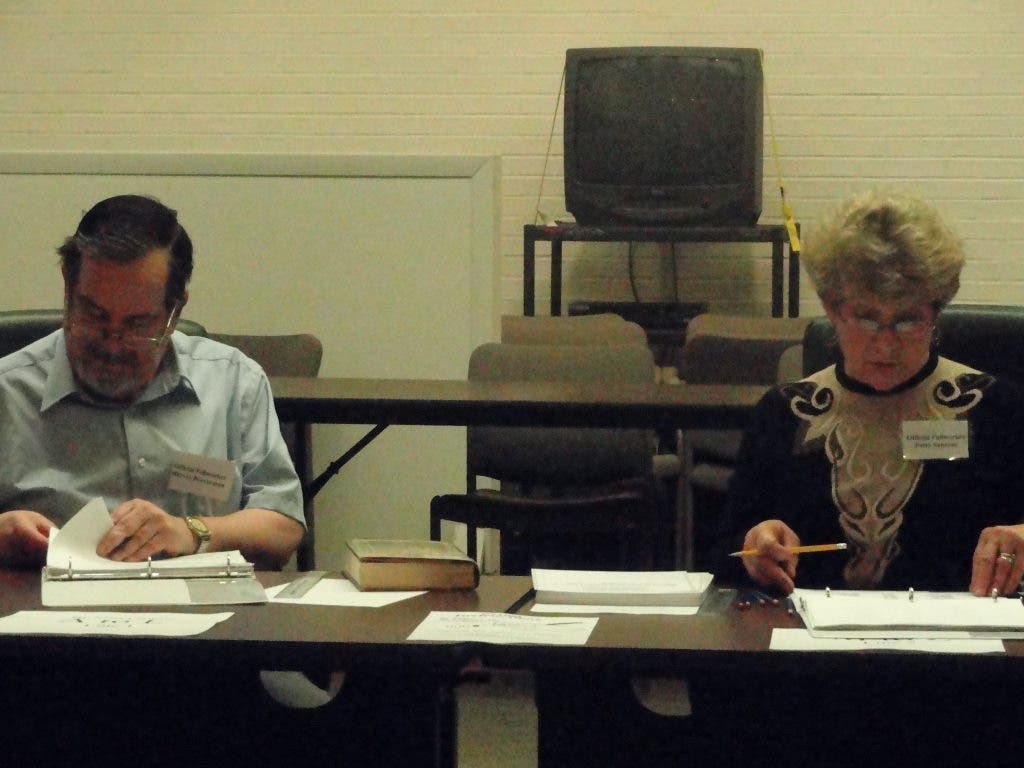
In a referendum marked by low turnout, Granby voters Tuesday overwhelmingly approved a resolution for the expenditure of $2 million for the debris cleanup that followed the late October snowstorm that devastated the local tree population.
Just 116 ballots — or 1.6 percent of the total registered voters — were cast at the Town Hall meeting room, with 105 voting in favor, 10 against and one rejected ballot.
Registrar of Voters Laura Wolfe said that the low turnout was not unexpected, given that the Town Meeting concerning the referendum was held just last week and the proximity of the vote to the holidays.
Nevertheless, town officials were pleased with the outcome of the referendum.
“Obviously we’re happy with the outcome,” First Selectman John Adams said. “Our efforts were certainly necessary and worthwhile to the community.”
The initial cost of the cleanup for about 35,000 cubic yards of material, Town Manager William Smith said at a special Town Meeting on Dec. 19.
Those estimates, which were provided by several contractors on the state-approved list, turned out to be wildly inaccurate, as the town has cleared some 80,000 cubic yards of material in recent weeks, according to Director of Public Works Jamie Klase at the Town Meeting.
After reimbursement from FEMA, the town will be responsible for $500,000 of the $2 million. The town’s portion of the payment will come from the general fund, Adams said.
The Board of Selectmen has been in talks with the Board of Finance to form a plan to replenish the general fund, Adams said.
Ratings agencies prefer to see that a town’s general fund is 5 to 10 percent of overall revenues, according to Adams. Granby is currently in the 7 to 9 percent range, Adams said.
The ratings agencies determine how expensive it is for a town to borrow money through bonding, which is a particularly sensitive issue considering that town voters will be asked to approve for a number of big-ticket capital improvements at a referendum on Jan. 17, 2012.
After reimbursements and grants, the town would have to pay aboyt $8.5 million for those capital improvements that, if approved by voters, would be funded through bonding. The better the town’s bond rating, the lower the interest on the bonds.
“The ratings agencies will look for a plan to replenish the general fund,” said Adams, who added that it could be done over a period of years and not just in one budget cycle.
Get more local news delivered straight to your inbox. Sign up for free Patch newsletters and alerts.