Politics & Government
Malloy: More Spending Cuts Needed as Connecticut Deals with $1.5B Projected Deficit
Malloy in his State of the State address called for more budget cuts, pension agreements and redoing municipal aid.


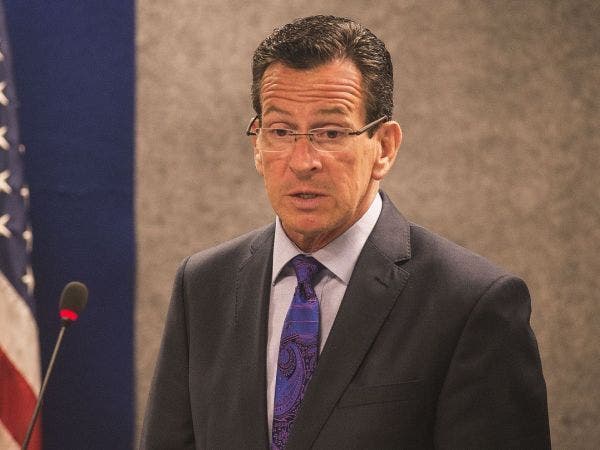
Financial predictability was the big goal Gov. Dannel Malloy highlighted in his annual State of the State address Wednesday as Connecticut’s government looks for ways to plug a projected $1.5 billion budget hole for the next fiscal year.
Malloy highlighted the need for additional budget cuts, ways to make state pensions more affordable and a better system for dispersing municipal aid.
He made the address to a joint session of the State House and Senate. Malloy will deal with a senate evenly split between Republicans and Democrats for the first time in more than 100 years.
Find out what's happening in Greenwichfor free with the latest updates from Patch.
Future Cuts Needed
Malloy highlighted cuts that have already been made, including reducing the size of the executive work branch by 9.5 percent or 5,000 fewer full-time employees since 2008. Management positions have been reduced by 28 percent.
Find out what's happening in Greenwichfor free with the latest updates from Patch.
“While we had to go through the unfortunate, but necessary, process of layoffs last year, the vast majority of these reductions have come through attrition,” he said.
Overtime costs dropped 14.5 percent last year and saved the state $37 million.
“Cuts in specific areas, or outright eliminations, should not be taken to mean that certain work is not valued,” he said. “It simply means that we can no longer afford to do it all, and that our spending must be focused on the very core, essential services for our residents.”
Malloy highlighted some positive economic news from the state, including investments that will help protect 8,000 jobs at Sikorsky.
“Together we’ve protected Connecticut’s aerospace and defense industries for a generation and likely beyond,” he said.
Pension Woes
Malloy blamed much of the state’s pension woes on past administrations that either failed to fund pension accounts at all or at lower levels. The state employee pension system was created 80 years ago but operated as a pay-as-you-go system for its first 30 years.
Only one-third of the money necessary to fund obligations has been set aside, Malloy said.
“Over many decades, legacy costs, insufficient contributions, lower-than-assumed returns, and early retirement packages left us with a significant unfunded liability in the state’s employee and teacher retirement systems,” Malloy said.
About 78 percent of what the state will deposit into the system will make up money that past administrations and legislatures failed to do in previous decades, the governor said.
Malloy said in the weeks ahead his administration will have talks with labor leaders to keep employee costs in line with the state’s new economic reality.
“These talks have been frank and direct so far, and I’m appreciative that state workers are taking part in them,” Malloy said.
Malloy’s administration recently came to an agreement with labor unions that will help avoid a pension “fiscal cliff” that would’ve cost the state between $4 billion and $6 billion per year in the early 2030s.
Pension increases will cost the state another $360 million next year compared to this year.
“It’s very hard, but we must reach an agreement on how to make our pensions and benefits more affordable, as we face these fiscal challenges together,” Malloy said.
Re-Doing Local Town Aid
About $5.1 billion or more than one-fifth of the state budget goes to municipal aid, and of that, 81 percent is for educational funding. That doesn’t include school construction funding.
Malloy said the state should spend a lot of money on education because it’s a down payment on the future. The state falls short when it comes to creating equitable education for students regardless of socioeconomic backgrounds. He pointed to a recent high-profile court decision that called into question how the state dispenses education funds.
“It’s why I have long advocated that we direct our support to those municipalities that are struggling the most — so that we can level the playing field for our students and our taxpayers,” Malloy said.
A formula and more equitable system for dispersing education funds will be proposed in Malloy’s budget proposal next month.
Increased funding for communities that need it will come with some strings attached.
“If the state is going to play a more active role in helping less-affluent communities – in helping higher-taxed communities – part of that role will be holding local political leadership and stakeholders to substantially higher standards and greater accountability than they’ve been held to in the past,” he said.
ConnCan CEO Jennifer Alexander said Malloy acknowledged what many educators, municipal leaders and families in the state already know: that the K-12 public education funding system is unfair.
"We applaud Governor Malloy’s call to 'invest in education as a down payment on our state’s future' by developing a fair, equitable, and predictable funding formula that directs resources to those students with the greatest needs across all types of public schools," Alexander said.
Malloy said he hopes the legislature will work in a bipartisan way to tackle the financial challenges that lay ahead.
“All of it will be geared toward building a more predictable budget and a more sustainable Connecticut economy,” he said.
Image via MTA/Flickr Commons
Get more local news delivered straight to your inbox. Sign up for free Patch newsletters and alerts.