Community Corner
Groton Observes Ramadan
The Islamic Center Of New London Invites Muslims To Celebrate Islam's Holy Month

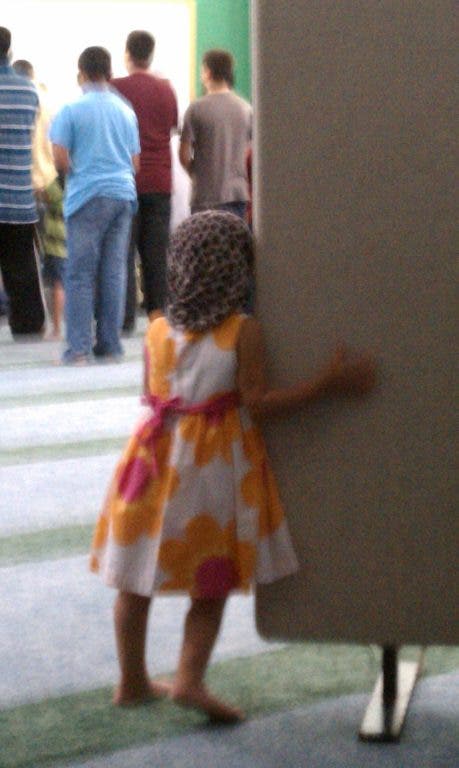


Fatima, like most restless children in a house of worship, fidgeted to the intonations of the prayer ceremony she had attended. Draped in a khimar, a head scarf she pulled about and rearranged, earnest in her participation, Fatima looked around at the fifty or so members of her congregation who had gathered at the Islamic Center of New London to observe the evening rites of Ramadan.
The prayer was scheduled to run beyond two hours that night and repeat the following night. In fact, it would take place every night for the rest of the month.
Ramadan is the ninth and holiest month of the Islamic calendar. Muslims believe it was at this time that the Qur’an was revealed to the prophet Muhammad. During the month, Muslims refrain from eating and drinking daily between dawn and dusk, which is intended to promote spiritual enlightenment, sacrifice, and humility. Other irreligious promiscuities like violence, anger, envy, greed, gossip, sexual intercourse, and profane language are also avoided.
Find out what's happening in Grotonfor free with the latest updates from Patch.
Charity is an important part of the holiday, and Muslims are encouraged to donate 2.5 percent of their earnings or belongings. Reading the Qur’an is another important element of Ramadan. Muslims believe prayer will provide communion with god and additional blessings.
Fatima’s family came to southeastern Connecticut in 1991. Her father, Mahmoud Mansour, is the Imam, or worship leader, at the center.
Find out what's happening in Grotonfor free with the latest updates from Patch.
Mansour came to the United States to work as a biochemist at Pfizer. At the time, the Islamic Center, which was founded in the 1980s, was comprised of a small group of mostly African American men.
Mansour, who was appointed Imam within a few months, grew the congregation. It is now the only Islamic worship center in the region and serves roughly 300 people. Its population represents a variety of countries, including Lebanon, Pakistan, Saudi Arabia, Sri Lanka, and Turkey.
This is a point of distinction for the center, Mansour said, as national customs can, at times, create friction in the practice of Islam.
“Islam does not divide people,” said Mansour. “Islam invites people regardless of race, color, and nationality.”
The center has been well-received in the religious community since its inception, which has served to help navigate the storms of 9/11 without confrontation or negativity.
“I think our goal here really is to be able to serve the community, the local community especially, whether it is Muslim or non-Muslim,” said Mansour. “And our goal has always been to tell the truth and send the message that we have: that people should know about Islam.”
“We believe this religion is not a religion that was sent only the Arabs and it is not a religion that is any different from previous religions,” said Mansour. “It’s a religion where the people are supposed to live a better life [and] where people are supposed to live in peace and harmony.”
This year’s Ramadan, however, has been marked with political unrest in the Middle East. Last Thursday, Secretary of State Hilary Clinton announced that 2,000 deaths have occurred in Syria since uprisings began over the government crackdown on protestors. The trial of former Egyptian president Hosni Mubarak also began last week. Mubarak is charged with the deaths of 800 protestors, corruption, and abuse of power.
Still, Ramadan also takes flight amidst the Arab Spring. Muslims are increasing using technology to redefine and reconnect with the traditions of Ramadan in the 21st century. Twitter and YouTube have made it easier for Muslims to share common practices, while iPad and iPhone applications established new directions in prayer and approaches in communing.
“The way I see it is it is actually a plus,” said Mansour. “People can learn more. Some people who might not have the chance can learn something new or different about the religion.”
The Islamic Center of New London is carving a space for Muslims in southeastern Connecticut. While the availability of food or ceremony is harder to come by than in surrounding states like New Jersey, Rhode Island, or New York, congregates are still rewarded by the intimacy of this unique community.
Fatima folded her legs under her on the ground, as is customary during the prayer. Her solemnity was interrupted by a toddler, who, after ripping off her hijab, offered a half-masticated ring pop. Fatima politely declined.
Get more local news delivered straight to your inbox. Sign up for free Patch newsletters and alerts.


