I like big books, and I cannot lie… Apologies to Sir Mix-a-Lot for sampling his lyrics, but for me it’s more like “baby got books, not back.”(Or maybe both.) Anyway, winter is a great time to read big books, by which I mean books of many pages. If it’s too cold to go outside or you’re snowed in, a really long book can while away those winter hours.
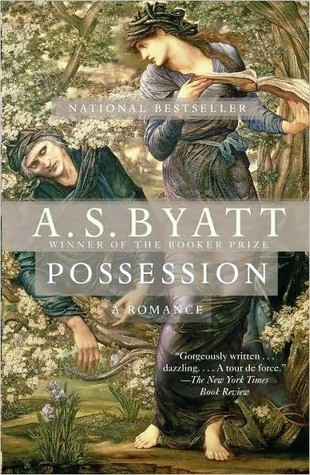
I have read some great big books in the last few years, but one of my all-time favorite big books dates back to 1990 – Possession by A. S. Byatt (only 550 pages). Roland Michell uncovers two letters while doing research in London for his doctoral dissertation on the Victorian poet Randolph Henry Ash. The letters lead him to believe Ash is linked with Christabel LaMotte, another Victorian poet. He meets with Dr. Maud Bailey, a LaMotte scholar, and together they investigate the mysterious connection between the poets. Their collaboration leads to love for Roland and Maud and also to the solution of the mystery of Ash and LaMotte. Possession has it all – a literary mystery, a passionate love affair, Victorian period detail and Byatt’s incredibly skilled writing and plotting.
Historical fiction seems to lend itself to the creation of big books. One of my preferred historical fiction authors is Edward Rutherfurd who writes long historical sagas that focus on one place and several families over a period of centuries. The last books by him I read are The Princes of Ireland (776 pages)and The Rebels of Ireland (a whopping 863 pages), fictional depictions of Irish history through centuries in Dublin. The Princes of Ireland tells the story of several families in Dublin from the sacrifice of Celtic warrior Conall to Druid gods in 430 through Henry VIII's despoliation of Catholic churches and monasteries in 1537, focusing on the passion and upheavals that formed the very soul of Dublin.The Rebels of Ireland picks up where the first book left off, continuing the saga from the sixteenth to twentieth centuries. Rutherfurd traces the history of several Dublin families through the French aggression, the potato famine and the consequent emigration of the Irish to the United States, the renaissance period of Irish literature featuring such literary greats as Yeats and Joyce and the nationalist movement to free Ireland from Great Britain. As always, Rutherfurd manages to entertain the reader with the story line while educating the reader about history, making history personal through the lives of his characters. That is why most of the history I know has been acquired through reading historical fiction.
There are many more big books to take you away from the dreariness of gray winter days. I would be happy to suggest some other titles to those who need suggestions. But what are your favorite big books?
(Right now I am reading a big book – Doctor Sleep by Stephen King. What are you reading?)
Find out what's happening in Grotonfor free with the latest updates from Patch.