Sports
1,401 Fish For The Hammonasset River!
Spring trout stocking starts early, state Department of Energy & Environmental Protection reports. Among the fish stocked this February are over 1,500 trophy-size trout (12 inch and larger fish) including 125 broodstock.


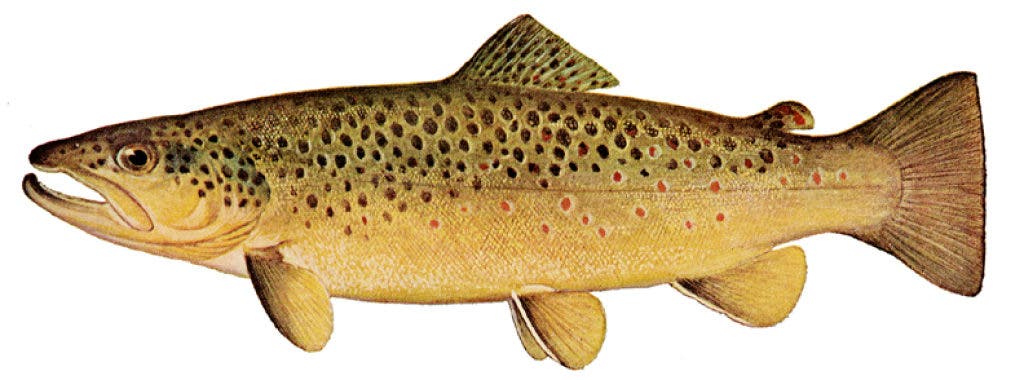

The Hammonasset River, which starts just south of Durham and runs north towards Long Island Sound to Clinton Harbor just east of Hammonasset Beach State Park, is one of several waterways benefiting from an early round of spring trout stocking, the state Department of Energy & Environmental Protection says.
To take advantage of the mild winter conditions, DEEP began the 2012 spring stocking season early this year, releasing more than 12,300 brook, brown and rainbow trout into a number of designated Trout Management Areas (TMA). Among the fish stocked this February are over 1,500 trophy-size trout (12 inch and larger fish) including 125 broodstock. (all these areas are open for catch-and-release fishing during the winter and early spring).
Find out what's happening in Madisonfor free with the latest updates from Patch.
Last week, on Feb. 17, the Salmon River TMA (2,170 fish) and the Yantic River TMA (1,500 fish) in eastern CT were stocked. This week, the Moosup River TMA (800 fish), Hockanum river TMA (1,200 fish), Willimantic River TMA (815 fish) and the Hammonasset river TMA (1,410 fish) in eastern CT and the Naugatuck River TMA (1,450 fish), Sleeping Giant TMA (Mill River-Hamden, 1,050 fish) and the Mianus River TMA (1,160 fish) in western CT were stocked, the DEEP says.
2012 CT ANGLER’S GUIDES - The full print version 2012 CT Angler’s Guide will be published and distributed in late March/early April. An electronic version of the 2012 Guide is available online atwww.ct.gov/deep/fishing (for added convenience “smart phone’ users should see QR codes posted with this story to access the fisheries homepage and the Angler’s Guide).
Find out what's happening in Madisonfor free with the latest updates from Patch.
FISHING SEASONS- Anglers are reminded that the fishing season will close after Wednesday, February 29th, on many rivers and streams and at a number of lakes & ponds. (Please refer to the online 2012 CT Angler’s Guide or the print version 2011 CT Angler’s Guide for complete regulations). All sixteen of the state’s Trout Management Areas remain open year round (and all are catch-and-release fishing during the winter and early spring). Class I Wild Trout Management Areas (WTMA) are also open year-round for catch-and-release fishing,
NEW REGULATIONS- A number of changes to Inland Fisheries regulations have recently become effective. These include:
New regulations for the West Branch Farmington River and Farmington River (Goodwin Dam to Unionville) became effective on January 1, 2012:
§ The existing West Branch Farmington River TMA is expanded approximately 1.4 miles upstream and remains “catch-and-release only” year-round with use of “barbless hooks only.”
§ The rest of the West Branch Farmington River and the Farmington River down to the Route 177 bridge in Unionville will be managed as a “seasonal” TMA, open year-round with a 2 trout/day, 12 inch minimum length from 6 am Opening Day through August 31st and “catch-and-release only” from September 1st to 6 am Opening Day.
Trout Management Lakes - “Trophy Trout Lakes” are renamed as “Trout Management Lakes.” The creel limit during the March first through March-thirty first period at Crystal Lake and Highland Lake is reduced to one fish per day (from five fish).
Closed seasons- Keney Park Pond (Hartford), Lake Wintergreen (Hamden) and Lower Storrs Pumping Station Pond (on Cedar Swamp brook in Mansfield) now have a closed season from midnight on the last day of February to 6:00 a.m. on the third Saturday in April. Lake Winfield (Plymouth) is now open year-round.
Aquatic invasive species - The importation, possession and/or liberation of certain invasive aquatic invertebrates (Chinese mitten crab, New Zealand mud snail, quagga mussel, zebra mussel, Asian clam and rusty crayfish) is now prohibited (with some limited exceptions).
Tips For Better Catch and Release Fishing
Artificial Lures (swimming plugs, surface poppers, jigs, etc.) are often rigged with multiple treble hooks. One disadvantage of these rules is that a fish struggling to escape capture will often hook itself with the remaining treble hooks, leading to additional injury. Anglers should try to use lures with a single hook if possible, or replace treble hooks with steel hooks (not stainless), or reduce the number of treble hooks on the lure.
Bait Fishing is a popular technique. However, the baited hook is often swallowed by the fish so that the hook is deeply imbedded in the stomach ("gut"). To reduce "gut hooking" a fish, anglers should set the hook immediately before the bait can be completely swallowed, or by using a single steel treble hook. When a fish is "gut hooked" the best solution is to cut the line as close to the hook eye as possible. This helps to prevent severe damage to the fish's internal organs, which can occur while trying to remove a hook. If the hook is not stainless steel, it will eventually corrode due to the fish's stomach acids.
Fishing tools used in hook removal can be extremely useful. Tools including needle nose pliers, hemostats, hook degorgers, and wire cutting pliers can be very helpful in reducing hook removal time.
Handling Methods depend on fishing technique used, how the fish is hooked, and size of the fish. Ideally, the fish should not be removed from the water. If fishing from a boat, try to prevent the fish from banging against the side or thrashing around the deck. Improper handling can cause internal injuries, skin abrasions, scale loss, or removal of the protective slime layer that prevents infection. When handling a fish make sure that your hands are wet to reduce slime loss.
To Release the Fish, grasp the tail firmly and place the fish back in the water and slowly move the fish back and forth. This motion will cause water to flow over the gills, restoring oxygen to the blood stream. Recovery time will vary according to size and health of the fish. As a general rule, the longer the fish fights and the higher the water and air temperature, the longer it will take the fish to recover.
Get more local news delivered straight to your inbox. Sign up for free Patch newsletters and alerts.