Neighbor News
When State 'Clean' Energy Policy Goals Silence Local Voices
Connecticut's solar policies sideline municipalities and threaten responsible land-use planning
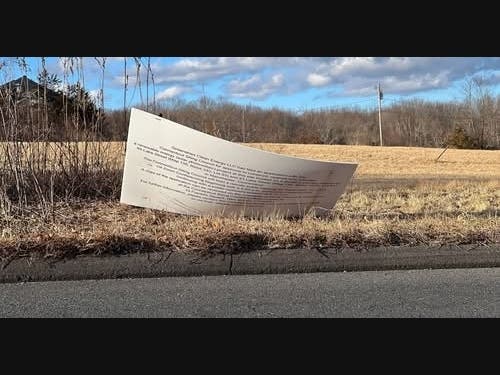

As a resident of Manchester, I find myself once again standing with neighbors who are increasingly concerned about the rapid expansion of industrial-scale solar development in our area. While renewable energy is an important part of Connecticut’s future, the current framework allows large solar projects to advance with limited local input, often at the expense of municipal planning, zoning authority, and community character.
In recent years, Connecticut has centralized decision-making for major energy infrastructure at the state level, leaving towns with little meaningful authority over where and how industrial solar facilities are sited. Municipalities are routinely sidelined, even when projects conflict with local zoning regulations, conservation priorities, or long-term plans of development. This imbalance has created growing frustration among residents who feel their voices no longer matter when state energy goals collide with local realities.
Petition No. 1688, filed by Green Skies Clean Energy LLC to construct a 1.20-megawatt AC solar facility at two properties on Lake Street in Manchester, illustrates this challenge clearly. Let me be clear: I am not opposed to solar energy. However, there is a critical distinction between appropriately scaled renewable projects and industrial solar facilities placed in residential, rural, or agricultural areas. This facility will be designed with 87 strings of 26 modules, for a total of 2,136 modules and 9 150 kW inverters covering 6.3 acres of Rural-Residential zoned land. Responsible renewable energy development must respect the communities in which it is located.
Find out what's happening in Manchesterfor free with the latest updates from Patch.
Recognizing these concerns, state lawmakers introduced HB 6779 and HB 5928 during the 2025 legislative session. HB 6779 sought to give municipalities greater authority to regulate certain nonresidential solar facilities, while HB 5928 would have allowed towns to enact temporary moratoriums on new solar developments after hosting multiple existing facilities. Both bills reflected a growing acknowledgment at the Capitol that local governments need a stronger role in land-use decisions affecting their residents.
Unfortunately, neither bill passed before the close of the 2025 session, and both proposals died without becoming law. Their failure leaves municipalities in the same vulnerable position—unable to meaningfully guide or limit industrial solar development within their borders, regardless of local conditions or cumulative impact.
Find out what's happening in Manchesterfor free with the latest updates from Patch.
Manchester is not alone. Communities such as South Windsor, East Windsor, Enfield, and Bethany are facing similar pressures. Residents are raising legitimate concerns about loss of open space, impacts to farmland and wetlands, declining property values, and public safety risks. Recent solar facility fires in neighboring states and flooding linked to poorly sited projects underscore the importance of careful, site-specific planning rather than blanket approvals.
Local plans like Manchester Next demonstrate that towns are willing to plan responsibly for sustainability and growth. However, these plans carry little weight when state policy overrides local zoning outright. Renewable energy development should be a partnership—one that aligns state climate goals with municipal land-use authority, environmental stewardship, and community input.
This is the heart of the green energy paradox: in the rush to build renewable infrastructure, we risk destroying the very green spaces we claim to protect. Forests, farmland, and wetlands are not expendable simply because a project carries a “clean energy” label.
I urge fellow residents to remain engaged and to contact their state legislators. Ask them to reintroduce and strengthen legislation like HB 6779 and HB 5928 in the next session. Connecticut can pursue renewable energy without silencing municipalities or sacrificing local control. Our towns deserve a seat at the table when decisions of this magnitude are made.
Responsible development, local representation, and environmental protection are not opposing values—they are essential to a sustainable future for Manchester and for Connecticut as a whole.