Neighbor News
The Women’s Marches Impact on Women Across Connecticut
Eight women in Connecticut were asked about how the Women's Marches have changed the way they view themselves and society.

Suzette DeBeatham-Brown, the first West-Indian-American, black female mayor of Bloomfield, said that the Women’s Marches that followed the election of President Donald J. Trump gave women strength.
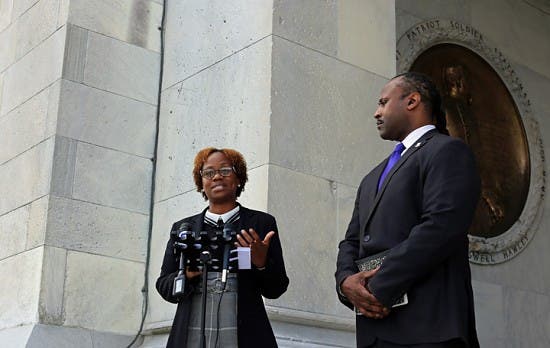
“As women, it’s tough for us to find a voice,” DeBeatham-Brown said. “But collectively, we are a powerhouse. We had women marching and fighting for themselves but also the people around them. It was absolutely amazing to see how many women were present during these marches.”
Find out what's happening in Manchesterfor free with the latest updates from Patch.
DeBeatham-Brown said that she vividly remembers where she was when the first Women’s March following the election of Trump occurred.
“I was watching TV and seeing different areas and women in droves,” DeBeatham-Brown said. “It was so powerful. It was more powerful than the Million Man March. We are all caregivers, birthers, nurturers. It was like a massive movie.”
Find out what's happening in Manchesterfor free with the latest updates from Patch.
Debeatham-Brown said that out of all significant issues related to the marches, equality is the hottest button.
“We are just as good and deserving as our male counterparts,” she said. “We should not be battered. Health care and education are things we are fighting for. Now that we’re looking towards the election, these things matter more now than ever in Connecticut.”
In January of 2017, the first Women’s March on Washington coincided with marches around the world. Thousands of women, children and men gathered to protest against what they felt was the invisibility of human rights occurring in the globe.
Many attended due to their dissatisfaction of the beliefs and political standpoints of the newly elected president.
Some Americans, particularly women, have become more outspoken and taken a stand against the political issues by running for office to fight for change directly. These issues included LGBTQ rights, reproductive rights, worker’s rights, disability rights, immigration reform, health care reform, police brutality, sexual misconduct, environmental protection and racial equality.
The Washington Post said that this year constitutes the largest pool of female congressional candidates in history and the reason why many are running is due to their disappointment about Trump’s election.
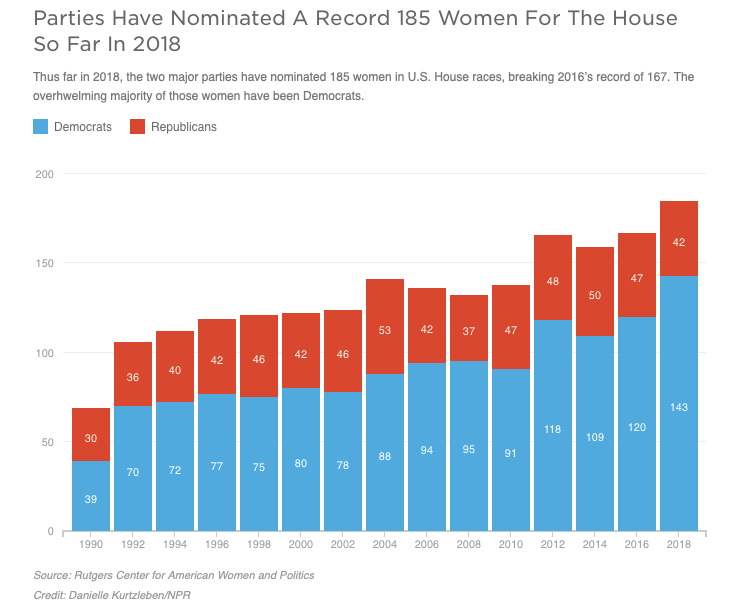
The last time there was a surge of female candidates like this was in 1992, the CT Mirror reported. This year, a total of 13 primary candidates were female.
Brianna Martone, a social studies educator, human rights activist and spoken-word artist from New Haven, said that impact happens when the youth are empowered.
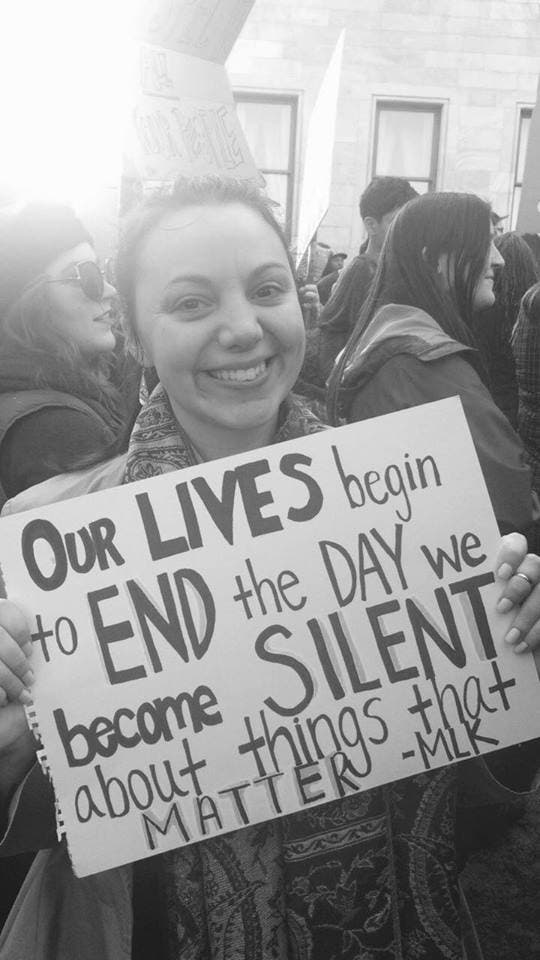
“Identifying largely as an educator, I find that the engagement and empowerment of our youth is necessary in order to see lasting, impactful change,” Martone said. “Education and equipping youth with a language that helps them better understand themselves in relation to the world around them is needed.”
She also said that self-awareness and social and political wisdom around the world begins within the youth.
“Our students are global citizens that are part of a global economy,” Martone said. “As a country, we need to see a shift from individualism to collectivism.”
Zi Yi Huang, a student-worker at the Women’s Center at Eastern Connecticut State University said that what struck her most about the Women’s March was the unity she witnessed.
“It was definitely a confidence-booster for me knowing that there are sisters even my age out there to support one another,” Huang said.
Huang also said she sees the issues as equally important.
“I think it would be much better if the [politicians] can all strive for these goals,” Huang said. “Awareness for all these issues and most importantly getting the right [laws] passed in Congress is what should be focused on at this point.”
Democratic State Senate Mae Flexer of Danielson, who was re-elected on Nov. 6 against Republican David Coderre of Putnam, said that intolerance of sexual misconduct, one of the topics protested in the marches, has become firmer over the years.
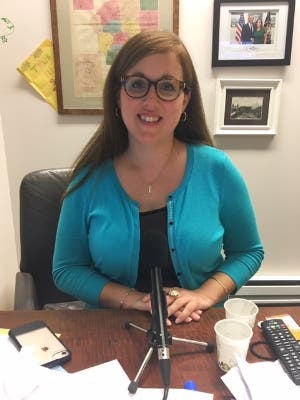
She said she was the first person to speak about Democratic U.S. Representative from Connecticut Elizabeth Esty, who was accused of mishandling a misconduct case involving her chief of staff.
“Five years ago, I called out one of my colleagues in the legislature for behaving inappropriately during a public hearing,” Flexer said. “This past year, I was the first Democrat to call on Congresswomen Esty to resign for the inappropriate way she handled a situation of [sexual] abuse in her office amongst her staff.”
Flexer said the first time was harder for her in speaking out about sexual misconduct, while last year, she received more support for what she did. She said that she received a great deal of backlash from Democrats who told her that as colleagues, they are supposed to stick together.
“I told them that I’m a woman first,” Flexer said, “and this behavior has been going on for far too long and it’s time somebody says something about it.”
Flexer said that now, people react to these situations differently.
“Democrats followed me with calling for Esty’s resignation within hours and I was grateful that so many other people stepped up and I attribute that change to the activism of the Women’s Marches, #MeToo, and Time’s Up movements,” Flexer said.
Flexer said Republicans are not speaking up for anything related to that.
“Republicans are not there,” Flexer said. “It was Democrats that called for the resignation of [Senator] Al Franken. Look at the way they handled the situation with [Supreme Court Justice Brett] Kavanaugh.”
Flexer said that she is witnessing a lack of Republican support on dire issues firsthand in her race against Coderre.
“I’m running against a man who was arrested four times for domestic incidents, including the violation of a restraining order, which is a serious offense,” Flexer said before defeating David Coderre. “He had to go to the Family Violence education program in order to avoid a trial and potential jail time and Republicans are rallying around him.”
Flexer also said that she feels confident that the women who are running for office feel that it is their duty to defend and protect other women.
“These issues are the reason why they chose to run in the Democratic party because it’s the place that embraces these values,” Flexer said.
Jacqueline Kozin, the deputy campaign manager for Lamont, said that Lamont is planning on using his time to tackle issues such as health care and paid medical family leave.
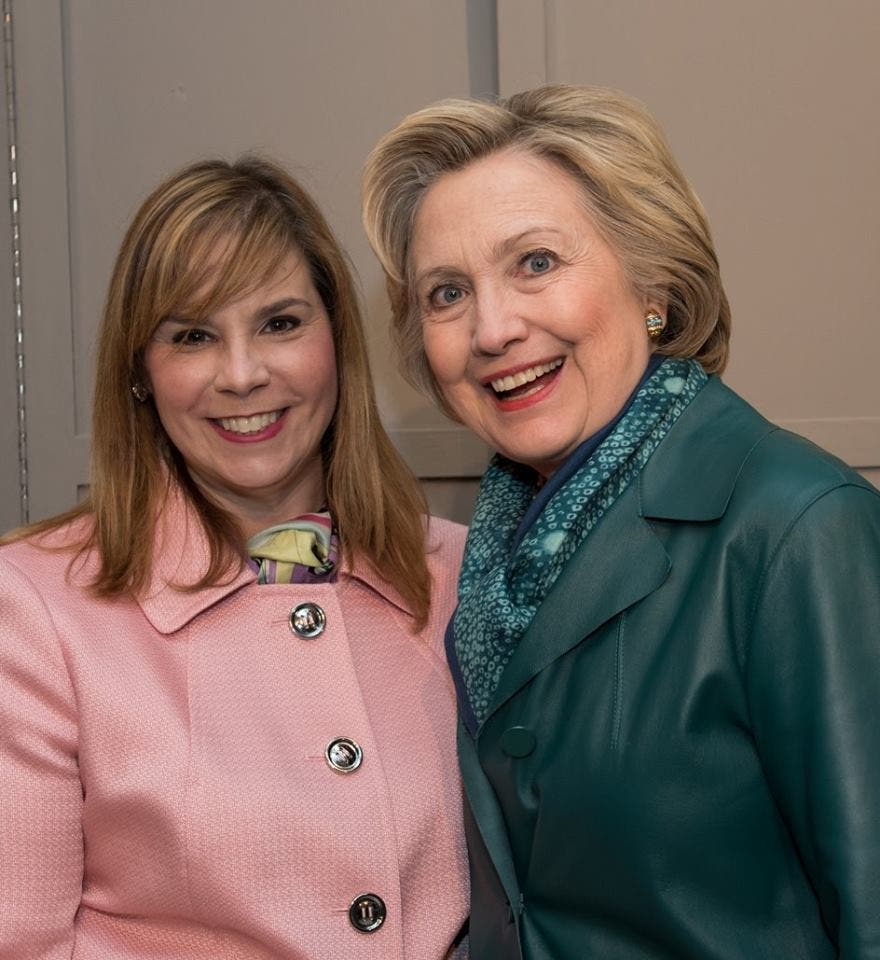
Kozin said that voicing her thoughts in a male-dominated environment made her more confident.
“I’ve noticed that I, and other women on the campaign, are often afraid to give our opinions for fear of being considered opinionated,” she said. “[We] have to stand strong on advising a different position when you know it’s the right decision for the campaign, but not popular among colleagues.”
Kozin said that the Women’s March in 2017 definitely forced politicians to realize that women’s interests are now a movement.
“When women come together, pull their energy and power together, it shifts the direction of policy and politics,” she said. “And with the president we have, it is now more than ever a necessity.”
She also said that political campaigns are her way of installing leaders in elected positions who can make a difference on issues of importance to her.
“I have sacrificed a lot in terms of a personal life, but I think that building a stronger community and creating a government that actually reflects its citizens is on par with having a family,” Kozin said. “I think women are often told by society that they need to create their lives on a certain path, even in today’s “woke” days, but I think there are so many ways to contribute to the world.”
Martone said that it is important for a male candidate who supports women to advocate for opportunities for women.
“We should have the freedom to make decisions regarding our bodies and get paid equally compared to our male counterparts,” Martone said. “In regards to these candidates, it is necessary that they utilize their political platforms and share them with women while providing them the space to speak.”
Maria Sanchez, the owner of Hairmosa Salon in Hartford, said that she is grateful for the rise in both female and male candidates supporting women’s issues, the fight for raising minimum wage and advocating for state wide paid family leave.
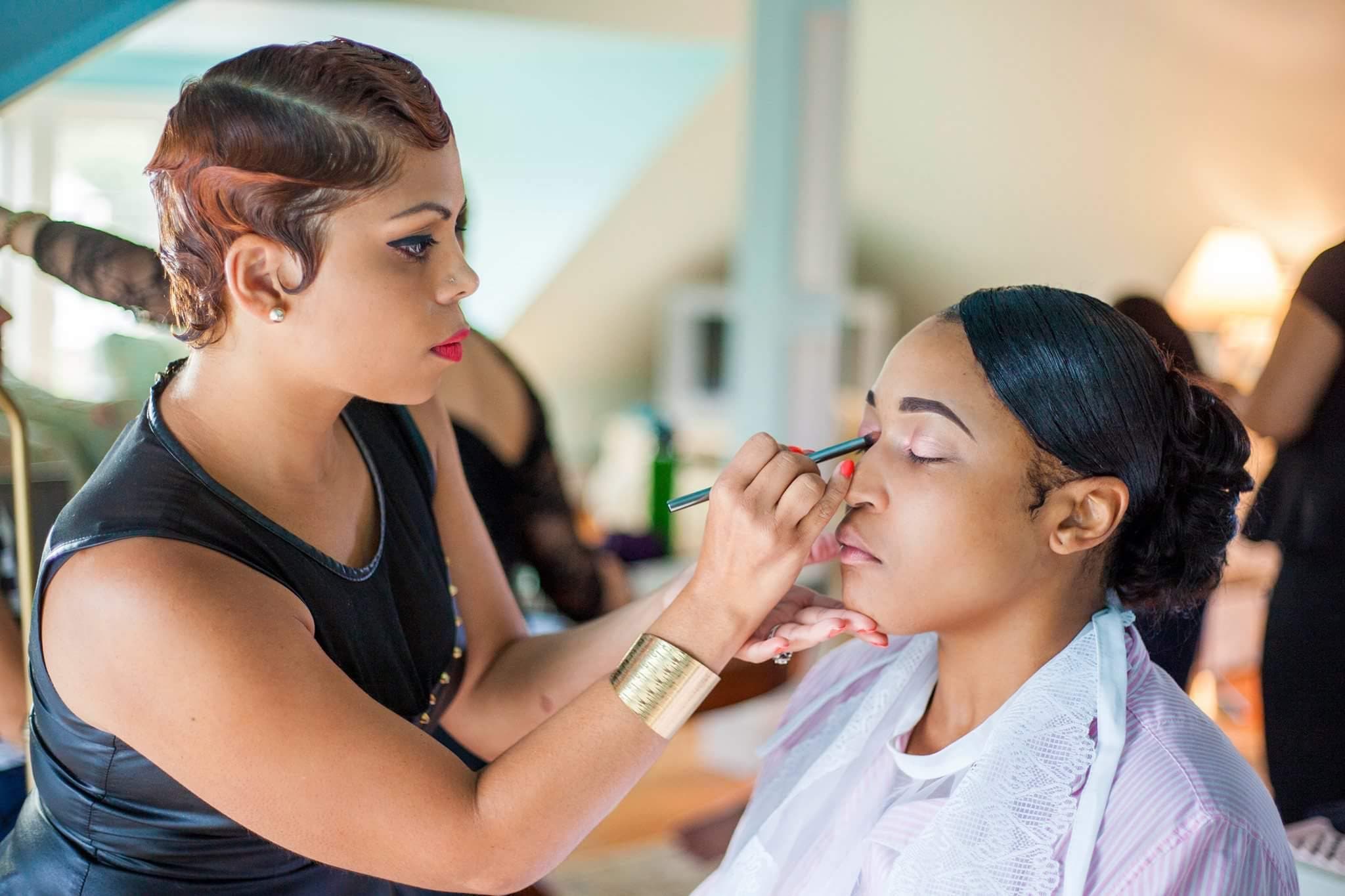
“As a business woman who owns a small business, it takes a lot of sacrifice from my family to make ends meet,” Sanchez said. “Lamont fighting for the rise in minimum wage helps the economy. Everyone wins because I can not only gain more profit as a business owner but be able to help my employees as well.”
Sanchez said that she started her own business because she was frustrated with working for employers who did not value her, paying her low wages.
“I wanted to become a business owner because I wanted to be my own boss so that I can do so much more for my family,” Sanchez said.
Yvonne Renee Davis, an international relations and media expert from Fox 61 in Hartford, said that the current political and social climate is one of the most interesting she has witnessed because of the role media has played.

“Without media, none of this would be out in the open,” Davis said. “In real time, you can be on social media broadcasting as one person to a million people. Nothing is hidden.”
Davis said that the openness of the media has led to the hyper-awareness of issues.
“On the federal level is where you have more women running for office more than ever before, specifically black women,” Davis said.
Megan Delaney, an academic advisor for the College of Liberal Arts and Sciences at the University of Connecticut, said that she has seen a rise in the number of students interested in pursuing Women, Gender and Sexuality Studies following the Women’s Marches.
“Students are funneling their passion for justice and equality into making positive changes,” Delaney said. “On the flip side, I have heard many heartbreaking stories from students who feel marginalized.”
Delaney said that she hopes the surge in female candidates will lead to better representation in government.
“This change is good because those of us who identify as female need strong role models to have our voices heard,” Delaney said. “I hope that the culture will shift in favor of better work and life balance for all, but especially for mothers and caregivers.”
Delaney also said that there is room for improvement in Connecticut.
“I would like to see universal healthcare both in Connecticut and nationally and think that there is much work to be done to solidify rights for the LGBTQ-plus community,” Delaney said. “I expect all current and aspirant politicians to listen to their constituents and respond accordingly.”