Health & Fitness
Let's Talk Turkey-Facts for Food Safety
It is important to be careful when you handle, store, cook, and serve turkey. Follow the rules and the guidelines from UConn Extension.

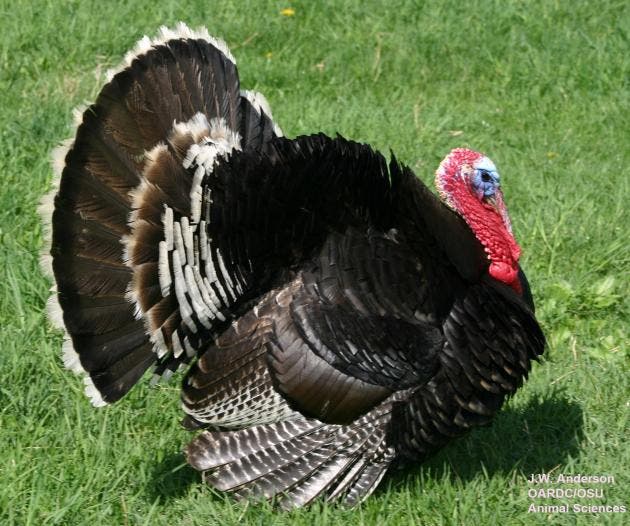
What to do when you get the turkey
Take the turkey home right after you get it.
Put it in the refrigerator or freezer right away.
Find out what's happening in Mansfield-Storrsfor free with the latest updates from Patch.
Keep fresh turkey in the refrigerator, in its original wrappings. First put it on a rimmed cookie sheet or a large pan to keep the juices from dripping into your refrigerator.
If you have a fresh turkey, cook it within 2 days of the “use-by” date on the package. If there is no use-by date, cook it within 2 days from bringing it home. If you do not plan to use the turkey within 2 days of the use-by date, then put it in the freezer until ready to defrost and cook. If you have a frozen turkey, keep it in the freezer until you are ready to defrost it, following guidelines for defrosting (below). A frozen turkey will be safe indefinitely, though quality is best if used within a year.
Find out what's happening in Mansfield-Storrsfor free with the latest updates from Patch.
How to defrost or thaw the turkey
Defrosting turkey takes a long time to defrost. Follow these guidelines to thaw your turkey.
Never thaw turkey at room temperature!
The outside will warm up and defrost before the inside. Bacteria will grow and spread. There are three safe ways to thaw a turkey.
1. In the refrigerator
Place the frozen turkey in a pan with sides, or a large rimmed plate or bowl so that the drippings will not get onto other foods. Place the turkey on a shelf below fresh fruits or vegetables or cooked food.
It takes about 24 hours for every 5 pounds of turkey to defrost in the refrigerator. How long will your turkey take to thaw?
Refrigerator Thawing Times
4 to 12 pounds.......................1 to 3 days
12 to 16 pounds.....................3 to 4 days
16 to 20 pounds.....................4 to 5 days
20 to 24 pounds.....................5 to 6 days
A thawed turkey can remain in the refrigerator for 1 or 2 days before cooking. Foods thawed in the refrigerator can be refrozen without cooking but there may be some loss of quality.
2. In cold water
Be sure your sink is clean. Make sure the turkey is in a leak-proof package or plastic bag. Fill your sink, or a large pan, with cold water-- enough to cover the turkey. Place the turkey in the water. Change the water every half-hour until the turkey is thawed. A turkey thawed in cold water should be cooked right away, as soon as it is thawed.
Cold Water Thawing Times
4 to 12 pounds....................... 2 to 6 hours
12 to 16 pounds..................... 6 to 8 hours
16 to 20 pounds..................... 8 to 10 hours
20 to 24 pounds.....................10 to 12 hours
3. In the microwave oven
Follow the instructions from your microwave oven owner’s manual when defrosting a turkey. If using a microwave, plan to cook it immediately after thawing.
Some areas of the turkey may be warm and start to cook during microwaving. The warm
temperatures are perfect for bacteria to grow.
When the turkey is completely thawed, it is ready to prepare for cooking.
How to get the turkey ready to cook
Remove the neck and giblets from inside the fresh or defrosted turkey. If they are in a bag, take them out of the bag. Place them in a pan with water and cook on medium high heat for about 20 minutes. Use the cooked giblets in stuffing or gravy. Refrigerate the neck bone to use for soup.
Remove the turkey from the wrappings and drain well. (It is no longer recommended to wash the turkey. Washing increases the risk of cross-contamination when the water splashes on counters and other surfaces. Cooking will destroy any bacteria on the turkey.)
Place turkey, breast-side up, on a flat wire rack in a roasting pan, about 2 or 3 inches deep. Make sure the oven rack is set so the turkey will fit in the oven.
Wash your hands, sink, counter, plate, cutting board, and anything else that has touched the raw turkey or has turkey juice on it. Use HOT water and soap.
Bacteria from the raw turkey could get onto the cooked turkey or other foods.
This is a main cause of foodborne illness, so keep everything CLEAN!
Stuffing
While stuffing cooked separately may be easier to cook safely, you may prefer stuffing your turkey. If stuffing a turkey, it’s essential to use a food thermometer to make sure the center of the stuffing reaches a safe minimum internal temperature of 165 °F. Mix the stuffing just before you are ready to use it. The stuffing should be moist, not dry, because heat destroys bacteria more rapidly in a moist environment.
Spoon the stuffing loosely inside the turkey. A stuffed turkey takes longer to cook. Stuff the turkey just before you put it in the oven.
Do not stuff turkeys to be grilled, smoked, fried, or microwaved and NEVER stuff the turkey the day before you roast it!
Seasoning
Sprinkle herbs on the turkey to give it more flavor. Use sage, thyme, or parsley; garlic powder or ground pepper.
Roasting
Set the oven temperature to 325 degrees F. (not lower!) You do not need to pre-heat the oven.
Place the turkey on a rack in a roasting pan. Add 1/2 cup water or chicken broth to the bottom of the pan if you wish.
To help keep the turkey moist, cover the turkey with an aluminum foil tent. Tear off a sheet of aluminum foil big enough to cover the turkey breast. Fold the foil in half the long way to make a tent shape. Loosely place it over the turkey.
Keep it on the turkey for the first 1 to 3 hours. Remove it in time to let the turkey skin brown. Place the turkey in the oven and roast at 325 degrees F., never any lower temperature, for the recommended time.
Never cook the turkey only part way, thinking you will finish cooking it the next day.
Approximate cooking times for turkey Unstuffed
4 to 6 pound breast .................1½ to 2½ hours
6 to 8 pound breast .................2½ to 3½ hours
8 to 12 pounds.........................2¾ to 3 hours
12 to 14 pounds.......................3 to 3¾ hours
14 to 18 pounds...................... 3¾ to 4¼ hours
18 to 20 pounds.......................4¼ to 4½ hours
20 to 24 pounds ......................4½ to 5 hours
Stuffed
8 to 12 pounds.........................3 to 3½ hours
12 to 14 pounds.......................3½ to 4 hours
14 to 18 pounds.......................4 to 4¼ hours
18 to 20 pounds.......................4¼ to 4½ hours
20 to 24 pounds.......................4½ to 5¼ hours
How to know when the turkey is done
The roasting times are a basic guide to for how long to cook a turkey. Some turkeys have a popup timer, so make sure it pops up before taking the turkey out of the oven. But the only way to know for sure if the turkey is done is to use a meat thermometer. The temperature must reach 180 degrees F. in the innermost part of the thigh of a whole turkey (and 165 degrees F. in the center of the stuffing inside the turkey) before it is done. Cook a turkey breast to 170 degrees F. If you don’t have a meat thermometer, cook the turkey for at least the recommended time. Use a long-tined fork or a sharp knife to stick into the thickest part of the inner thigh, and make sure the turkey juices always run clear with no pink color.
When the turkey is done, take it out of the oven carefully. Let it stand for 15 to 20 minutes before carving. This makes it easier to carve.
Serving
Serve the turkey within an hour after cooking. Remove the stuffing from the turkey right away and place in a clean bowl or dish. Keep warm (at least 140 degrees F) until ready to serve.
Use a sharp knife to carve the turkey, and place turkey slices on a clean plate or platter.
Do not let the turkey stay at room
temperature for more than 2 hours.
After dinner, carve the meat from the rest of the turkey. Wrap thin layers of meat (less than 2 inches thick) in aluminum foil or plastic wrap, or store in plastic containers or bags. Place in the refrigerator. Put the turkey bones in a plastic bag or covered container and keep in the refrigerator to make turkey soup the next day.
Storing leftovers
Cooked turkey keeps for 3 to 4 days in the refrigerator. Stuffing and gravy keep for 1 to 2 days in the refrigerator. Other cooked foods from dinner keep 3 to 4 days. Freeze whatever you will not use up within the recommended time limits.
Frozen turkey, plain, will keep 4 months at 0 degrees F. or below. Turkey covered with broth or gravy will keep 6 months, stuffing and gravy will keep about 1 month. The food will be safe for a longer time, but may become dry or lose flavor and quality.
Use leftover turkey, gravy, and stuffing to make sandwiches, casseroles, soups, and salads. Heat leftovers to in internal temperature of at least 165 degrees F. Reheat gravy to a rolling boil.
Ideas for Leftover Turkey
· Stir fry pieces of cooked turkey with sliced onion, green pepper, and broccoli. Add 1/4 cup water and 1 Tablespoon soy sauce. Heat and serve over rice.
· Wrap sliced turkey, cheese, lettuce and tomato in a flour tortilla for a turkey wrap sandwich.
· Mix chunks of cooked turkey with drained, canned black beans, . cup sweet corn, 1 cup chopped raw vegetables, and favorite Italian dressing. Serve on lettuce, or mix with cooked, cold macaroni or rice for a tasty salad.
· Sauté onion, sweet pepper, and mushrooms if you like, in a small amount of vegetable oil. Add a can or jar your favorite spaghetti sauce. Stir in pieces of turkey. Heat and serve over cooked pasta. Top with grated cheese.
· Sauté onion, garlic and peppers in small amount of oil. Stir in 1 teaspoon each of ground cumin, oregano, and chili powder, and a pinch of hot pepper. Add drained, canned white beans, turkey pieces, and enough chicken or turkey broth to cover. Bring to a boil, lower heat and cook for 1 hour. Just before serving, stir in some grated Monterey Jack or cheddar cheese. Heat until cheese melts.
For more information, visit the UConn Extension Food Safety Website.