Schools
Rare, Smelly, Twin 'Corpse Flower' To Bloom At Eastern 'Any Day Now'
A rare plant that smells like, well, crap, is ready to put in a show at Eastern Connecticut State University.


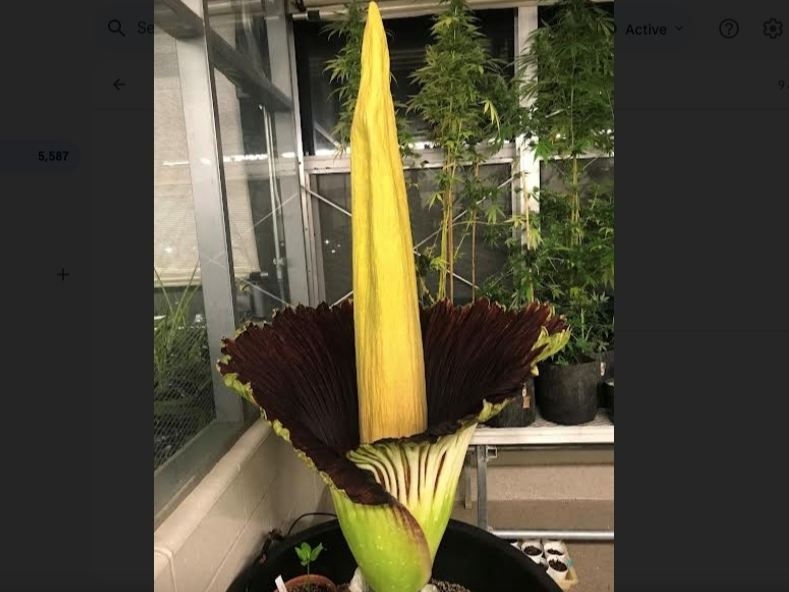
WILLIMANTIC, CT — An unusual double-stemmed "corpse flower" at Eastern Connecticut State University is ready to bloom "any day now" in the University's greenhouse in the David G. Carter Science Building.
The massive, putrid-smelling plant may bloom as soon as Friday, according botanist and biology Professor Bryan Connolly, and it will last last just a few days before "dying away until its next bloom in several years."
Members of the public can monitor the bloom through a live feed on the University's YouTube channel: https://www.youtube.com/live/-rVsBAdG8U4?si=Y87IJEL9Z1sS8ELW
Find out what's happening in Mansfield-Storrsfor free with the latest updates from Patch.
Amorphophallus titanium, popularly known as the "corpse flower," is native to the Indonesian island of Sumatra, Eastern officials said. It is the world's largest unbranched inflorescence — a group of flowers arranged on a stem-reaching heights up to 12 feet tall. According to Connolly, the plant wreaks of feces and rotting fish to attract pollinators that normally feed and lay eggs on dead animals.
A corpse flower's first bloom may take up to 10 years and last just three days. Under ideal conditions, subsequent blooms may occur ever second or third year. Corpse flowers are rare in their native jungle environment; therefore the flowers' powerful odor is necessary to facilitate cross pollination between plants that may be miles apart.
Find out what's happening in Mansfield-Storrsfor free with the latest updates from Patch.
Eastern's greenhouse contains two genetic individuals and several clones of corpse flower. Rare as they are, Connolly said the coming double bloom is particularly unusual and may be twice the stench.
Get more local news delivered straight to your inbox. Sign up for free Patch newsletters and alerts.