Schools
UConn President Pledges To Work Toward 'Carbon Neutrality' By 2030
The announcement was made in a recent letter.


STORRS, CT — University of Connecticut officials Tuesday pledged to work toward achieving carbon neutrality on campus by 2030.
UConn President Radenka Maric, an internationally known expert in clean energy research, announced the carbon-neutral plan in a letter to the UConn community. Specifics on the vision, goals, and targets for various initiatives will be outlined in a comprehensive Sustainability Action Plan to be released in the spring, officials said.
UConn has the "institutional commitment, student support, research expertise, academic strength and industry partnerships" to achieve the goal, and to compete for state and federal funding to develop and demonstrate the technologies, Maric said.
Find out what's happening in Mansfield-Storrsfor free with the latest updates from Patch.
A major part of the carbon-neutrality movement will include how UConn provides energy to its on-campus facilities in Storrs. The majority of its energy is generated by the natural gas-powered Cogeneration Plant, which went online in 2006 to replace older, carbon-intensive oil-fired burners.
Through cogeneration, more than 80 percent of the fuel energy can be harnessed, compared to 33 percent from a conventional electric power plant, she said.
Find out what's happening in Mansfield-Storrsfor free with the latest updates from Patch.
Maric said the UConn Facilities Operations Department has been incorporating sustainability and conservation measures into its projects for several years, and its leaders are working on ideas to "continue that progress with new and emerging technologies."
Progress is already being made, she said. Though UConn has grown 44 percent in terms of its in on-campus square footage since 2000 due to new and expanded buildings, the Storrs campus has reduced its greenhouse gas emissions by 25 percent from the baseline amounts 20-plus years ago, Maric said.
The Depot Campus is also powered by a HyAxiom fuel cell that provides 100 percent of the power required for the campus, plus heating for the Center for Clean Energy Engineering research laboratories, she said.
UConn also has received LEED Gold status from the U.S. Green Building Council on five construction projects, plus several others with silver certifications, since adopting a policy in 2007 for sustainable methods in all major projects. LEED-certified buildings are designed with methods to conserve energy and water, cut down on waste sent to landfills, reduce harmful greenhouse gas emissions, reduce operating costs, and ensure a healthy environment for occupants.
Michael Jednak, UConn’s associate vice president for facilities operations, told trustees at a recent meeting that the university is also "reinvesting renewable energy credit payments back into sustainability measures on campus." UConn receives about $2.5 million in those payments annually and, because it invests that money back into green efforts, it also gets an enhanced Eversource Energy conservation rebate of about $2.5 million annually.
The combined $5 million then goes back into "conservation," like switching to LED lighting that uses up to 90 percent less energy and can last up to 25 percent longer than incandescent bulbs, he said.
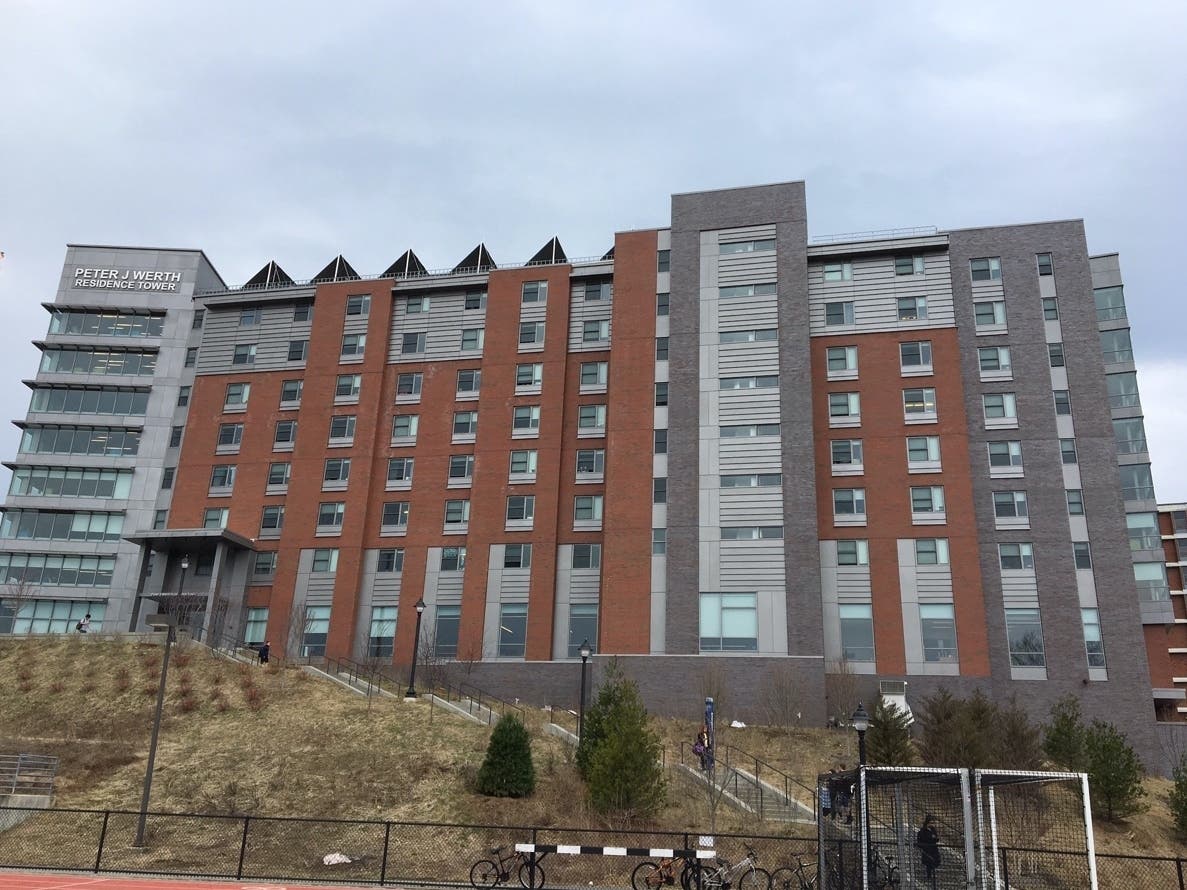
Sustainability efforts also are in place throughout many parts of campus, covering a wide range of operations and facilities from water reclamation to locally sourcing much of the food served in dining halls and other establishments, he said. For example, UConn Dining Services diverts most of its food waste for renewable biofuel energy and compost. UConn also installs sustainable building features wherever possible, such as the "green" plant-covered roofs on several buildings and the solar energy array at the Peter J. Werth Residence Tower — which has "avoided" more than 241,000 pounds of CO2 since 2017, he said.
UConn is now offering a wide range of majors directly or partially related to sustainability and the environment along with two dozen graduate and post-graduate programs, Maric said.
Get more local news delivered straight to your inbox. Sign up for free Patch newsletters and alerts.