Health & Fitness
Learning about Songbirds and Falcons at the QRWA
Our 2012 Speaker Series, provides an opportunity to learn about different animals and environments in the informal, relaxed atmosphere of our new classroom.
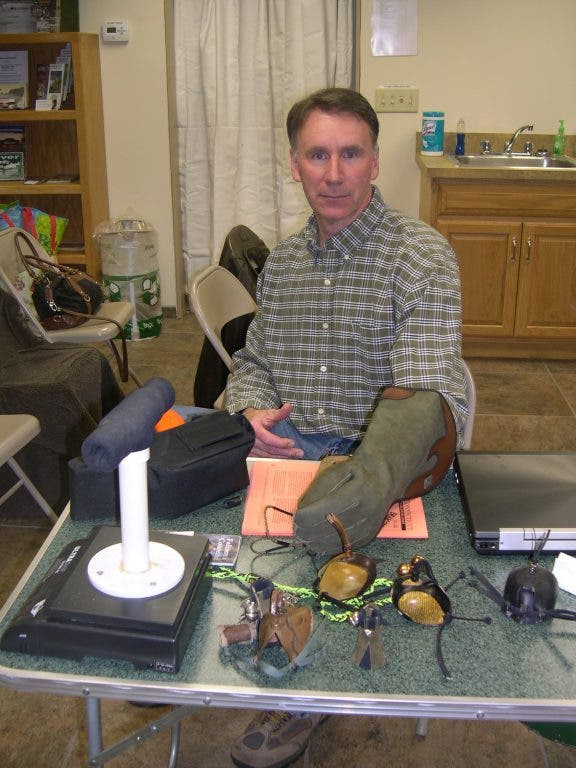

The QRWA's first two programs as a part of its 2012 speaker series have provided a great opportunity to learn about different animals and environments in the informal, relaxed atmosphere of our new classroom.
Our inaugural speaker was QRWA’s own Peter Picone, a wildlife biologist, with a presentation entitled, “Enhancing Habitat for Songbirds Using Native Plants,” on Tuesday, January 10.
Peter delighted the packed audience with the wisdom of his experience, sharing information about numerous creatures and their environments. He addressed how we all are our own ‘habitat managers’, caretakers of space that can be enhance to encourage nature to renew and thrive, regardless of the size. He gave us insight to the habits of various creatures from birds to insects to animals, what they do and don’t do, depending on the season.
Find out what's happening in Meridenfor free with the latest updates from Patch.
Every action has its consequences, both positive and negative, and this is especially true in nature. Wildlife, Peter explained, chooses to adapt, leave or die, when their habitats are threatened. Science is always uncovering examples of how nature has adapted to changes in the environment, finding evidence of movement of species and sadly, documented the demise of numerous creatures.
Rather he stressed the importance of having a variety of plants, flowers bushes, tress and grasses, all of which allows for a diversity of creatures who will be attracted to the different species as well as minimizing the impact on any one species.
Find out what's happening in Meridenfor free with the latest updates from Patch.
All creatures needs some form of water, food, shelter and space. This balance is constantly being readjusted as these components are always changing due to changes in the environment. Be an observer of nature to determining when this is happening and perhaps you can become a ‘citizen scientist’ and document the change in progress.
We all have the ability to create our own little special place of nature. It could be as simple as planting more native plants, creating a hummingbird garden or leaving a buffer zone near the water.
On Tuesday, February 7, Jon D’Arpino spoke about Falconry in Connecticut. Jon is a general class Connecticut falconer since 2005. He is a member of the Connecticut Falconers Association, the North American Falconers Association and is an active member of the DEEP’s Conservation Advisory Committee.
Jon explained the intricate process of becoming a falconer in CT. In order to be a falconer you need to obtain a CT small game hunting license, participate in a 2-year apprenticeship, pass a written exam, build a mews or hawk house, have the mews inspected and approved, get permission of the local zoning board, obtain both state and federal permits as well as import and capture permits from the CT DEEP. That could possibly explain why there are so few – only 14 – falconers in CT.
And clearly the falconers are dedicated to the sport of falconry and the unique relationship with their birds. Jon is able to capture birds, like the Red-tailed hawk, and trains, houses, care for and hunts with the bird and then can release the bird back into the wild after the end of the season. At any time the bird is free and may or may not choose to come back to Jon, but there is no guarantee.
In CT there are four types of birds that can be used for falconry: Red-tailed hawk, Harris hawk, (which is not native to CT) prairie falcon and the Merlin, a small falcon. The males are smaller, usually 2/3 the size of the female and usually nest on cliffs and ledges.
Falconry is a very, very old sport, dating back over 2,000 years, with the Medieval Age considered the golden age of falconry, with royalty embracing the sport. Falcons and other raptor birds are just doing what they normally do, hunting for food, but with human assistance.
Like the eagles, hawks and other birds were threatened when the insecticide DDT was widely used, which caused their eggshells to be fragile and crack. Many species were almost wiped out. Conservationists and falconers brought the sport and the birds back to life.
Falconers are dedicated to their birds, providing them with a safe home, regular food and health care before releasing them into the wild. It is truly for the love of the sport, nature and the birds.
For more information on falconry, please visit the CT Falconry Association at www.ctfalconers.com and the North American Falconers Association at www.n-a-f-a.com.
Monthly Speaker Series events are usually offered on the second Tuesday of each month, from 7 – 9 pm at the QRWA headquarters, 540 Oregon Road.
The talks are funded by a Connecticut Light & Power and Yankee Gas Services $2,500 Community Investment grant. These monthly talks cover a wide variety of topics, from animals to the environment, with a CT focus and a constant theme of water being critical to life and the wildlife within the watershed.
Please refer to our website, www.qrwa.org for specific event details.