Community Corner
Council Greenlights City's Purchase of Two Downtown Properties
City will purchase two South Colony Street properties – including the Church and Morse building – for flood control.

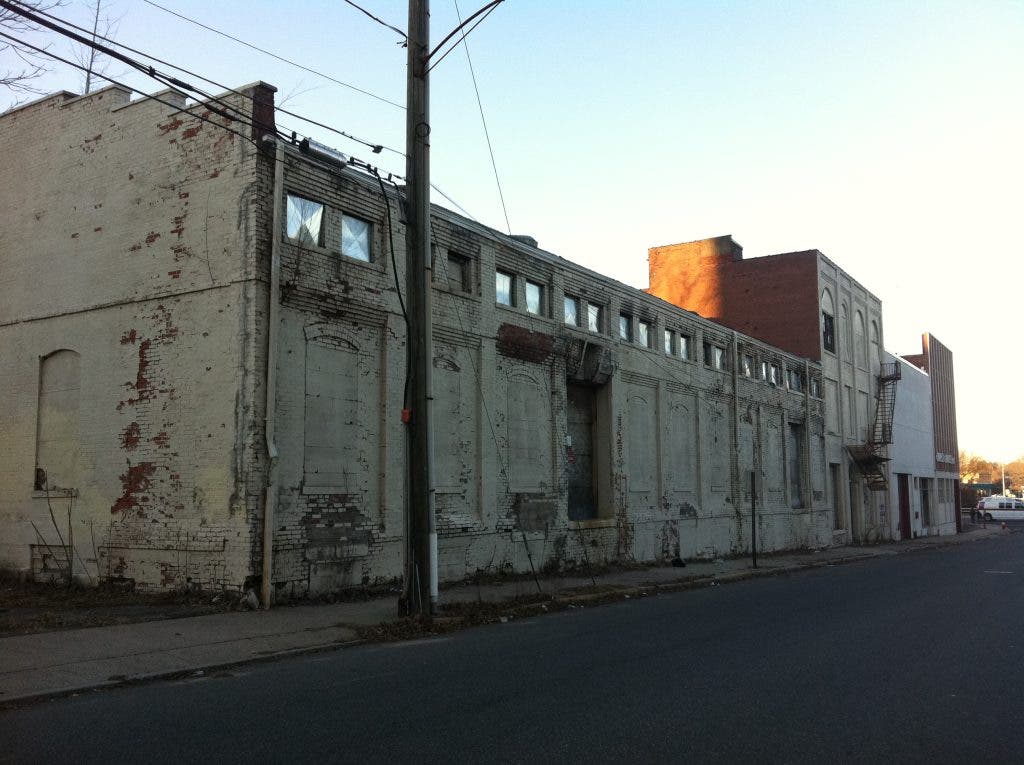

After a second spin through the Finance Committee, and a close, party-line vote, the Meriden City Council gave the final OK for the city to for flood control purposes at its meeting Monday night.
The city can now proceed with its plans to buy the Church and Morse Building at 31-33 South Colony St., for an already negotiated $175,000, and as well as a building at 51 and 53 South Colony St. owned by Alfred Liseo for $130,000.
Find out what's happening in Meridenfor free with the latest updates from Patch.
Though they unanimously approved the resolution to purchase the Church and Morse land, the Liseo property gave the council's four conservative members pause – with Walter Shamock (W), Bob Williams (W), Dan Brunet (R) and Kevin Scarpati (R) voting against the resolution after Shamock balked at the purchase price of the property.
"Mr. Liseo purchased the property in 1999 for $50,000...he did absolutely nothing to increase the value of that property but load it with debris top to bottom. Now we're paying $130,000 – a profit of $80,000." Shamock said. "As a real estate broker this deal is beyond comprehension for me. There isn't anybody out there in the private sector that would buy that building for $130,000."
Find out what's happening in Meridenfor free with the latest updates from Patch.
Shamock suggested the city foreclose on the property due to back taxes Liseo owes on the South Colony building and two other Meriden properties. All together, Liseo will owe the city about $60,000 when the building is purchased, which officals say will be taken out of Lieso's payment for the building and directly returned to the city.
City Manager Lawrence Kendzior said that the city had three appraisals done on the property and the agreed-upon price of $130,000 was the lowest assessment. He said foreclosure would likely not cost the city any less – and might not be possible. He laid out the two ways a municipality could forclose on property in the state.
The first is "strict foreclosure" in which a court awards the party owed money the title to a property. But the roughly $15,000 Liseo owes on his $130,000 property would not be enough to merit awarding the land to the city, Kendzior said.
"There is no way that any court is going to order the property to be conveyed to us by strict foreclosure when the value of the property so exceeds the value of the debt on the property," Kendzior said.
The second is foreclosure by sale, in which an auction is held on the property, and the highest bidder wins the land. If the city is not the highest bidder, Kendzior said, then the city has to contend with the new owner for land it deems vital to halting downtown flooding. Or if bids come in too much lower than the appraised property value the original owner can ask to negate the sale and have other auctions.
"We're not going to do better than the lowest of the three appraisals that our (own) appraisers have established...," Kendzior said. "Whether it's done by foreclosure or done by eminent domain - you get the same result."
The council voted 5-4 in favor of the purchase.
The city plans to raze the buildings and uncover Harbor Brook, which runs underneath the properties, and to back up at a nearby railroad bridge in heavy rains. The backup floods the city center, according to staff.
"One of biggest obstacles (to flood control) from day one has been that railroad bridge," Mayor Michael Rohde said. "(This is) absolutely critical to our flood control program, and flood control is critical to downtown redevelopment."
Get more local news delivered straight to your inbox. Sign up for free Patch newsletters and alerts.