
 Israel Putnam (January 7, 1718 – May 29, 1790) was an American army general officer and Freemason, popularly known as Old Put, who fought with distinction at the Battle of Bunker Hill (1775) during the American Revolutionary War (1775–1783). His reckless courage and fighting spirit became known far beyond Connecticut's borders through the circulation of folk legends in the American colonies and states celebrating his exploits.
In 1740, at the age of 22, is when the young Putnam moved to Connecticut. He lived in Mortlake (Now Pomfret in northeastern Connecticut), where land was cheaper and easier for young men to buy. According to oral tradition, in 1743 Putnam killed the last wolf in Connecticut with the help of a group of farmers from Mortlake seeking to safeguard their sheep. The tradition describes Putnam crawling into a den with a torch, a musket, and his feet secured with rope, in order to be quickly pulled out. While in the den, he allegedly killed the she-wolf.
Find out what's happening in Meridenfor free with the latest updates from Patch.
A section of the Mashamoquet Brook State Park including the 'den' in modern-day Pomfret Ct, is named "Wolf Den". The name "Wolf Den Road" in adjacent Brooklyn, Connecticut also attests to the days of wolves.
Putnam took part in the French and Indian War as a member of Rogers' Rangers, and later led a similar company of rangers from Connecticut. He was promoted to captain in 1756 and to major in 1758.
Find out what's happening in Meridenfor free with the latest updates from Patch.
Following the Seven Years' War, in 1765 he returned to Brooklyn, Connecticut to settle. Putnam publicly professed his Christian faith and joined the Congregational Church in his town. Putnam was among those who objected to British taxation policies. For instance, around the time of the Stamp Act crisis in 1766, he was elected to the Connecticut General Assembly and was one of the founders of the state's chapter of the Sons of Liberty. In the fall of 1765, Putnam threatened Thomas Fitch, the popularly elected Connecticut Governor, over this issue. He said that Fitch's house "will be leveled with the dust in five minutes" if Fitch did not turn over the stamp tax paper to the Sons of Liberty.
By the eve of the Revolution, Putnam had become a relatively prosperous farmer and tavern keeper, with more than a local reputation for his previous exploits. On April 20, 1775, when Putnam received news of the Battles of Lexington and Concord that started the war the day before, he left his plow in the field and rode 100 miles in eight hours, reaching Cambridge the next day and offering his services to the patriot cause. Putnam was named major general, making him second in rank to General Artemas Ward in the Army of Observation, which preceded the founding of the Continental Army.
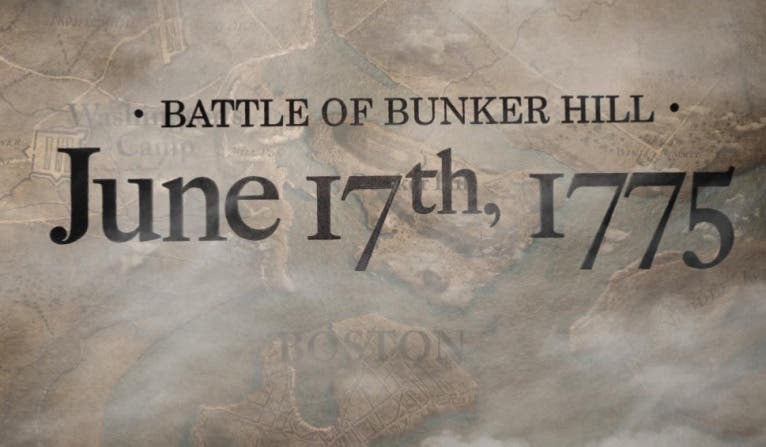
He was one of the primary figures at the Battle of Bunker Hill, both in its planning and on the battlefield. During that battle, Putnam may have ordered William Prescott to tell his troops "Don't fire until you see the whites of their eyes" (It is debated exactly who said these words first; they are attributed to a number of officers). This command has since become one of the American Revolution's notable quotes. It was given to make the best use of the low ammunition stocks the troops had. Putnam joined the Continental Army when it was organized in July 1775; he was commissioned as colonel of the 3rd Connecticut Regiment, and later became brigadier of the Connecticut militia. The Battle of Bunker Hill is considered to be one of the greatest achievements in Putnam's life.
During the winter of 1778–1779, Putnam and his troops were encamped at the site now preserved as the Putnam Memorial State Park in Redding. In December 1779, Putnam suffered a paralyzing stroke, which ended his military service.
Putnam died in Brooklyn, Connecticut in 1790. He was buried in an above-ground tomb in the town's South Cemetery. He is honored with an equestrian monument at his burial site on Canterbury Road (Route 169).
Over the years, souvenir hunters removed fragments of the headstone of his tomb and eventually, the overall condition of the tomb was deemed unsuitable for General Putnam's remains. Sculptor Karl Gerhardt, who designed the nearby Soldiers’ and Sailors’ Monument as well as Civil War monuments in New York and New Jersey, was chosen to create a monument to house Putnam’s remains.
 Putnam was placed in a sarcophagus in the base, and the original headstone inscription was recreated on the monument.
From Wikipedia, the free encyclopedia