Community Corner
Connecticut Reports First Human West Nile Virus Case Of 2026 — And It's In Middlesex County
A Middlesex County man was hospitalized after developing West Nile virus illness this month, state officials said.


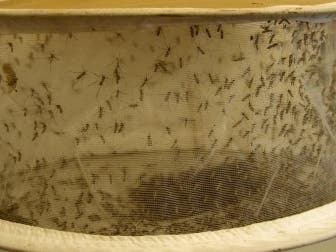
HARTFORD, CT — Connecticut health officials have reported the state's first human case of West Nile virus-associated illness of 2026.
The Connecticut Department of Public Health said Wednesday that the case involves a Middlesex County man in his 30s. He became ill during the first week of August, was hospitalized with a West Nile virus infection and has since recovered. Laboratory testing confirmed the presence of West Nile virus antibodies.
Six human West Nile virus infections were reported in Connecticut in 2025.
Find out what's happening in Middletownfor free with the latest updates from Patch.
State health officials said mosquito activity "remains a concern" as summer winds down, with the number of mosquitoes testing positive for West Nile virus at its seasonal peak. Positive mosquito samples have been identified in communities throughout Connecticut.
"We are at a peak for the number of mosquitos testing positive for West Nile Virus, and these positive tests are occurring in communities throughout our state," DPH Commissioner Manisha Juthani said. "As summer winds down and fall begins, many Connecticut residents may think that the risks from mosquitos have passed, but this is the time to prevent mosquito bites which continues to be the best way to reduce the risk of West Nile virus infection."
Find out what's happening in Middletownfor free with the latest updates from Patch.
The first West Nile virus-positive mosquito pool of the 2026 season was collected in Milford on June 29, according to the state.
West Nile virus has been detected in Connecticut every year since 1999 and is the most prevalent mosquito-borne disease in the United States, according to DPH.
Most people infected with West Nile virus do not develop symptoms. About 1 in 5 infected people develop West Nile fever, which can include fever, body aches, joint pain, headaches and a rash.
About 1 in 150 people infected with the virus develop severe illness affecting the central nervous system. About 1 in 10 people who develop severe illness die from the infection. People 60 and older face the highest risk of serious illness.
Philip Armstrong, a medical entomologist with the Connecticut Agricultural Experiment Station, said mosquitoes that transmit West Nile virus are most common in urban and suburban areas and are most active from dusk to dawn.
"With West Nile virus now detected in mosquitoes in communities across Connecticut, residents should continue to take steps to prevent mosquito bites," Armstrong said.
Officials expect the risk of West Nile virus infection to continue through the summer and into early fall, until mosquito activity declines in October.
Residents can reduce mosquito breeding around their homes by removing standing water at least once a week. Water should be emptied or changed in birdbaths, pet dishes, flowerpots, gutters, used tires and other containers that can collect water.
Residents also are advised to maintain window and door screens, cover water-storage containers with tight-fitting lids and properly maintain swimming pools.
To reduce the risk of mosquito bites, health officials recommend limiting time outdoors between dusk and dawn, wearing long sleeves and pants and using mosquito repellent containing an EPA-registered active ingredient such as DEET, picaridin, IR3535, oil of lemon eucalyptus, para-menthane-diol or 2-undecanone.
Officials also recommend wearing light-colored, loose-fitting clothing made of tightly woven material and clothing or outdoor gear treated with permethrin when appropriate.
The Connecticut Mosquito Management Program is a collaborative effort involving the state departments of Energy and Environmental Protection, Public Health and Agriculture, the Connecticut Agricultural Experiment Station and the Connecticut Veterinary Medical Diagnostic Laboratory at the University of Connecticut. The agencies monitor mosquito populations and mosquito-borne diseases across the state.
Get more local news delivered straight to your inbox. Sign up for free Patch newsletters and alerts.