Community Corner
December 24th, 1814 : War of 1812 Ends!
Middletown's Thomas Macdonough Won The Battle Of Plattsburg


The Treaty of Peace and Amity between His Britannic Majesty and the United States of America is signed by British and American representatives at Ghent, Belgium, ending the War of 1812. By terms of the treaty, all conquered territory was to be returned, and commissions were planned to settle the boundary of the United States and Canada.
In June 1812, the United States declared war against Great Britain in reaction to three issues: the British economic blockade of France, the induction of thousands of neutral American seamen into the British Royal Navy against their will, and the British support of Native American tribes along the Great Lakes frontier. A faction of Congress, made up mostly of western and southern congressmen, had been advocating the declaration of war for several years. These “War Hawks,” as they were known, hoped that war with Britain, which was preoccupied with its struggle against Napoleonic France, would result in U.S. territorial gains in Canada and British-protected Florida.
Find out what's happening in Middletownfor free with the latest updates from Patch.
In the months following the U.S. declaration of war, American forces launched a three-point invasion of Canada, all of which were repulsed. At sea, however, the United States was more successful, and the USS Constitution and other American frigates won a series of victories over British warships. In 1813, American forces won several key victories in the Great Lakes region, but Britain regained control of the sea and blockaded the eastern seaboard.
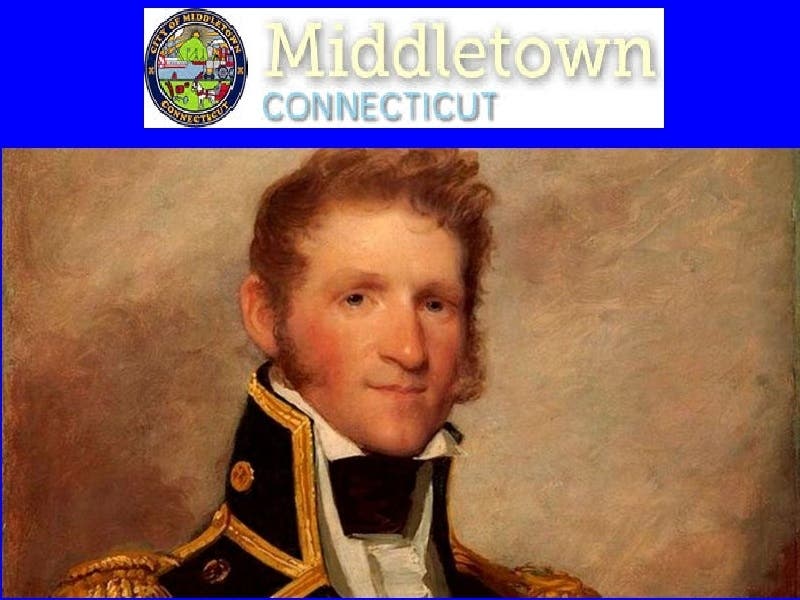
The tide of the war turned when Thomas Macdonough’s American naval force won a decisive victory at the Battle of Plattsburg Bay on Lake Champlain. A large British army under Sir George Prevost was thus forced to abandon its invasion of the U.S. northeast and retreat to Canada. The American victory on Lake Champlain led to the conclusion of U.S.-British peace negotiations in Belgium, and on December 24, 1814, the Treaty of Ghent was signed, ending the war.
Find out what's happening in Middletownfor free with the latest updates from Patch.
Although the treaty said nothing about two of the key issues that started the war–the rights of neutral U.S. vessels and the impressment of U.S. sailors–it did open up the Great Lakes region to American expansion and was hailed as a diplomatic victory in the United States.
News of the treaty took almost two months to cross the Atlantic, and British forces were not informed of the end of hostilities in time to end their drive against the mouth of the Mississippi River. On January 8, 1815, a large British army attacked New Orleans and was decimated by an inferior American force under General Andrew Jackson in the most spectacular U.S. victory of the war. The American public heard of the Battle of New Orleans and the Treaty of Ghent at approximately the same time, fostering a greater sentiment of self-confidence and shared identity throughout the young republic.
In early September 1814, a British army under George Prevost (1767-1816) entered New York State from Canada and advanced toward Plattsburgh. British ground troops soon engaged in skirmishes with the Americans. Then, on September 11, a British naval squadron under Captain George Downie sailed into battle against a smaller American naval force under who was waiting at Plattsburgh Bay on Lake Champlain. Shortly after the battle began, Downie was killed, and after several hours of fighting, the British surrendered. Prevost called off the land battle, and the British retreated to Canada.
From The History Channell