Community Corner
Haven on the Hill
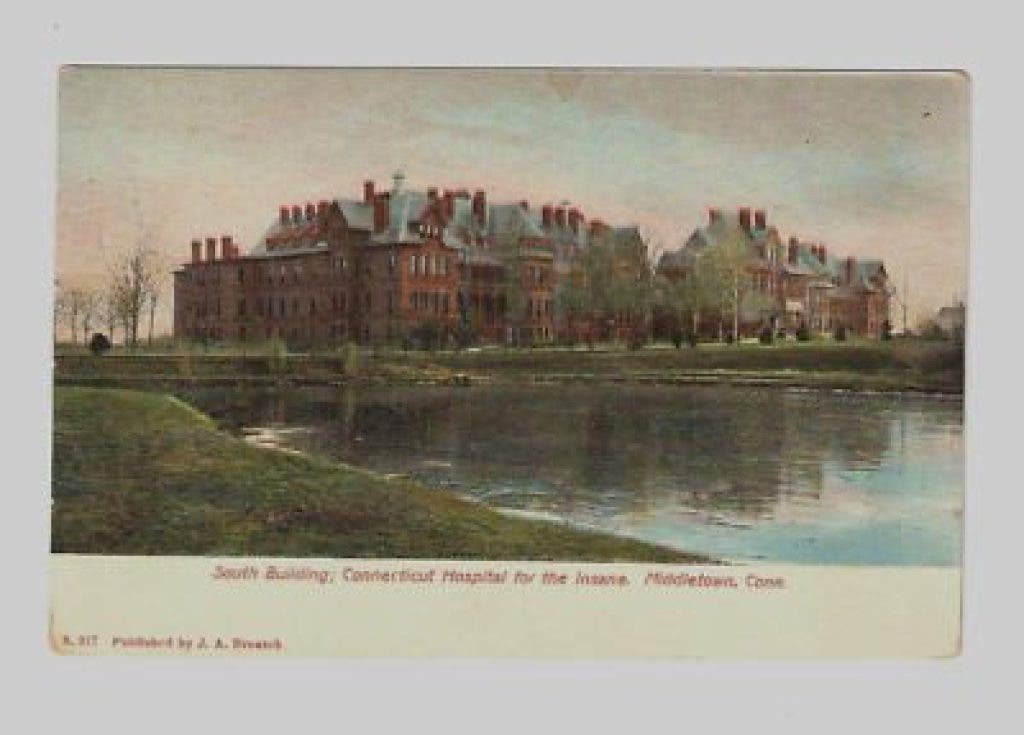
The once-stately 19th century buildings populating the campus of Connecticut Valley Hospital reflect the original aim for treating mental illness: to provide patients with a soothing, elegant and therapeutic environment


People who live in Middletown, especially those who have lived here for a long time, put up with a lot of wisecracks from out-of-towners about living in Middletown, the home of Connecticut Valley Hospital (CVH). We've heard it all, but I can honestly say, each time it happens, I am taken aback.
First of all, CVH is (or was) a beautiful place. Secondly, unless you work there, it has little influence on the daily lives of Middletown citizens. I know that de-institutionalization in the 1970s and 1980s hit us hard with the release of literally thousands of residents from the hill, but this cultural shift in the way our society treats the mentally hill had an impact on every city in Connecticut and in the country. Many Middletown people think we took the brunt of it, and maybe we did.
The worst public event occurred in 1989, when a patient escaped and stabbed Jessica Short on Main Sreet during the annual sidewalk sale. Many of us came to view the institution overlooking our city as a potential threat to the safety of residents and worried that it would forever define our city.
Find out what's happening in Middletownfor free with the latest updates from Patch.
To appreciate CVH, it is essential to understand its history.
Before 1780, the United States was primarily rural and even our cities were quite small. Over the next 50 years, the change in American culture and daily life was enormous. Immigrants came from Europe at an increasing rate. Cities became larger, more industrial and crowded. By 1830, urban areas were experiencing crowding, crime, poverty, pollution and other modern ailments.
Find out what's happening in Middletownfor free with the latest updates from Patch.
When someone became sick, blind, elderly, or impaired in the early days of this country, multi-generations of family provided care. This millennium-old expectation broke down with the growth of cities. It became possible to be a stranger someplace and to be overlooked by those around you. So cities and towns started to build into their budgets the expense of caring for the poor. By 1800 in Middletown, it comprised the largest expense in the town's annual budget.
Almshouses were established by towns to take in those who could not care for themselves. But it didn’t take long to realize that the scale of the problem had been underestimated.
In 1824, The Hartford Retreat (today's Institute for Living) was organized as a private hospital to meet the needs of the mentally ill. It quickly filled to capacity and, by 1866, there were 500 people on the waiting list.
The State of Connecticut acted to fill the void. In 1868, the General Hospital for Insane was established in Middletown on a prominent hillside site overlooking the Connecticut River. The 158 acres were donated by Middletown for the asylum, as it was then known.
The people of Middletown did not consider it a bad thing for the city. Middletown residents participated in the celebrations and activities with gusto. The governor was there, as was the president of Wesleyan, state legislators and Middletown dignitaries.
By the mid-nineteenth century, the perception was that mental illness could be cured through "moral treatment" by taking those who were troubled out of society, to a place with clean air, good food, plenty of exercise and purposeful work. Prior to this time, mental illness had been seen as divine retribution, God's punishment for one's sins.
Cities rife with overcrowding, poor conditions, and social evils, were considered to be the cause of most mental illness and taking them out of this environment, into a more peaceful and calm arena, was half the cure.
Addressing the gathered dignitaries for the opening, Wesleyan's then-president, Joseph Cummings, said: "It is the duty of government to protect the weak and to provide for the unfortunate and the helpless; the strong can care for themselves. No class is more dependent on public aid then those for whom this hospital is designed."
The city went out of its way to make the hospital successful. It built roads to the site and constructed a wharf, called Asylum Dock, along the river where supplies could be delivered. Four prominent Middletown men were among members of the board of trustees. Most people perceived that it would provide local jobs, bolster the economy and be a prestigious addition to the city. Later, a railroad branch line ran off the Connecticut Valley line to serve the hospital.
Life for the patients focused on routine and exercise. Bells rang for meals and for bedtime, and the doctors visited each patient daily. Those who were able worked on the farm or in the light industry on campus. Land around the hospital was farmed by the patients to supply the hospital with vegetables, grains, and fruit; foul were raised for food, eggs, and feathers, and a dairy farm equipped them with milk, cheese, and beef.
In the fiscal year1889-1890, the patients produced 2,085 brooms, 74 mattresses, 149 overalls, 65 pillows, 183 suspenders, 12 rattraps, and 134 caned chairs.
It was key to their therapy that they have regular exercise; sometimes up to four hours of their day would be set aside for walking or dancing. They were taken on cruises along the river, dramatic performances were provided as entertainment, and uplifting lectures were provided for intellectual stimulation.
For most of the nineteenth century, the grounds at the hospital were elegant and well maintained. The buildings were designed and built to be stately and impressive. The park-like setting was intended to create a peaceful and soothing environment for the patients.
The main building, known as Shew Hall, was designed by Sloan and Hutton from Philadelphia, and was built of Portland brownstone. It had the superintendent’s office and living quarters and a chapel in the center, with three wings to house 450 patients.
Martin Shew, the first director (1866 – 1880), felt strongly that the hospital should never grow bigger than the number of patients and employees that could be overseen by one administrator. But the state had different plans.
There were about 500 patients by 1872 when the state required the hospital to take in the criminally insane. The numbers of the chronically ill also continued to increase. Doctors and directors felt that the criminally insane were not curable and they became concerned about overcrowding.
A list of patients from the 1870s, which included their ailments or symptoms, reveals the types of issues with which the hospital dealt. Patients were being treated for intemperance (alcoholism), overexertion, epilepsy, exposure, religious excitement, business anxiety, the death of a friend, disappointed affections, physical injury, ill health, sunstroke, paralysis, typhoid fever, inflammation of the brain, masturbation, fright, jealousy, syphilis, tobacco, riotous living and old age.
There was plenty of open land around the Connecticut Hospital for the Insane, as it became known in 1874, so the state bought more and continued to expand the hospital. The state bought more houses, converting existing space for use by the criminally insane, and prepared space for the employees to reside on campus.
By 1880, when Shew left, the hospital had become a dumping ground for alcoholics, social outcasts, epileptics, and the severely mentally handicapped. Instead of therapeutic care, the hospital was focused on long-term care.
As is often the case, the changes were made and then the philosophy of treatment shifted to meet the needs of what the hospital had become. Individual care of patients became less common and patients were divided into symptoms and received a standardized treatment.
Work was increased (without pay) and the farm was expanded. In 1900, the hospital harvested $21,000 worth of produce, which was sold to support the hospital. In 1944, the hospital grossed $95,000 by selling fruits, vegetables, eggs, dairy products, and livestock. By the mid-1950, all these activities were ended when the cost of running the operations became more than the income.
Drug therapy became the mode of treatment during the first 20 years of the 20th century. Hydrotherapy was also in vogue. Doctors looked at the body to find the causes for the illness, instead of the environment.
Norwich State Hospital was built in 1904, but the Middletown facility was still overcrowded. New superintendents were hired less for their philosophy of treatment for the mentally ill than for their bureaucratic successes.
Clifford Beers did more to change the Connecticut State Hospital (name changed in 1879) than just about any event in its history. He wrote a book, A Mind that Found Itself in 1908, and revealed to the world the conditions inside “insane asylums.” He had been a patient in Middletown for a year and a half. He wrote about the abuse by attendants and the lack of therapy for the mentally ill. His recommendations, advanced by his Connecticut Society of Mental Hygiene, were that patients like him, who could make improvements through treatment, should be in local hospitals or smaller facilities.
By 1910, many of his ideas were instituted in Connecticut and across the country. He promoted more outpatient treatment options. By the 1960 and 1970s, this same philosophy led to the deinstitutionalization of most of the hospital’s functioning patients.
The hospital became known as Connecticut Valley Hospital in 1961. Its grounds were expanded from the original 158 acres to 650 acres. There are more than 70 buildings still standing, although many of them are abandoned and near collapsing from neglect. At the turn of the 20th century, the hospital housed 1,752 patients; today, there are fewer than 500. The hospital offers a range of services including general psychiatric division, a forensic division and a substance-abuse division.