 THE MANUFACTURE OF FIRE ARMS,
-The spirit of the Revolution was kept alive for many years after peace was declared, and the militia regiments of the country constituted a standing army ready for any emergency. This created a great demand for fire arms and other implements of war. The time had not arrived when “the swords should be beaten into plowshares and spears into pruning hooks,” for several manufactories of these weapons sprung up just before and during the war of 1812-15. Among the first of these was the manufactory of Oliver BIDWELL, on the Upper Pameacha. He had a government contract for making guns. He commenced about 1810. Everything at this time was hand made.
About the same time, Colonel NORTH started a pistol manufactory at Staddle Hill, on the West River:
He is said to have been the first manufacturer of government pistols in this country. He was at work on his second contract for the government when the war of 1812 broke out. The secretary of war came to Middletown and offered colonel NORTH a very large contract, if he would enlarge his factory so as to supply the government demand. In order to raise the money, he offered his note for discount at the Middlesex County Bank, but it was refused; when Mr. Samuel RUSSELL, who had urged the directors to discount it, at once indorsed the note himself. Colonel NORTH continued for some years to receive large government contracts. His first contract was for 20,000 horseman’s or cavalry pistols. He subsequently made carbines, and other weapons. His contract was continued down to a short time previous to the last war. For many years the production was about 10,000 pistols a year. These were all made for the government.
About half a mile northeast of Colonel NORTH’s factory, and on the opposite side of the river, was the factory of Colonel Nathan STARR jr. Colonel STARR, after an absence of some years from his native place returned in 1812, and erected a factory with stone taken from the West River at Staddle Hill:

This was fitted up for the machinery for the manufacture of government swords. The building was 81 by 33 feet, three stories high, with an extension, 35 feet square. The government contracts extended through several years, and the annual production was about 5,000 swords; some of these of the finest workmanship and pattern; equal in quality and temper to the best imported goods. Two elegant presentation swords were made here for the State of Tennessee, one of which was presented to General JACKSON, and other to Colonel Richard M. JOHNSON. Another elegant sword was made here for General Edmond P. GAINES, the hero of the Florida war.
Find out what's happening in Middletownfor free with the latest updates from Patch.
Muskets and rifles were subsequently made at this establishment. This manufactory was continued for some years, but government agents were sent to inspect the machinery, and after obtaining the information the government made use of it in fitting up the extensive armories at Springfield, Massachusetts, and Harper’s Ferry, Va.
Every available spot in and around Middletown was selected during the war of 1812-15 for erection of factories to supply the government demand, and Middletown was the chief and almost the only source from whence the government obtained these supplies.
Find out what's happening in Middletownfor free with the latest updates from Patch.
About this time John R. and J. D. JOHNSON built a factory on Lower Pameacha:
for the manufacture of rifles for the government. They employed from 25 to 30 hands, and made from 1,000 to 1,200 rifles a year. They did a successful business until 1825 when the government contracts were discontinued. They just down the street from the
WILCOX, CRITTENDEN & Co.,
A powder mill was established, in 1793, on the West River, and for many years it produced, annually, some 5,000 casks. It is still continued by the Rand Power Company, a large portion of the powder being consumed by the Portland quarries for blasting purposes. THE SAVAGE REVOLVING FIRE ARMS COMPANY was organized August 17th 1859, with a capital of $30,000, for the manufacture of revolving pistols. This company did a large business during the war, and increased their capital to $45,000; but the business was finally given up, and the company disbanded in 1866. The building used by this company was later occupied by the Goodyear Rubber Company:
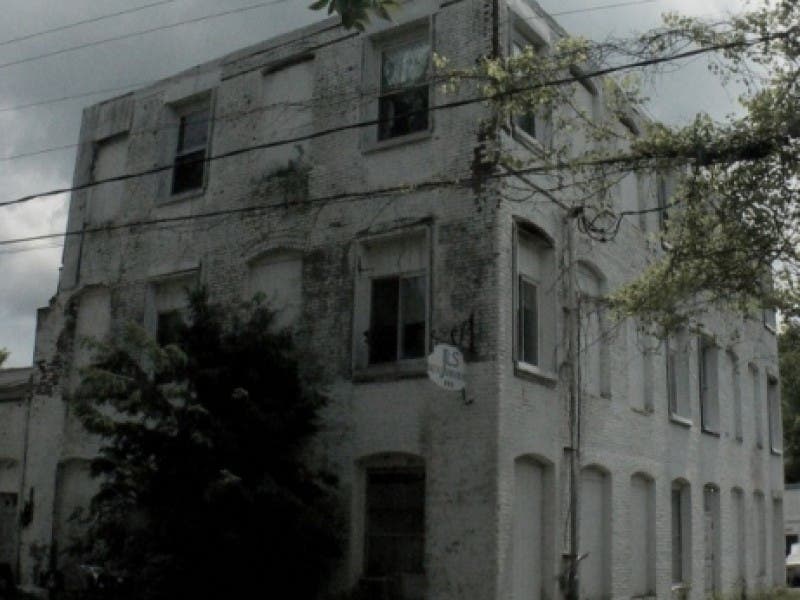
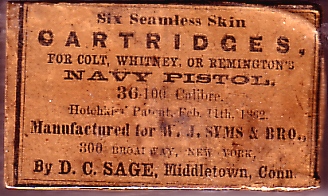 THE SAGE AMMUNITION WORKS
were organized October 29th 1864, with a capital of $75,000, which was subsequently increased to $100,000. The business fell off after the close of the war, and the company ceased to do business about 1866-7.
Have a news tip? Email Bill Maune. You can also post your own news, events and announcements on Patch by following these directions