EARLY MANUFACTURING: 1820-1850
In post-Revolutionary Middletown, the first tentative steps were taken toward the establishment of an industrial society. Although mills were not unknown in eighteenth-century Middletown, they were confined primarily to supplementing other processes largely done by a hand. Thus, fulling mills (to finish cloth), gristmills, and sawmills were common. During the nineteenth century, however, the harnessing of water and steam power for the manufacture of commercial goods was to transform the nature of work, the shape of the city, and the social order of the community.
From Mercantilism to Manufacturing
The first shifts toward an industrial society in Middletown were prompted by the decline of the West Indies trade. Increased cost, devaluation of currency, and fluctuation in agricultural prices began to make the shipping trade less profitable. The Great Embargo and the War of 1812 further disrupted commercial activity. Moreover, the use of larger sailing ships made Middletown less suitable as a seaport.
In response to these conditions, many Middletown merchants recognized the need to diversify their interests. They joined together in partnerships to share capital and risks for investment in small-scale manufacturing. A representative local example of the successful transition from mercantile activities to investment in manufacturing is found in the development of the Russell Manufacturing Company. Samuel Russell’s phenomenal success in the China trade at the turn of the century made him the wealthiest citizen in Middletown. He entered manufacturing in 1834, when he joined with Samuel D. Hubbard to form the Russell Manufacturing Company. They constructed a factory building for the production of textiles on the lower Pameacha River in South Farms. Russell’s transition of interest from shipping to industry was very near unsuccessful as the business almost failed in the Panic of 1837. In that year, however, Samuel Hubbard’s nephew, Henry G. Hubbard, took control of the company. H.G. Hubbard was familiar with manufacturing processes and industrial finance. He developed and instituted a method for producing elastic webbing on power looms (believed to have been the first industrial production of elastic webbing in the United States), which enabled the Russell Company to provide a specialized product to wide markets. Thus, the Russell Company enjoyed sustained growth throughout the nineteenth century, despite its faulty start. Its history exemplifies the successful conversion of shipping capital to industrial investment, and the adaptation and exploitation of new industrial processes.
Find out what's happening in Middletownfor free with the latest updates from Patch.
During the early nineteenth century, a number of similar enterprises in commercial manufacturing were initiated in Middletown. For example, between 1810 and 1825 the following concerns were established:
1810 Middletown Manufacturing Company (cotton and wool)
1813 Starr’s Sword Factory (Staddle Hill)
1813 North’s Pistol Factory (Staddle Hill) Colonel NORTH started a pistol manufactory at Staddle Hill on the West River.
 He is said to have been the first manufacturer of government pistols: in this country. He was at work on his second contract for the government when the war of 1812 broke out. The secretary of war came to Middletown and offered colonel NORTH a very large contract, if he would enlarge his factory so as to supply the government demand. In order to raise the money, he offered his note for discount at the Middlesex County Bank, but it was refused; when Mr. Samuel RUSSELL, who had urged the directors to discount it, at once indorsed the note himself. Colonel NORTH continued for some years to receive large government contracts. His first contract was for 20,000 horseman’s or cavalry pistols. He subsequently made carbines, and other weapons. His contract was continued down to a short time previous to the last war. For many years the production was about 10,000 pistols a year. These were all made for the government.
1815 Johnson’s Rifle Factory
1815 Phoenix Mill
1818 Mattabesec Company (cotton and wool)
1819 Pameacha Manufacturing Company (wool, cotton and machinery, South Farms)
1822 Sanseer Manufacturing Company (machinery, South Farms)
THE MANUFACTURE OF FIRE ARMS, -The spirit of the Revolution was kept alive for many years after peace was declared, and the militia regiments of the country constituted a standing army ready for any emergency. This created a great demand for fire arms and other implements of war. The time had not arrived when “the swords should be beaten into plowshares and spears into pruning hooks,” for several manufactories of these weapons sprung up just before and during the war of 1812-15. Among the first of these was the manufactory of Oliver BIDWELL, on the Upper Pameacha, near the present location of the bone mill. He had a government contract for making guns. He commenced about 1810. Everything at this time was hand made.
Find out what's happening in Middletownfor free with the latest updates from Patch.
Every available spot in and around Middletown was selected during the war of 1812-15 for erection of factories to supply the government demand, and Middletown was the chief and almost the only source from whence the government obtained these supplies. About this time John R. and J. D. JOHNSON built a factory on Lower Pameacha, about fifty rods below the present manufactory of WILCOX, CRITTENDEN & Co., for the manufacture of rifles for the government. They employed from 25 to 30 hands, and made from 1,000 to 1,200 rifles a year. They did a successful business until 1825 when the government contracts were discontinued.
THE SAVAGE REVOLVING FIRE ARMS COMPANY was organized August 17th 1859, with a capital of $30,000, for the manufacture of revolving pistols. This company did a large business during the war, and increased their capital to $45,000; but the business was finally given up, and the company disbanded in 1866. The building used by this company was occupied by the Goodyear Rubber Company (Now 126 Church St:)
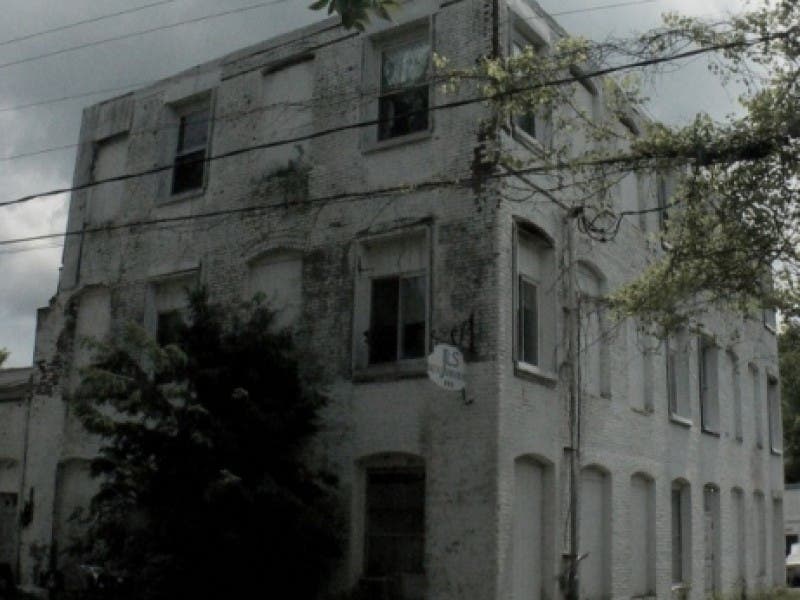
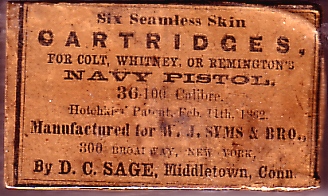 THE SAGE AMMUNITION WORKS were organized October 29th 1864, with a capital of $75,000, which was subsequently increased to $100,000. The business fell off after the close of the war, and the company ceased to do business about 1866-7. The building used by the company is now occupied by the Middletown Hardware Company.