Politics & Government
LETTER: Seaside Avenue Affordable Housing Proposal is Too Dense
The Milford resident raises concerns over the latest affordable housing project, which tries to build 9 homes on a little over an acre.


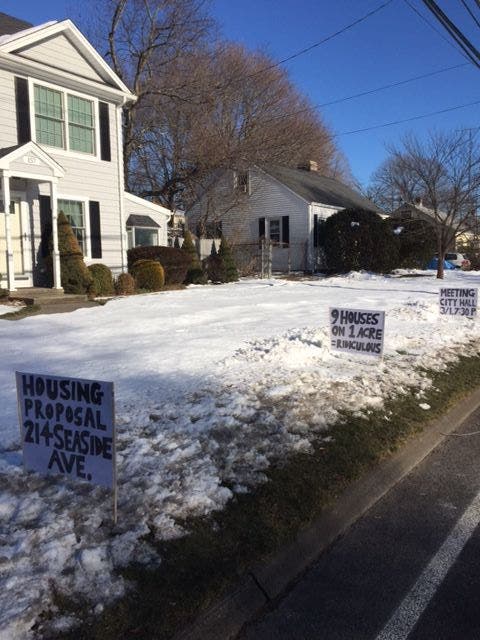
To the Editor:
In recent years Milford has received many “8-30g” affordable housing applications. The latest application is filed for 214-224 Seaside Avenue and proposes the construction and renovation of nine single family homes on 1.18-acres.
I find myself struggling to reconcile my belief that increasing affordable housing is necessary with my disbelief that the state affordable housing statutes effectively accomplish this goal.
Find out what's happening in Milfordfor free with the latest updates from Patch.
8-30g encourages the construction of affordable housing by allowing developers to construct developments that bypass zoning laws - provided a percentage of the development’s units are designated affordable. Moreover, a municipality cannot reject an 8-30g proposal unless 10% of the municipality’s housing stock is affordable; or, if the proposed development creates safety hazards.
In Milford, 6% of housing is affordable. Therefore, Milford can only reject an 8-30g development if it is ‘hazardous’. Unfortunately, municipal rejections on such bases rarely withstand a court appeal.
Find out what's happening in Milfordfor free with the latest updates from Patch.
Ultimately, 8-30g gives residents no input in the deliberation process. This is outrageous.
As 8-30g developments do not adhere to zoning regulations, such developments are dangerously dense. The proposed Seaside development has a density of 16 bedrooms per acre, while typical development density on Seaside is 4 bedrooms per acre. High-density 8-30g developments engender many hazards – particularly traffic.
Seaside Avenue is already a traffic hazard. Speeding motorists frequently cause accidents. Are we really poised to approve a development that promises 22 vehicles on-site?
Lastly, 8-30g developments are more beneficial to developers than to low-income residents. Developers consistently designate the minimum number of units allowable as ‘affordable’ in 8-30g projects, in order to realize profits that are unrealizable without 8-30g protection.
These developments make negligible contributions to the affordable housing supply. The Seaside proposal pledges to designate three of nine units affordable. How much of an impact does this ‘contribution’ really make?
We are capable of better.
John Bonetti
Seaside Avenue Resident
Get more local news delivered straight to your inbox. Sign up for free Patch newsletters and alerts.