Politics & Government
Highest Inflation Rates In 40 Years: Here's What It Means In CT
Food, gas and many necessities of life cost much more than they did a year ago. Here is how the Connecticut area compares to the U.S.


CONNECTICUT — Surging prices for food, gas and housing have already squeezed the budgets of Connecticut families, but prices could go even higher, according to a report from the Labor Department.
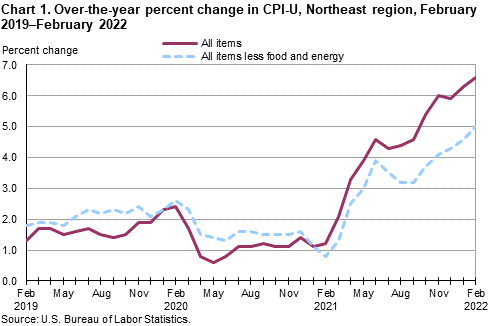
Nationally, inflation spiked by 7.9 percent in the 12-month period ending in February; it’s the sharpest spike since 1982. The New England region saw slower, but still painful inflation at 6.9 percent over the same time period.
Food
The national food at home index rose 8.6 percent over the past 12 months, which was the largest 12-month increase since April 1981. The food away from home index rose 6.8 percent over the last year, which was the largest 12-month increase since December 1981.
Find out what's happening in Milfordfor free with the latest updates from Patch.
The index for meat, poultry, fish and eggs increased 13 percent from 12 months ago.
The Northeast region’s food index increased 7.6 percent during the same 12-month period.
Find out what's happening in Milfordfor free with the latest updates from Patch.
Energy
The national gasoline index rose by 6.6 percent from January to February, and that doesn’t take into account recent skyrocketing gasoline prices.
Regular-grade gas averaged $4.49 a gallon in Connecticut as of Friday morning, according to AAA. That is up $1.64 from a year ago.
Related:
The national whole energy index rose 25.6 percent over the past 12 months, with gasoline and natural gas up 38 percent and 23.8 percent respectively. Electricity costs rose 9 percent.
Comparatively, total energy costs in the Northeast went up 23.7 percent.
The government report doesn't reflect increases in already-high gas prices associated with President Joe Biden's announcement Tuesday of a ban on Russian crude and other energy imports as punishment for its unprovoked invasion of Ukraine.
Motor vehicles
Nationally, new vehicle prices increased about 12 percent and used vehicles skyrocketed by 41 percent.
Pay raises don't make up for inflation
For most Americans, inflation is running far ahead of the pay raises that many have received in the past year, making it harder for them to afford necessities like food, gas and rent. As a consequence, inflation has become the top political threat to President Joe Biden and congressional Democrats as the midterm elections draw closer. Small business people say in surveys that it's their primary economic concern, too.
The almost 8 percent inflation rate was driven not only by increases in almost everything Americans spend money on but also by 4.5 percent pay raises, which are higher than at any point in 20 years, and persistent shortages of goods and services, The Associated Press reported.
But even with those solid pay raises, many Americans aren't able to keep pace with the increasing costs of necessities, which could put Democrats — who control both houses of Congress and the White House — in a vulnerable position in midterm elections.
Inflation could reach 9 percent this month or next, Eric Winograd, a senior economist at asset manager Alliance Bernstein, told the AP.
Some of that will likely be driven by Russia's war in Ukraine. Since Feb. 24, prices have soared for commodities for which the two countries lead the world in exporting, including wheat, corn, cooking oils and metals such as aluminum and nickel.
The cost of rent has also surged at the fastest rate in decades, largely due to steady job growth and surging real estate prices that have combined to put apartment vacancy rates at their lowest level since 1984, according to The AP analysis.
To beat back inflation, the Federal Reserve plans to raise interest rates several times in 2022, beginning with a quarter-point hike next week. It's a delicate challenge for the Fed, which risks undercutting the economy and possibly triggering a recession if it tightens credit too aggressively, The AP reported.
Energy cost increases are a particularly difficult challenge for the Fed.
Soaring energy costs pose a particularly difficult challenge for the Fed. Higher gas prices tend to both accelerate inflation and weaken economic growth. That's because the more Americans spend at the gas pump, the less they'll spend on other goods and services, creating a dynamic economists call "stagflation" — a combination of high inflation and a sputtering economy.
However, The AP reported that most economists think the U.S. economy is growing strongly enough that another recession is unlikely, even with higher inflation.
Additional reporting by Paige Austin, Patch Staff, The Associated Press contributed to this report
Get more local news delivered straight to your inbox. Sign up for free Patch newsletters and alerts.