Community Corner
Animal Reports: Irksome Insect Is Big Problem
Monroe residents enlisted to join the fight against Flavivirus.



Birds and mosquitoes have tested positive in Monroe every year since 1999 for West Nile virus (Flavivirus) or WNV. WNV only appears between the months of May to October. But a single bite from an infected mosquito can have grave consequences. Signs and symptoms range from no symptoms at all to a rapidly fatal brain infection.
Humans, birds, dogs and cats, as well as many wildlife mammals, are susceptible to WNV. There is no vaccine and no cure. Patients are treated for the complications.
People are more likely to show no symptoms of the infection or have only a mild, flu-like illness rather than a severe brain infection. The likelihood of developing illness after infection with West Nile virus is about 1 in every 140-300 people.
Find out what's happening in Monroefor free with the latest updates from Patch.
Infection typically begins with the abrupt onset of fever, chills, muscle aches, headache, and an overall feeling of illness. Headaches may be severe and sensitivity to light with pain behind the eyes may develop.
Most people fully recover from the infection. However, in some, particularly the elderly, the disease can progress to cause encephalitis or meningitis.
Find out what's happening in Monroefor free with the latest updates from Patch.
When to seek help
According to Connecticut's Department of Public Health, Infectious Disease Division, people who experience symptoms of serious illness, and have been bitten by a mosquito in the previous five to 15 days, while in an area where West Nile virus is known to exist (Trumbull and Monroe) should see their doctor immediately.
Facts show that most people with mild symptoms of low-grade fever and muscle aches do not have West Nile virus and will not require specific diagnostic testing.
However, anyone who has severe symptoms such as mental status changes, high fever, neck stiffness, sensitivity to light, or confusion should go to a hospital's Emergency Department immediately.
A new threat emerges
Warnings are also out about another mosquito-borne disease in parts of North America, Eastern Equine Encephalitis.
Horse owners are being encouraged to reduce mosquito breeding sites and reduce mosquito exposure of their horses — no easy task. Fortunately, horses can be vaccinated against the virus.
Ongoing testing of pools and ponds of stagnant water shows that the virus still exists in mosquitoes in Monroe and Trumbull. Although cases are rare in people and horses, WNV shouldn't be ignored because of its potential to cause severe illness.
WNV was first diagnosed in Africa in 1937. Prior to 1999, it was not found in the Western Hemisphere. That year two species of infected mosquitoes were trapped in Greenwich, CT. It has since spread through most of Connecticut and the United States.
How homeowners can help
According to Monroe Animal Control Officer Ed Risko, people need to regularly walk their property. Any standing water, the breeding ground for mosquitoes, should be eliminated. Buckets, pots, anything that can hold water, need to be turned over and drained. Stagnant birdbaths need to be hosed out and re-filled daily. When not in use, turn over wading pools and wheel barrows.
Check any storm drains and swampy areas for standing water. “Mosquito Dunks”, a larvae-killing briquette, can be purchased for $1 each from the Monroe-Trumbull Public Health Department, 2 Corporate Drive, off Monroe Turnpike, first building on the right.
According to the manufacturer they are completely non-toxic to animals such as fish, birds, wildlife and pets. "Mosquito Dunks may be used in all types of mosquito breeding areas. Mosquito Dunks float on water and keep working for 30 days or longer. While floating, they slowly release a long-term, biological mosquito larvicide at the waters surface. This larvicide gradually settles in the water where it is eaten by mosquito larvae growing there. Mosquito Dunks may be used in all standing water sites where mosquito larvae grow. Alternate wetting and drying will not reduce their effectiveness."
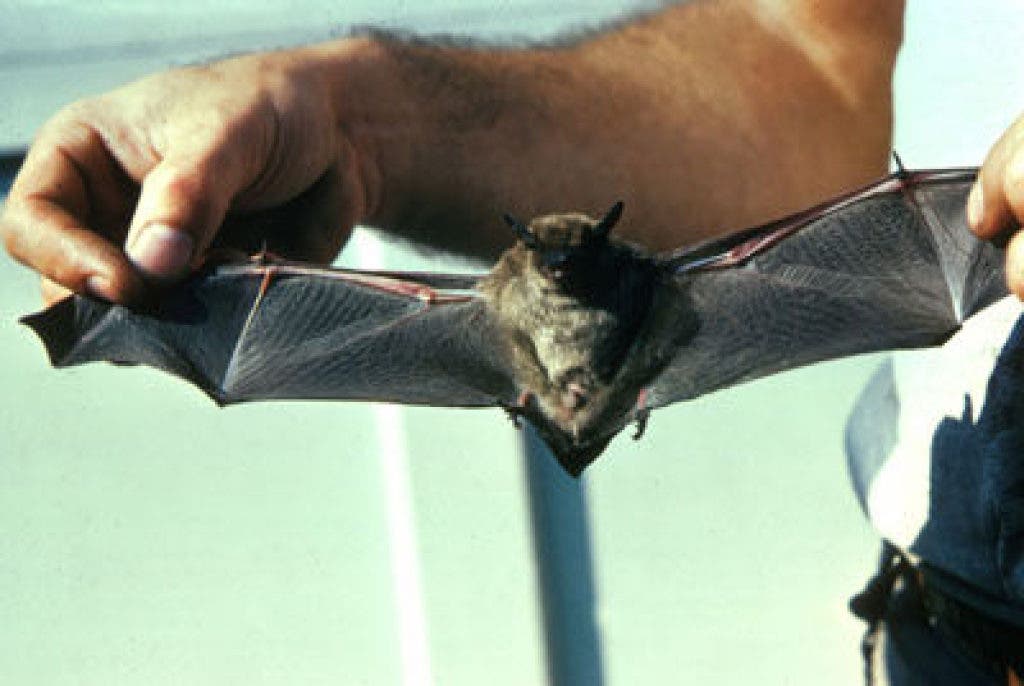
Guppies, dragonflies and bats also control mosquito populations. A single bat can eat 600 to 1000 mosquitoes in an hour.
The local health department reminds residents to avoid mosquito bites through basic measures: Stay away from mosquito-infested areas (particularly at dawn and dusk.) Wear light colored clothing with long sleeves and long pants. Use insect repellent containing DEET, and make sure windows have intact screens.
Dog Tales From the Blotter
Over the past week a running dog created an annoyance on Arrow head Drive and a stray was picked up by Animal Control on Route 110. A dog was reported lost by its Heritage Road owner, and an unleashed Golden Retriever was reported romping through the backyards on Hammertown Road. A small gray and tan dog was reported running in the road on Israel Hill, a small long-haired white dog was seen in the road at the intersection of Nancy Drive and Misty Lane. A black lab was picked up on Wheeler Road near Mill Brook Terrance (north.)
Either canines are becoming craftier in their daytime escapes or owners are becoming less responsible for the well-being of their pets. The best that can happen to a wandering pooch is that Monroe Animal Control locates them and takes them to safety. The worst would be a loved pet is killed by an unobservant motorist or stolen.
Although dog owners are usually given verbal or written warnings, on occasion a dog is impounded. That means a $15 retrieval fee charged to the owner. If the dog is not picked up within 48 hours, a $10 per day boarding fee begins to accrue. If the pet is left for more than a week an additional $75 fine is imposed.
The fines and fees are not a money-making enterprise, but support the feeding and care of the animal.
Wildlife Sightings
Monroe's Main Street bobcat (or a family member) was sighted again last Friday over on Dingley Dell Road out for his morning stroll at 9:56 a.m.
At 5:30 that evening a coyote, or fox, was seen on Lovers Lane. Twelve minutes later a Walnut Street resident reported a strange animal in the yard, possibly a coyote.
Raccoons made an appearance. One was trapped inside a garbage container on Bradley Drive, and another sitting on the rear steps of a Blueberry Hill backyard shed.
A Great Oaks Farm resident called in for assistance with a woodchuck she thought was eating her vegetables. An investigation exonerated the accused. Woodchucks prefer flowers and the bite marks were wrong.
The Week's Casualties
Aug. 13, 8:50 a.m. — A deer killed by a motor vehicle on Knorr Road.
Aug. 13, 8:45 p.m. — A deer killed by a motor vehicle on Route 111 at the Trumbull town line.
Aug. 16, 9:40 a.m. — A raccoon dead in the backyard of a Wiltan Drive resident.
Remember. Monroe's creatures were here first. Respect them. Enjoy them. And if you need help with them, call Officer Ed Risko at Animal Control (203)452-3760. In an emergency call 911.