Community Corner
With Montville Church Roots, Hillhouse Family's Impact Felt Across CT
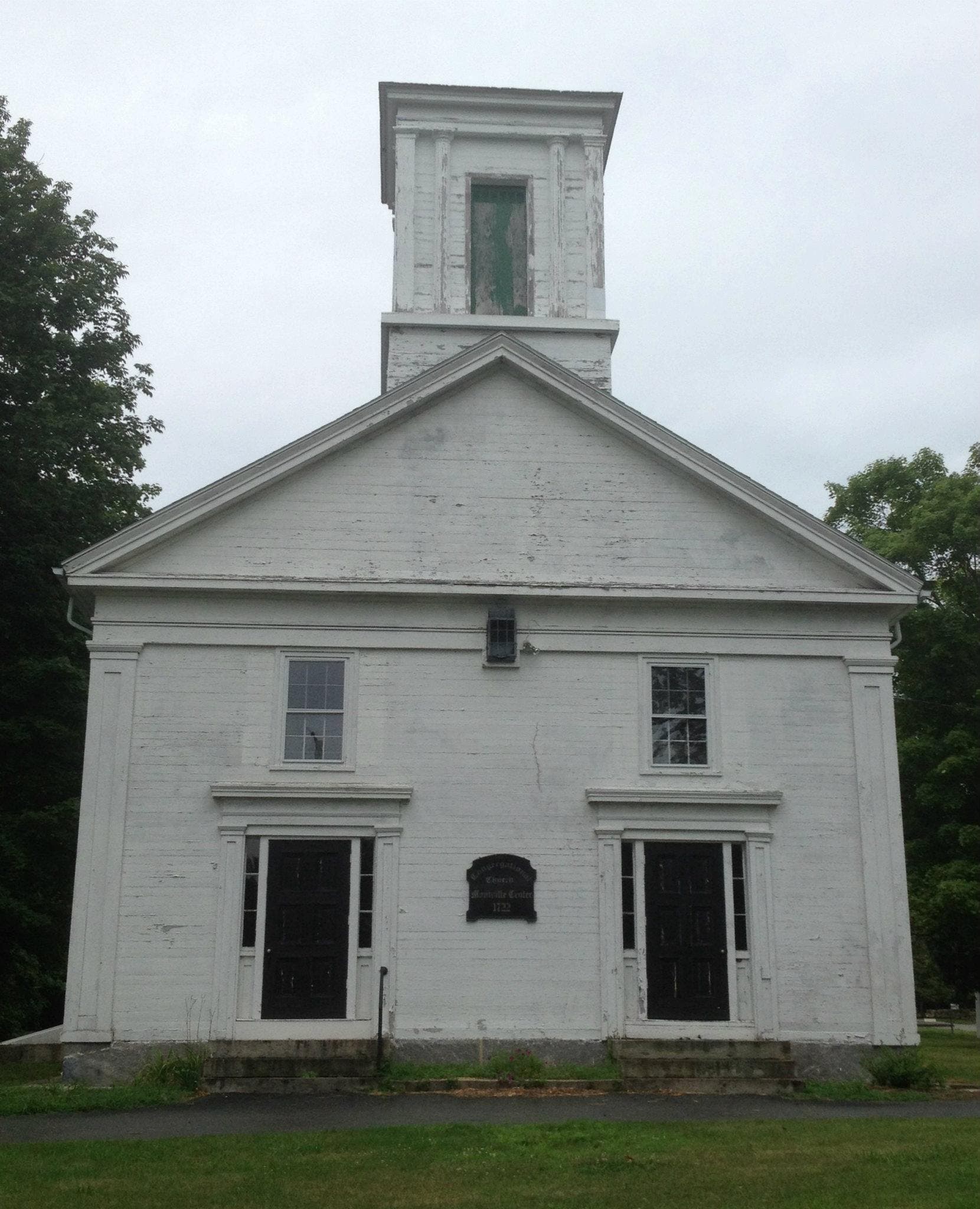
A small world: James Hillhouse was pastor of c. 1722 Montville Congregational Church, now town-owned, his descendant helped shape New Haven.


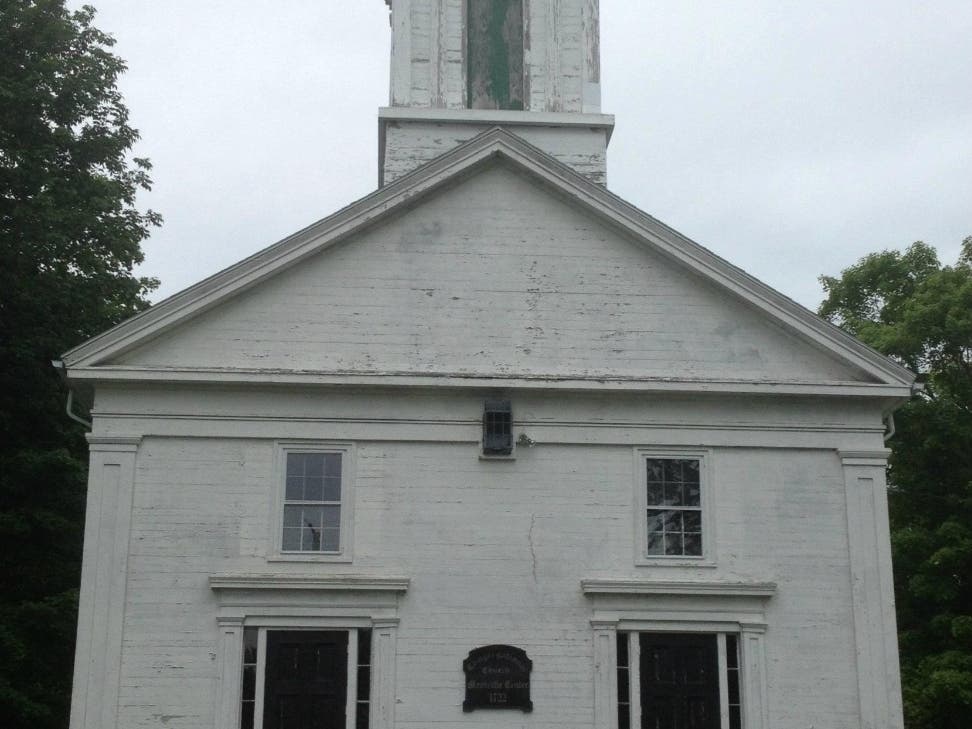
MONTVILLE CENTER, CT —Born in Ireland in 1688, the Rev. James Hillhouse would immigrate to America, landing first in Boston and then traveling to, and remaining in, in what was then known as North Parish now Montville Center.
Hillhouse became the first pastor of the Congregational Church, whose steeple rises above Raymond Hill Road. He preached at the church, built around 1722, married and raised four children. He and his wife Mary (née Fitch) are buried in the ancient burying ground atop Raymond Hill.
Their son, William, would become a respected New London judge and, according to the Montville Town Historian, was described as the town's patriarch. William married Sarah Griswold around 1750 (all the names, sound familiar?) and the couple had three children.
Find out what's happening in Montvillefor free with the latest updates from Patch.
The third, James, son of Montville named for his grandfather, would go on to become a significant political, cultural and academic force in the state and most specifically, in New Haven.
Hillhouse was a Yale grdauate, lawyer, Revolutionary War soldier and "captain of the foot guards," was a Continental Congress delegate, a Connecticut state senator, a U.S. Senator, Yale College treasurer from 1782-1832.
Find out what's happening in Montvillefor free with the latest updates from Patch.
Here's his Congressional biography:
HILLHOUSE, James, (son of William Hillhouse), a Representative and a Senator from Connecticut; born in Montville, Conn., October 20, 1754; attended the Hopkins Grammar School, New Haven, Conn., and graduated from Yale College in 1773; studied law; admitted to the bar in 1775 and commenced practice in New Haven, Conn.; served in the Revolutionary War and in 1779 was captain of the Governor's foot guards when New Haven was invaded by the British; member, State House of Representatives 1780-1785; chosen as a delegate to the Continental Congress in 1786 and 1788 but did not attend; member, State council 1789-1790; elected to the Second, Third, and Fourth Congresses and served from March 4, 1791, until his resignation in the fall of 1796, having been elected to the United States Senate on May 18, 1796, to fill the vacancy caused by the resignation of Oliver Ellsworth; reelected in 1797, 1803, and 1809, and served from May 18, 1796, until June 10, 1810, when he resigned; served as President pro tempore of the Senate during the Sixth Congress; member of the Hartford convention in 1814; treasurer of Yale College 1782-1832; died in New Haven, Conn., December 29, 1832; interment in Grove Street Cemetery.
Oh, and he was an American elm tree aficionado.
Yes, the Elm City, aka New Haven, was so named. The city's first elms were planted at Temple and Elm streets in 1686 with hundreds more planted decades later, But it would be Hillhouse's "Great Planting" project at the end of the 18th century that led to the city being so named.
A son of Montville's influence regionally, statewide and nationally was born of one of the most significant of Montville families, whose impact is felt today.
Nice going, Montville.
Get more local news delivered straight to your inbox. Sign up for free Patch newsletters and alerts.