Schools
Montville Students Training To Use Peer Mediation To Solve Conflicts Next Year
Students Will Sit Down With Both Sides Of An Argument to Try to Broker Agreement
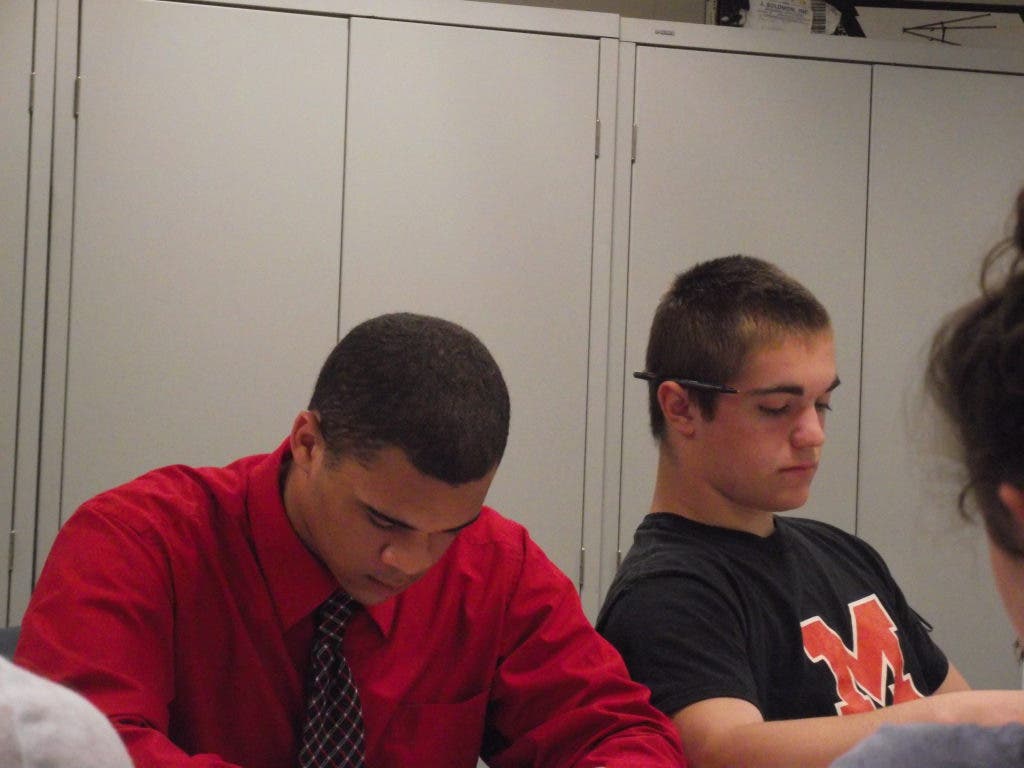


On a recent Friday morning, a group of 18 students at Montville High School sat around a table in the office to discuss how they would mediate a dispute between two classmates.
The mediation by fellow students is a way to solve an argument or a fight without having to involve discipline. To hear it from Senior Mediator Zachary Scovish, it is also an opportunity for the mediators to grow.
“If we want to change the school, we have to change ourselves first,” Scovish said. He and fellow mediator Loren Rickards were leading the group through the hefty “Peer Mediation Training Manual,” peppering the lesson with questions for the other students, and anecdotes from their own experience training students. Two juniors, Kerri St. Denis and Carlie Cave, who would lead the mediators next year, also had perspective to lend. Though peer mediation has been in place at Montville for years, this is the first time that students have had the responsibility of training.
Find out what's happening in Montvillefor free with the latest updates from Patch.
“The slogan for peer mediation is ‘cross the line’” Scovish told the group. “It is awkward to stick oneself out there.”
In a mediation, two students in a conflict will meet two student mediators, who will help them work together to a resolution. The agreement goes in writing and both students sign it. That way, there will be proof if one student breaks the agreement.
Find out what's happening in Montvillefor free with the latest updates from Patch.
The content of the mediation is kept private from the teachers and everyone else at the school—with exceptions for substance abuse or threats of violence.
School Psychologist Deborah Hally and Counselor Chris Contos have organized peer mediation in past years. Now they watched Scovish and Rickards lead the instruction and offered an occasional comment.
“This is the first year we’ve targeted kids who were emotionally invested in the school.” Hally said.
“I want them to own the process so they feel empowered to use these strategies in the school,” said Hally. “If we do this right, they become the peacemakers in the school.
“These kids are totally different from each other,” Contos said with pride. “They posses the willingness and desire to change this place.”
Several of the groups come from sports teams like softball, basketball and track. There were 67 appliants for the 19 mediator positions.
In order to mediate effectively, the group would have to learn to understand the motivation behind conflict. As the group discussed different types of disputes, they were able to come up with multiple stories to explain the same type of argument.
In one example from the manual, a game of one-on-one on the basketball court ends with a sore loser pushing the winner to the ground.
Scovish asked the room what might have triggered the dispute.
“He needed to preserve his sense of self,” Isiaah Holloway said
“He wanted to show his physical dominance,” said Peter Utz who was sitting next to him.
According to Contos, even seemingly simple disputes can have complex causes.
“It’s something behind it always,” Contos said. “It’s always about something else.”
The students got to learn five different ways that the people deal with disputes, rising from competition—the least desirable—up through avoidance, accommodation and compromise. Collaboration, where two parties work together towards resolution, is the way that peer mediation intended to work with the students.
When two sides broker an agreement through cooperation, Scovish said, “it stays that way forever.”
Along with being able to put the techniques of peer mediation to work with other students, many in the room saw peer mediation as a way to improve themselves
“It kind of changes you as a person because you notice the little things you didn’t know were being mean,” said Allie Contillo. “You change that.”
Contos had the same idea.
“It will change your relationships with your friends, with your family and people you love,” Contos said. “Everybody.”