Crime & Safety
Oakdale Firehouse Goes Solar
New Panels - Installed at $1 Each - Save The Department $200 a Month in Electric Costs


Since the end of January, the Oakdale firehouse has been sporting jaunty solar panels on its roof. The 44 panels pump an average of $200 a month for the company’s electric bill—and came with a one dollar installation cost.
Todd Fruchette, the EMS lieutenant for the department’s ambulance service and a seven-year volunteer at the station found out about Salem, which had panels installed on the roof of its firehouse and library.
The panels were available through a program that combines two federal grants as well as private funding. DCS Electricity, based in Glastonbury, installed the panels in one day.
Find out what's happening in Montvillefor free with the latest updates from Patch.
“They came out with 20 guys,” said Fruchette, who explained that the first step in the installation was clearing all the snow off the roof. Wiring the panels took the department a couple of days.
Fruchette called the installation “a no-brainer.”
Find out what's happening in Montvillefor free with the latest updates from Patch.
“Anyone reading your article should be reaching out to DCS Energy,” he said.
The program extends the same one-dollar installation deal to all public buildings and buildings owned by nonprofit organizations such as churches. In return, they get tax incentives and carbon credits to offset their carbon footprint.
The buildings that get the panels must have flat or south-facing roofs, an asphault surface or new shingles that will not need to be replaced during the 20-plus years that the panels will stay up.
The firehouse with its south-facing roof and position atop a hill is perfectly situated to get the most out of the sunlight.
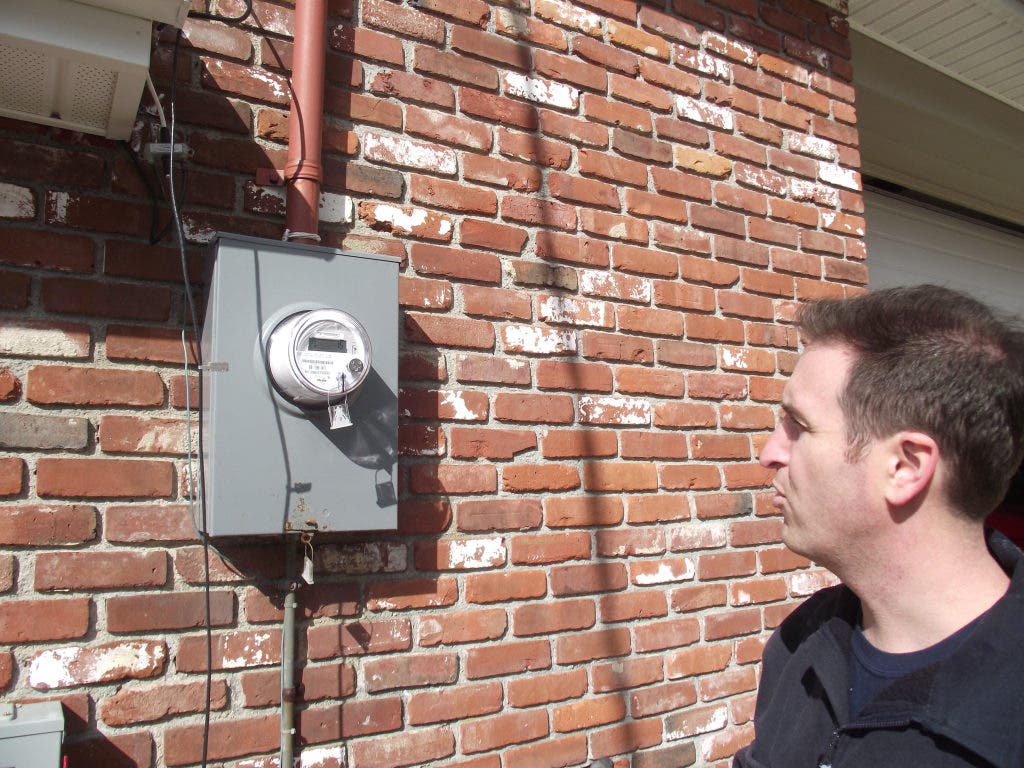
The fire department can monitor the output panels by looking at the electric meter outside the department.
“If you produce more than you’re using, it spins backwards,” he said, meaning that the department can produce profit as well as save money.
The two units produce a total of 18 kilowatts in ideal conditions. At 10:15 Saturday morning, the meter was dead even, meaning that the panels were producing the same amount of electricity that the firehouse was using. This yield dropped significantly when a cloud drifted across the sun.
Fruchette expects far more production from the units by the summer months, which will see more hours of sunlight as well as a more direct angle from the solar rays. He said it is also possible that they could get money for a third set of panels.
The fire department uses electricity not only for basics like lighting and heating, but also to charge equipment inside the trucks. A compressor inside the building pumps the airbreaks that the trucks use to stop. Solar energy will also help charge flashlights, gas meters and thermal imaging cameras, which the department needs uses in its line of work.