Sports
Town Pursues $460K Solution for NCHS Tennis Courts
Each spring, recreation officials have to repair cracks and bumps in the asphalt. A technology, supported by the selectmen for next year's budget, would preempt the problem.


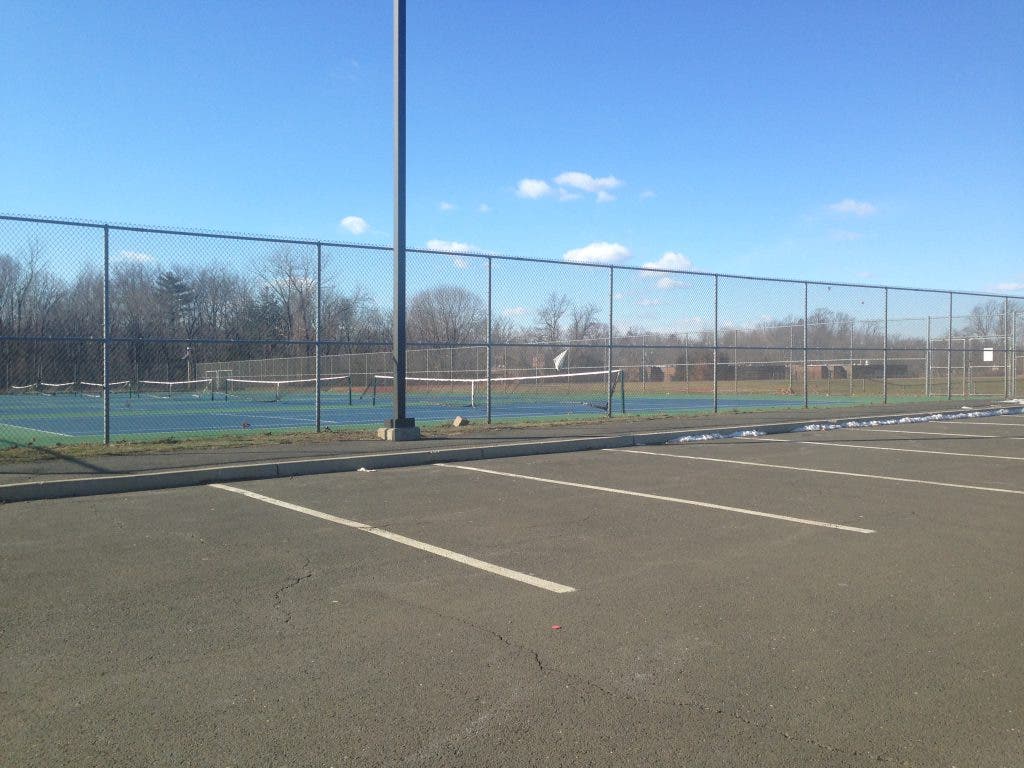
Here’s something the New Canaan Recreation Department does each spring, and something that surely will be done again some time after the snow from this winter storm melts: Repair the cracks on the high school’s hard tennis courts.
Recreation Director Steve Benko told Patch that about two years ago, in the fall of 2010, workers routed all the cracks on the six courts there, sealed them and painted them—and then followed a brutal winter of weekly snowstorms.
Find out what's happening in New Canaanfor free with the latest updates from Patch.
“Had to come out April 1 for the start of the high school season and spent another $6,000 on emergency repair,” Benko said.
After about four years of discussion on how to find a more viable, longer-term option, Benko has hit on a new technology that he says, with some upfront investment, will save the town repair costs—not to mention sparing New Canaan the risk of injury to one of its athletes and the legal costs that could follow.
Find out what's happening in New Canaanfor free with the latest updates from Patch.
A $460,000 allocation for what’s called a “post-tensioned concrete surface” received support from the Board of Selectmen as part of next year’s budget (see page 223 in the attached PDF). Typically, the rec department spends $5,000 to $7,000 each spring repairing cracks, and $25,000 every seven years to color-coat the courts. A post-tensioned concrete surface only needs that coating every five years, the rec department says.
According to Benko, the technology—used with success in Newtown, for one—solves a problem the courts now have where changing weather patterns create bumps, cracks and other problems. In post-tensioned concrete, concrete is poured around a duct to follow areas where tension otherwise would exist. Here’s what Wikipedia says about it.
As it is now, the asphalt on the courts moves on its own, creating potential hazards for players.
"What you really don't want is for some kid to break an ankle," Benko said.
The life expectancy of the solution is 20 to 30 years, he said.
The town has pegged a Sept. 13 start date for the project, which would take about two months to finish.
Get more local news delivered straight to your inbox. Sign up for free Patch newsletters and alerts.