Schools
Living History: Local Holocaust Survivors Share Their Stories With Students
New London High School students learn what life was like during the Holocaust from a Waterford survivor
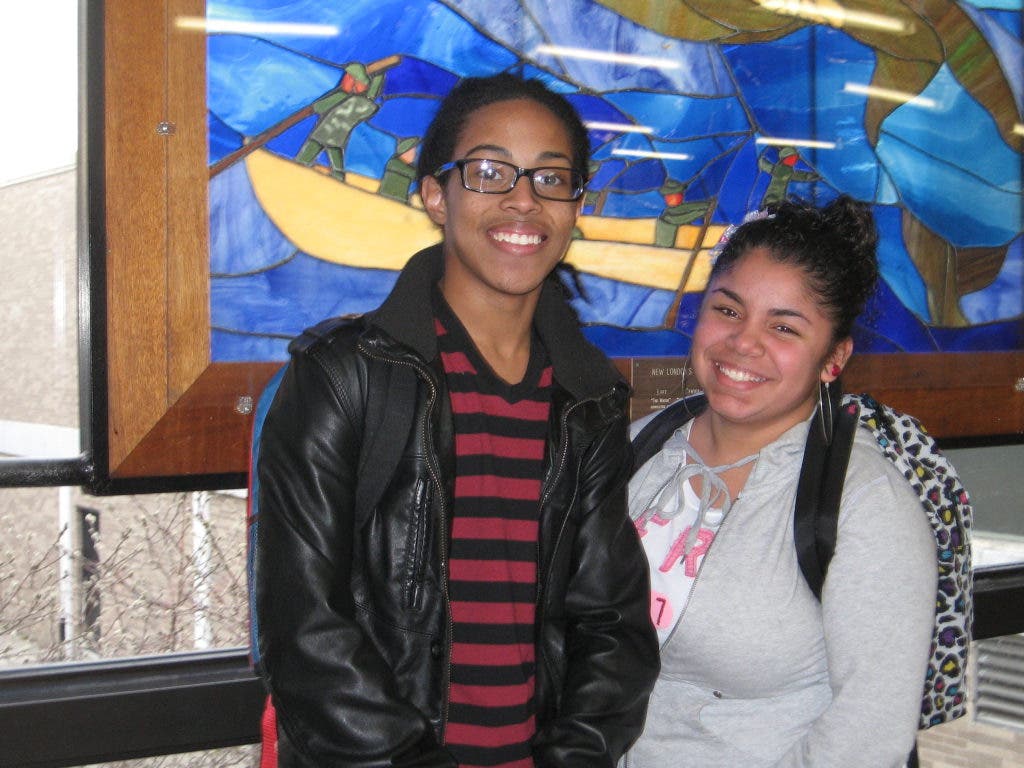
For the average 15-year-old, studying World War II and learning about the Holocaust in school is about as far removed from their daily life experience as learning about the Roman Empire. It feels like ancient history.
history teacher Chris Marot spends about four weeks on the Holocaust but it wasn’t until two of his students, Kelly Pena and Kirshon Augmon, met Waterford resident Romana Strochlitz Primus that they realized the horror of the Holocaust was also a part of people’s personal history.
Primus’s parents Sigmund and Rose Strochlitz were among the lucky ones who survived the concentration camps. Primus herself was born after the liberation in a camp for displaced persons. Hearing about what life was like, before, during and after the Holocaust was a real eye-opener for the two 15-year-olds.
Find out what's happening in New Londonfor free with the latest updates from Patch.
“I knew what they taught us in class,” said Pena. “Most of us just see it as some part in history. After you know how they felt, it’s kind of life-changing. It changes the way you see things.”
The Program
Find out what's happening in New Londonfor free with the latest updates from Patch.
The opportunity to meet and interview holocaust survivors is part of a program called “Encountering Survivors,” run by the ’s Rose and Sigmund Strochlitz Holocaust Resource Center. Primus has been part of the program since its inception and continues to share her late parents’ story with students from the region.
Past participants in the program have included students and teachers from the Norwich Free Academy, Bacon Academy, New London High School, Fitch High School in Groton, Ledyard High School, and Leonard J. Tyl Middle School in Montville. Each group receives a lesson from Linda Christensen, the Holocaust Resource Coordinator, on how to conduct an oral interview before meeting with local Holocaust survivors in their homes.
“Video and audio doesn’t bring history to life as much as meeting the person who’s been through it,” said Marot, whose students at New London High were among the most recent participants.
Before meeting Primus, Augmon said he knew the basic history about how the Nazis forced the Jews into Concentration Camps as part of a widespread program of genocide. What he didn’t realize until he met Primus, however, was that before the Nazis came to power in Germany, Jews weren’t widely discriminated against.
“It never entered my mind that before the Holocaust, Jews were OK. It didn’t seem like too many people were prejudiced,” he said. “The fact that this torment struck was a lot to take in. It was so unexpected.”
Hearing about the Holocaust from someone who’d been through it also brought home the importance of passing down memories through the generations. That’s one of the primary missions of the Encountering Survivors program, and it becomes increasingly important as fewer survivors are left to tell their stories.
The experience made Augmon curious to learn more about his own family history, particularly to find out more about his paternal grandparents, who died before he had a chance to know them.
“You start to realize the more the years go by, the more history could become diluted,” says Augmon.
Pena, meanwhile, came away from the experience with a deeper understanding of what it took for the Strochlitz family to survive and with a deep admiration for the family’s ability to thrive after arriving in the United States.
“I was going back and forth wondering how did they get the strength to go on? I don’t know if I would have gotten over it,” Pena said.