Schools
Two Virtual Panel Discussions to Raise Awareness
Quinnipiac University School of Law to co-sponsor two virtual panel discussions to raise awareness about human trafficking


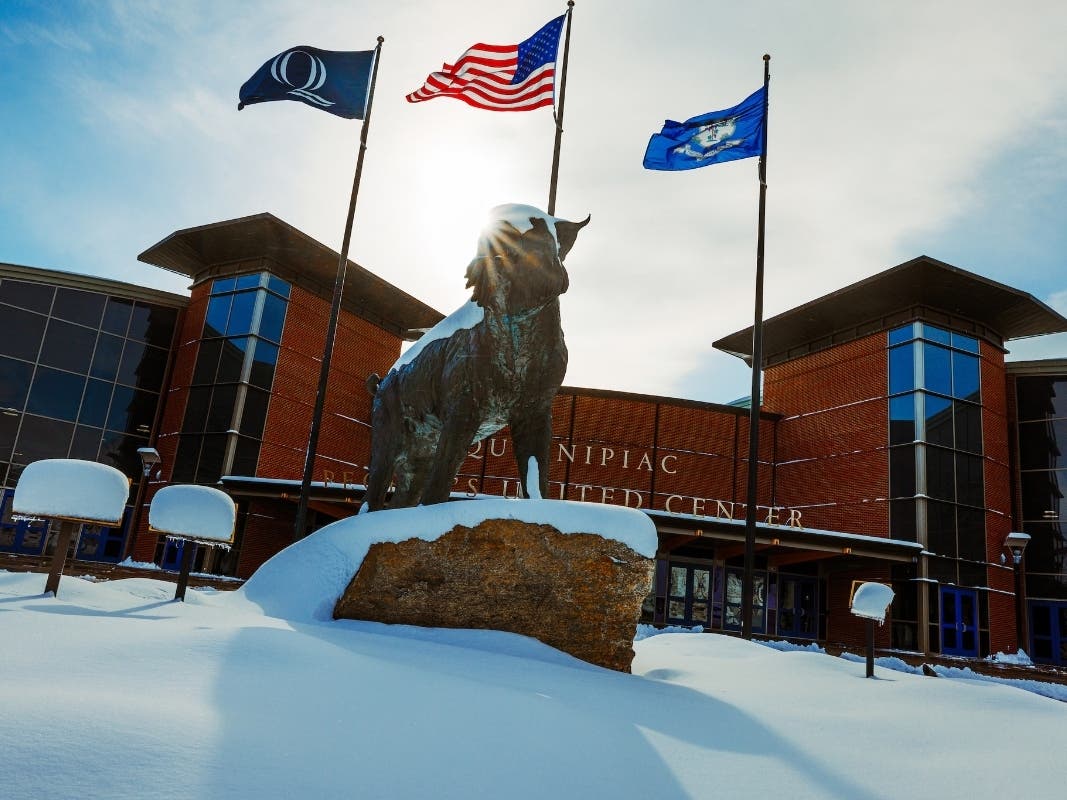
NORTH HAVEN - The Quinnipiac University School of Law’s Human Trafficking Prevention Project along with the Connecticut Bar Association and Connecticut Bar Foundation will host two virtual panel discussions this month to raise awareness about human trafficking, a serious federal crime involving the exploitation of individuals for labor, services, or commercial sex through force, fraud or coercion.
Erin Williamson, vice president of global programs and strategy for Love 146, will moderate the discussion, “Finding Common Ground: Debates Around Sex Trade Reform, Decriminalizing Prostitution, and the Fight Against Trafficking,” from 6-8 p.m. on Monday, Jan. 24. Register here.
Kate D’Adamo, partner at Reframe Health and Justice, and Mary Speta, chief impact officer at Amirah Inc., will discuss the deep divide on questions of legalizing or decriminalizing prostitution, sex trade reform, and how to draw the line between voluntary sex work, exploitation and trafficking.
There is general agreement among advocates that the criminalization of the sex trade—the current model in the United States—is not working. However, experts disagree over how best to reduce violence and other harms associated with the sex trade while protecting trafficked persons and others trapped in the industry. Extrapolating from models in other countries—such as New Zealand, the Netherlands, and various Nordic countries—advocates can be theoretically divided into the following camps: legalization, full decriminalization, partial decriminalization, and outright criminalization.
Find out what's happening in North Havenfor free with the latest updates from Patch.
On Wednesday, Jan. 26, Attorney Alicia Kinsman will moderate the panel, “Labor Trafficking at Home: Involuntary Domestic Servitude in the U.S.,” featuring Evelyn Chumbow, survivor activist and former member of the U.S. Advisory Council on Human Trafficking, and Agatha Schmaedick Tan, labor rights and policy attorney for SAFE Center for Human Trafficking Survivors. The discussion will run from 6-8 p.m. Register here.
When Americans think about human trafficking, they tend to focus on sex trafficking. Experts estimate that labor trafficked persons account for roughly two-thirds of all trafficked persons worldwide. Trafficking experts point to involuntary domestic servitude—which can affect live-in nannies, home health aides or personal care aides, maids, etc.—as the predominant form of labor trafficking in the U.S. and in Connecticut in particular.
Because it involves work in a private residence, involuntary domestic servitude can be especially difficulty to detect and thus presents unique vulnerabilities for victims. Our patchwork of federal and state laws fails to protect most domestic workers, who do not receive basic protections extended to other workers—including a single day off per week.
Find out what's happening in North Havenfor free with the latest updates from Patch.
Domestic workers, especially women, face various forms of abuse, harassment, and exploitation, including sexual and gender-based violence. Victims are often underpaid—if they are paid at all—and many start their first day of work already facing enormous debt (known as debt bondage).
Others encounter employers who insist on confiscating their passports; and all find themselves isolated and often alone in the residences where they work, without freedom of movement or ability to leave their employment.