Community Corner
The Search For Seals Off Norwalk's Coast
Aboard the Maritime Aquarium's RV Oceanic on Long Island Sound.


After two days of shoveling snow off the dock and boat, Cathy Hagadorn and Capt. Paul Lepanto were ready to launch the Maritime Aquarium's RV Oceanic Saturday for its first 2011 Winter Creature Cruise. (RV stands for research vessel.)
The sun was barely peeking through the overcast skies, but the temperature was above 30 degrees and the cruise was still on. To the twenty passengers huddling on the gang plank ready to board, there was a mixture of excitement and apprehension. Would we see any harbor or gray seals today?
The Maritime Aquarium named the expedition aptly, because the tour of Norwalk Harbor -- officially Sheffield Harbor on marine charts -- is more than just a seal sighting ride around the rocks that stand off Sheffield Island.
Find out what's happening in Norwalkfor free with the latest updates from Patch.
The tide drives the schedule of the cruise, with the goal of getting the Oceanic underway about an hour before low water so it arrives at the optimal time, when the rocks are exposed and the seals have climbed them.
Shortly after 1 p.m. the Oceanic shoved off and we were underway on the Norwalk River, observed by a herd of swans swimming near the railroad bridge pilings.
Find out what's happening in Norwalkfor free with the latest updates from Patch.
Swans, said Hagadorn, the aquarium's education director, are an invasive species from Europe. As we watched them, Hagadorn asked if anyone knew what a baby swan is called. When no one offered an answer, she revealed it's a cygnet, "just like we call baby pigs piglets.”
And sure enough, there was a dark gray cygnet in the middle of the herd.
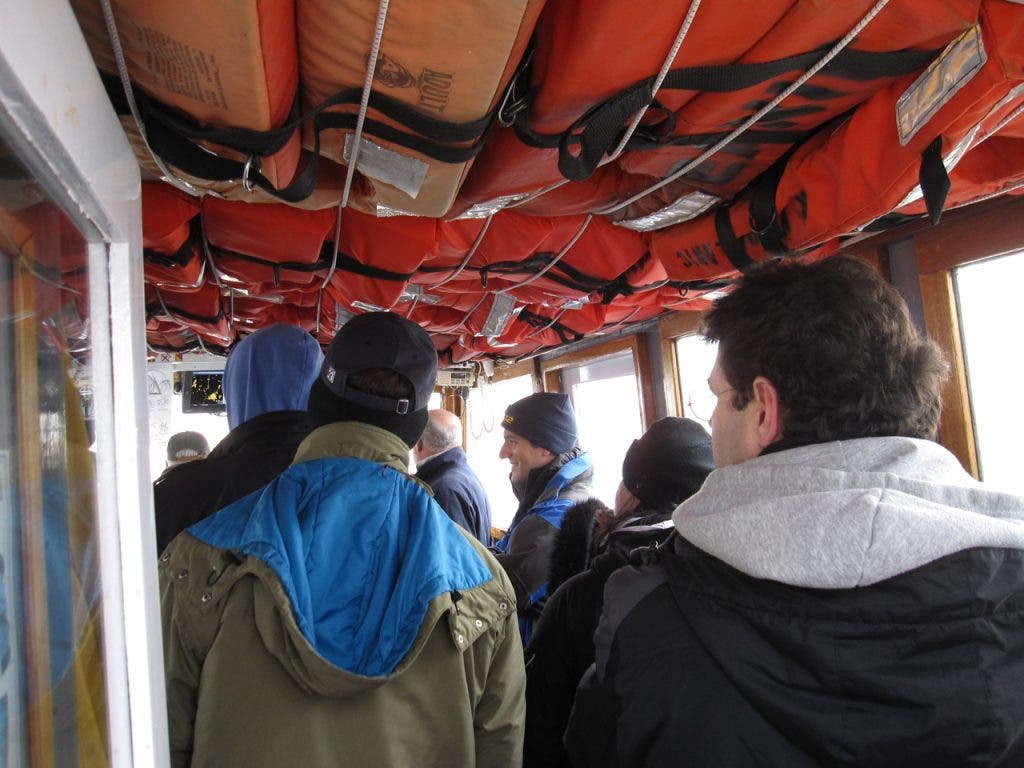
Hagadorn peppered the cruise with a constant stream of facts and observations about what we were seeing, which kept us all active. A small, well-heated cabin that offered respite from the cold also contained the boat's navigation instruments and the scientific gear used to conduct studies of Long Island Sound.
Seeing the harbor in winter is a different look from the summer months. The shoreline houses with huge windows were clearly visible, and it was amazing to see just how many people live so close to the Sound.
Lepanto has skippered boats for the aquarium for eleven years, and his love and knowledge of the Sound were evident as we chatted about the history of the various nearby islands. He also works as a captain for the the Bridgeport Aquaculture School.
As we chugged along, Lepanto pointed out birds nesting along the shoals and Hagadorn would quickly gather us up to take a look.
A boat of duck hunters decked out in camouflage passed us as we headed out to the islands and, in maritime tradition, we waved and they waved back. Their yellow Labrador retriever, wearing a camouflage neoprene vest, gazed as curiously at us as we did at him.
By 1:50 p.m. we had reached Sheffield Island, and as the boat slowed a bit, Hagadorn pointed beyond Greens Ledge lighthouse towards Manhattan twenty-five miles away. We could see the Empire State Building on the horizon.
After completing a plankton experiment, it was time to go past the lighthouse and look for seals, so we gathered in the cabin to learn more about their lives.
Birdwatchers would appreciate the variety of birds easily seen along the Norwalk Islands and coast. Cormorants, Brant Geese and a red-throated loon were among those spotted.
The birds weren’t that interesting to Ian Marganski. His family came down from Ansonia to experience the cruise, but he spent part of the time playing his Play Station Portable , riveted by Motor Storm Artic Edge.
How he managed to keep his focus on the game while the boat heaved in the 2-3 foot waves was a marvel unto itself. But the lure of spotting seals drew Marganski out onto the deck enough times to make him eventually abandon the game.
The Marganskis said they come to the Maritime Aquarium when there’s no school, but this was their first time on the boat.
By 2:35 p.m. it was time to head back. No seals were spotted but the sun was out, lighting up Sheffield Island against the deep gray waters and providing a beautiful scene of the fresh white snow covering most of it. The temperature had dropped a bit, and as we made our way back a floating patch of ice lay ahead.
As we passed through it, the sound of slushy ice groaned against the hull, slowing us down a bit and providing a reminder of just how quickly conditions can change on the water.
About two and one-half hours after starting out, we were back on shore. Even without seals the cruise was enjoyable for providing a look at the harbor and shoreline you wouldn't see in the warmer months.
Each cruise offers a different experience as everything from the weather to the time of day changes. That’s what makes each one unique and fun.
The peak season for spotting seals lies ahead. With the colder weeks of mid-winter driving fish down from Canadian waters, seals will reach peak migration here in February.
Tickets for the cruise are $18.50 for Maritime Aquarium members and $20.50 for non-members. Passengers must be at least 42 inches tall because of Coast Guard regulations. Reservations are suggested but walk-ups are permitted.
The wind can be sharp out on the water, so dress appropriately: warm footwear, gloves, hats and windproof jackets.
The schedule for future cruises, weather permitting, is:
January 16th, 29th and 30th at 1 p.m.
February 12th at 11 a.m., 13th and 26th at 11:30 p.m. and 27th at 1 p.m.
March 12th at 9:30 a.m., 13th at noon, 26th at 11 a.m. and 27th at noon.
April 9th at 9 a.m. and 10th at 10 a.m.