Neighbor News
What Surviving Brain Injury and Addiction Really Looks Like
The real truth about surviving brain injury, addiction, and a system that failed me. If you feel erased, this is for you.

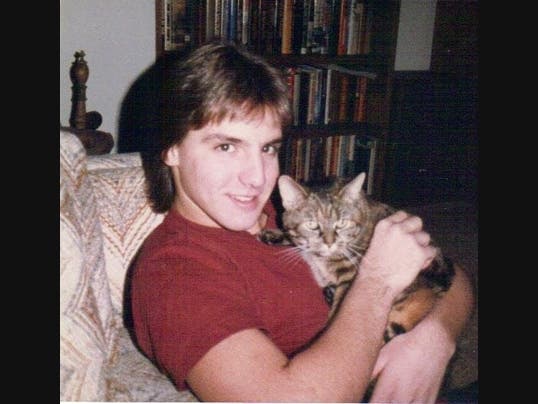
One survivor’s journey through recovery’s hardest truths
by Craig Sears
I’m a brain injury survivor. I’ve been through addiction, I’ve been through the system, and I’m still here. Maybe you’re here because you’re a survivor too. Maybe you’re angry, tired, skeptical, or just desperate for someone to finally say the truth out loud. Maybe you’re an ally or a professional, or you just want to understand. No matter why you’re reading, this is for you.
I’m not here to sugarcoat anything. I’m writing for people who rarely get heard—the ones living with brain injury, addiction, or both, and the people who care about them. If you’re curious, if you’re struggling, if you’re pissed off, if you’re lost, if you’ve ever felt erased—keep reading. YOU’RE NOT ALONE. I wish someone had said this to me when I needed it.
Find out what's happening in Norwalkfor free with the latest updates from Patch.
INTRODUCTION
Let’s be real: THE SYSTEM ISN’T BUILT FOR US. You deal with a brain injury, you deal with addiction, and suddenly you’re a problem nobody wants to handle. My story isn’t special—it’s just real, and I made it through. Doctors missed my brain injury for years. I was shuffled between psych wards and ERs, labeled “difficult” or “crazy,” but no one checked my head.
Find out what's happening in Norwalkfor free with the latest updates from Patch.
If you’re reading this and you feel skeptical, numb, hopeless, or just curious—keep going. If you’re looking for help, you’re going to have to dig—and sometimes, you have to build your own safety net. Start small: pick one resource from this list and just reach out, even if it’s just to read a post or send a message. Here’s what I found, and sometimes what I had to create myself:
- Brain Injury Association: Solid information, support lines, and sometimes connections to local resources.
- BrainLine: Stories, practical tips, and news for people living with brain injuries.
- Facebook groups: Places to ask questions, share struggles, and hear from people who truly get it—search for TBI, addiction, or dual recovery groups. There are even groups specifically for people living with both brain injury and addiction—sometimes called “TBI and Addiction Support,” “Dual Diagnosis Brain Injury,” or “Brain Injury & Substance Use Support.” If you don’t see one, ask around or start your own.
- 12-step meetings (AA, NA, and more): Local and virtual options, schedules usually online or at community centers.
Most of the time, I couldn’t find a group that fit—so I made my own. Sometimes it was just two or three of us, meeting in a coffee shop or online. Sometimes, all it takes is one other person who gets it to make a difference.
Sometimes, knowing you’re not alone is all you have to hang onto. And honestly, that’s enough to get you to tomorrow.
This isn’t some comeback movie. Surviving brain injury and addiction is ugly, it’s tough, and it’s nothing like those “miracle recovery” stories you see online. But I’m still here. That counts for something. If you’re still here, so are you.
LOSING EVERYTHING—AND EVERYONE
Before I understood the full impact of my brain injury, I was already struggling to survive the losses it brought: my job, my independence, my friends, my girlfriend. None of them stood by me, and the loneliness felt crushing. I lost my sense of self and had to find small ways to keep going—sometimes writing a single sentence in a journal, getting outside for a walk, or just making my own meals to ground myself.
But most days, it was just about killing time and proving to myself I still mattered. I’d volunteer at the hospital, even if it was just pushing wheelchairs or talking to someone who needed company. I’d tinker with a car, even if I never finished the job—just to feel useful, keep my hands busy, and stop my mind from spinning out. Sometimes I’d sit outside and people-watch, convincing myself I wasn’t as far gone as I felt. It wasn’t heroic or uplifting—it was me refusing to sink all the way under, even when it all felt pointless.
Truth is, even those things didn’t always help. Sometimes it was just going through the motions, hoping if I acted “normal” long enough, I might eventually feel it again. But most of the time, it didn’t. Sometimes, I honestly thought about checking out for good. “If this is it, what’s the point?”
When I asked for help, the system failed me, leaving me homeless or institutionalized. Sometimes I was locked on a psych unit just because I was confused and couldn’t explain what was wrong—nobody ever asked about my brain. I remember one nurse looking at me like I was just trying to get attention. I wasn’t. I was just trying not to disappear.
Here’s the truth: I didn’t just lose things—I lost myself. I was pissed off, scared, and half the time I wanted to disappear. The world felt like it was moving on without me while I was stuck in slow motion, just trying to get through the day. I didn’t care about tomorrow. I just wanted the pain to stop, even if it meant checking out for a while.
It wasn’t until after my injury that I turned to substances, trying to numb the pain and escape what I was facing. There were nights I lay awake thinking, “Why me?” Sometimes, I hated everyone—especially myself. There were days I wished for numbness, even if it meant disappearing.
Eventually, I found the 12-step community—not just for recovery from substance use, but for the hope and sense of belonging it offered. If you’re reading this and you need peer support:
- Look up local meetings in your city (AA, NA, and other 12-step groups usually post schedules online).
- Ask at a community center, clinic, or local church—many have posted flyers or know someone involved.
- Search online for virtual options; most fellowships now offer Zoom or phone meetings, which can be a lifeline if leaving home feels impossible.
- Many groups share meeting times and links on their official websites, so getting started is often easier than it seems.
The principles I learned—honesty, acceptance, and taking life one day at a time—became the foundation for how I approached everything that followed.
THE TRUTH ABOUT 12 STEPS AND A BROKEN BRAIN
They tell you 12-step is for everyone, but nobody talks about what it’s like to walk in there with a busted brain. The meetings, the Big Book, the slogans—none of it’s for people whose heads are scrambled from trauma. When I showed up, I wasn’t just fighting addiction—I was fighting my own brain, every single day.
I’d forget why I was even there. Sometimes I’d get lost in the middle of a sentence. I’d blank out during the readings or lose my place in the Big Book, and I was too embarrassed to ask for help. The brain injury made me slower, and people sometimes just talked over me or thought I was high.
Nobody tells you how hard it is to work the steps when your memory’s shot, when you can’t find your words, when you’re so tired you wish you could disappear. Nobody gets how it feels to be the only one in the room who’s been through both—a bottle and a brain injury. Sometimes I wanted to run. Sometimes I wanted to scream. Sometimes I couldn’t even follow what was being read, but I kept coming back anyway.
Here’s what I figured out: The steps don’t care if you’re perfect. They don’t care if you forget, or mess up, or have to start fresh a hundred times. All that matters is you keep showing up, even when it hurts.
People talk about serenity. For me, recovery was a street fight—especially with a brain injury and a system that feels rigged against you. The system knows just how to wear you down, push your buttons, make you feel small. Some days, just dragging myself out of bed was a victory. I’d force myself to sit through meetings, head spinning, barely able to follow along, and still had to ask for help—even though I never really trusted anyone. Every day felt like a battle to stay in the game.
But here’s what I know: going through all that isn’t an excuse to give up on yourself. Just do it—you won’t regret it.
The program didn’t save me—I did. I kept trying, kept failing, kept dragging myself back. I built hope out of scraps. I found connection, not because we were the same, but because we were all fighting for another day.
I’ve relapsed more times than I can remember, each time ending up in mental hospitals, jail cells, and losing everything I’d worked so hard for. The system didn’t help—it labeled me, exploited my disability, and often made things harder instead of better. I let people down, stormed out of meetings, cursed at those trying to help, and pushed away family and friends who couldn’t handle my pain.
But every time, I found a way to start again. If you’re in that cycle, don’t quit on yourself. Relapse doesn’t mean it’s over. You’re not a failure—you’re still in the fight. Just keep coming back. That’s what matters.
There was a time I thought I’d finally figured it out—I had a few months sober, was making meetings, felt almost human again. Then, out of nowhere, I spiraled back into old habits. I missed meetings, stopped answering calls, and one night I woke up in a holding cell with no memory of how I got there. The shame was crushing. I thought, “That’s it, I blew it for good.”
But that wasn’t the end—not even close. As soon as the court learned about my brain injury, I was sent to a mental institution for 90 days. Here’s the real kicker: every time someone mentions “brain injury,” you get put in the mental health system, not in brain injury care. It’s like they don’t know what to do with you, so they just lock you away and call it help.
I could have given up. Instead, I pushed myself to return to the meeting, even though I felt like an imposter. I sat in the back, angry and embarrassed, but I showed up. That’s what saved me. I learned that a setback doesn’t mean you’re finished. It just means you get another shot at crawling forward.
This is for every survivor who’s ever felt erased. For every person who’s sat in a 12-step room and wondered if anyone else gets it. I do. I see you. And there’s room for you here.
We’re still here. We’re not done fighting.
HITTING ROCK BOTTOM
You think recovery is hard? Try surviving a system that sees you as a problem, not a person. I lost everything overnight—home, job, support. Ended up homeless, in hospitals, even jail. The system wasn’t built for us, and it failed me over and over.
One hospital put me on psych meds I didn’t need, another said my confusion was “attention-seeking,” and nobody wanted to hear about the accident that scrambled my head in the first place. I was shuttled from one facility to another—never rehab for brain injury, always the psych ward or a jail cell.
You’d think the system could put two and two together. I never understood why I was the only one refusing the psych meds. I wasn’t trying to be difficult—I just didn’t want to be a walking zombie. It’s like nobody ever considered my brain injury was the real issue—not some psychiatric label. I never asked to be there. That was my legal right, and I exercised it every time some psych team tried to drug me into silence, especially when they clearly had no idea what to do with someone like me.
It was like a revolving door—sometimes 90 days, sometimes a year, sometimes 6 months. This went on for years. Every time I was released, I’d go back to my old ways because I felt hopeless about what the system was doing to me. I saw it as an escape.
But my true rock bottom wasn’t a hospital—it was prison. Law enforcement exploited my disability, and I ended up doing five years for some trumped-up, bogus charge—just for pissing in a garage. Unless you’ve walked that path, you can’t know what it does to you. They used my brain injury against me, and nobody listened. Five years. That was the lowest I ever got. I wouldn’t wish that kind of bottom on anyone. But if I could crawl out of that hole, you can too.
When I finally got out, I made myself a promise: I’d never let them do that to me again. I remembered the 12 steps, and that’s where I went back—angry, stubborn, but determined to never let the system break me again. That’s where I am, and that’s what I’m still doing to this day.
The system does not change. They just find new tricks. Walking these steps is my shield, and I use it every single day.
But here’s what I’ve learned: as long as I keep showing up, the system can’t write the ending for me. Every day I choose to walk these steps, I take my life back—one stubborn, imperfect step at a time. If you’re still fighting, you’re already winning.
And I have my mother and my family to thank for that. They never left me—especially my mother. Wherever I was, in a psych ward or a prison cell, she always came to see me. She would bring me food, send me clothes, put money on my commissary, and let me call home every day. Her support, along with my family’s, carried me through the toughest times and helped me keep that promise to myself.
I also think about my father. When I was growing up, he’d take me to his AA meetings and bring me to Alateen. I should have learned from that example—he’s been clean and sober for many years, and he showed me it’s possible. Watching him work the steps and stick with it, even when it was hard, proved to me you can come back from anything if you keep showing up.
Between my mom’s unwavering presence and my dad’s example, I learned what it means to keep going, no matter the odds.
ABI 12-STEP SURVIVAL KIT
- Messy notes, any way I could. Before my injury, I was a perfectionist. Afterward, that just got in my way. Now, my notes are a mess—half-sentences, random words, reminders scribbled in the margins. But they help. Writing things down, even if it looks like chicken scratch, helps me remember what matters. I stopped caring about neatness and started caring about getting through the day. Half a thought on a napkin is better than nothing at all.
- Asking for help, even if I felt stupid. At first, it was really tough for me. I hated admitting that I was lost or didn’t understand something. It felt vulnerable and uncomfortable. But over time, I discovered that the more questions I asked, the more people actually wanted to help me. Most of them were much kinder and more patient than I had expected. Sometimes, all it took was a simple question like, “Can you repeat that?” or “What page are we on?” Asking questions kept me involved, helped me learn, and, most importantly, kept me in the room where things were happening.
- I'd grab onto one phrase if the whole meeting was too much. Some days, the readings and the shares were just noise in my head. Instead of zoning out, I’d latch onto a single word or phrase—something like “one day at a time” or “keep coming back.” That was enough. You don’t have to take it all in at once.
- Stepping out, breathing, coming back. It’s okay to hit pause. My brain would get overwhelmed, and my body would follow. I learned to excuse myself, step outside, breathe, and come back when I could. Showing up imperfectly is better than not showing up at all.
- Finding one person I could trust. You only need one. For me, it was a sponsor, sometimes a friend, sometimes another survivor. Someone I could check in with, who wouldn’t judge if I lost my place or needed to talk something through twice. Trust is hard, but it’s worth risking.
- Setting alarms, sticky notes, marks on my hand. My memory is unreliable. So I set alarms for meetings, use sticky notes on the bathroom mirror, and sometimes draw a big “X” on my hand so I don’t forget something important. It might look odd, but it works. Don’t be afraid to use whatever cues you need.
- Celebrating small wins. Getting out of bed, making it to a meeting, speaking up, remembering a promise—these are victories. I learned to give myself credit for every little thing. Progress isn’t about leaps; it’s about steps.
- Telling the truth, even if nobody wanted to hear it. I started out hiding my struggles because I didn’t want to be a burden. But the more I spoke up—about memory loss, about feeling broken, about the system screwing me over—the more I realized other people felt the same. Honesty broke the isolation, and sometimes helped someone else open up too.
WHY DOES THIS MATTER? Because none of us get a manual for surviving this. These aren’t “hacks.” They’re battle-tested. They kept me coming back, they kept me alive, and maybe, just maybe, they’ll help someone else find their own way too.
Look, every brain injury and survivor is different. My way isn’t the only way. Here’s my truth: in institutions, I refused to see psychiatrists because I’ve seen too many people turned into zombies by medication. If you need meds or therapy, that’s your choice. Do whatever keeps you going.
You work the system to survive. In psych wards or jail, you do whatever it takes—even if that means crashing on a cold floor just to stay safe.
If you’re fighting both the bottle and a busted brain, you’re not alone. You don’t have to do it anyone else’s way—just keep coming back. That’s real recovery. That’s guts.
I’ve been sober for a lot of years now, and it’s still not easy. The scars don’t disappear. Some days I’m still clawing my way out of a hole nobody else can see. But I keep going because every day sober is another chance to fight for myself, and for the people who can’t fight anymore.
Telling the truth can make you lonelier. Some people bail; some tell you to “get over it.” That stuff leaves a mark. But scars mean you survived. If you’re stuck, keep going. You’re still here. So am I. And if you reach out, you might find someone else who gets it—maybe even me.
Your story might save someone else.
WHAT I WISH I KNEW
Nobody told me how hard this would be, or how broken the system is. I learned by getting knocked down, over and over. If you’re new to this, here’s what I know:
“Easy does it, but do it.” There’s no perfect way. Take the next right step, even if it’s tiny. Call a friend. Write a sentence. Get out of bed. Set reminders—alarms, sticky notes, whatever helps your busted memory.
Other lifelines: music, stretching, outside air, tea, a deep breath, water. If you’re overwhelmed, it’s okay. You don’t have to be perfect. Just keep moving. Sometimes hope is just making it to the next day.
Recovery is possible—even when it feels hopeless.
IF YOU’RE A SURVIVOR
If you’re living with brain injury and addiction, you know what it’s like to be invisible—even in places meant for healing. I’m writing to you—the one who sits in a 12-step meeting and wonders if anyone else has fought both these battles.
You’re not alone. Our struggles are real, even when nobody else sees them. No two stories are the same, but showing up—angry, messy, lost—is enough. You belong here, even if you start over a hundred times.
Take what helps, leave the rest. If you’re struggling, just being here proves you’re stronger than you think.
Your voice matters. Your story matters. Your scars mean you survived. We’re still here, and we’re not done fighting.
SURVIVING THE SYSTEM
Recovery isn’t just about quitting or coping—it’s surviving a system that doesn’t get us. Sometimes the places meant to help just make things worse. I got labeled, misdiagnosed, and shuffled through places that had no clue what to do with me.
All the system ever did was try to make me fit their box. It never saw the real injury. It never saw the fight it takes just to show up, ask for help, or hang on to hope. But I did it anyway—and so can you.
But there’s hope: other survivors, a few advocates, rare pros who listen, and the stubborn love of someone who refuses to let you go.
If you’re feeling lost, reach out—whether it’s to one person or an online community. It can make all the difference. You don’t have to go through this alone.
Don’t know what to say? Try: “Hi, I’m having a hard time with brain injury and addiction. Sometimes it feels like nobody gets it. If you have a minute, I’d just like someone to listen.”
It doesn’t have to be perfect. Reaching out is enough.
WHAT NEEDS TO CHANGE • Stop treating brain injury and addiction as separate issues. • Train staff to recognize the person, not just the label. • Give survivors a genuine voice in decision-making. • Real community connections, not bureaucracy, are what save lives.
SURVIVOR TIPS • Find groups—online or in person. • Keep notes, even messy ones. • Let yourself feel what you feel. • Celebrate small wins. • If you care about someone like me, your support means everything.
FINAL THOUGHTS: I fought for my dignity, my health, and my voice. I’m still fighting. You’re not alone. Your story matters—even the parts nobody else wants to hear.
If you read this far, you’re part of this too. Thank you for surviving with me.