Sports
Knowing Signs of Concussions is Critical
Part 2 of 2: State's new law makes sure high school coaches know what to look for.
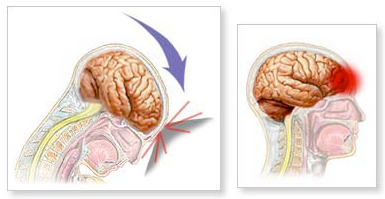
A running back gets hit hard by a linebacker during a high school football game. It hurts, but he gets up, shakes it off and plays the next down.
After the game, the player has a pounding headache, balance problems and sensitivity to light. A trained coach, like Oxford’s Joe Stochmal, will recognize that those are symptoms of a possible concussion, and Connecticut's new concussion law is making sure all coaches can do the same.
One reason it is important for coaches to recognize concussions is that the symptoms of concussions are not always immediately apparent. The Centers for Disease Control and Prevention (CDC) estimate that 1.6 to 3.8 million concussions occur in the U.S. every year as a result of sports and other recreational activities.
Find out what's happening in Oxfordfor free with the latest updates from Patch.
“There is obviously large variation in all estimates, but concussions are particularly difficult because people often don’t go to the hospital for treatment or don’t report it to a coach, parent, etc.,” said Steven Broglio, Director of the Neurotrauma Research Laboratory at the University of Illinois. “It is estimated that 50 percent of all sport concussions go unreported.”
Connecticut is one of nine states to pass legislation protecting student-athletes from concussions at a time when concussions have taken a prominent place in the public eye. Washington became the first state to pass anti-concussion legislation in May of 2009 when it passed the Zackery Lystedt Law, named to honor Zackery Lystedt, who at 14 years old suffered a concussion playing football. Lystedt returned to the game l5 minutes after his injury and suffered another concussion. The second injury resulted in a brain hemorrhage, which left Lystedt in and out of a coma for almost three months.
Find out what's happening in Oxfordfor free with the latest updates from Patch.
A similar tragedy has not occurred in Connecticut, but Looney said he felt it was important to be proactive. “That was one of the reasons we wanted to take action,” said Sen. Majority Leader Martin Looney. “Before we had something like that, because we didn’t want to be in a position where we had to have the law named after some tragic case.”
Concussions are especially dangerous in young athletes, who are susceptible to a rare but deadly condition called Second Impact Syndrome (SIS).
“This results when a young athlete sustains a second concussion prior to recovering from the first,” Broglio said. “For unknown reasons, the brain loses the ability to regulate pressure and it begins to swell. Because the cranium does not expand, the brain pushes through the base of the skull resulting in high mortality rates.”
Many experts estimate SIS has a mortality rate of about 50 percent and, according to a report by the Council on Sports Medicine and Fitness, all reported cases of SIS have been in athletes younger than 20 years old.
Studies conducted by the Center for Injury Research and Policy estimate that 40.5 percent of high school athletes in the U.S. who suffer concussions return to play before it is safe to do so. The Center also found that high school athletes suffered almost 400,000 concussions between 2005 and 2008 and that, behind ankle sprains and strains, concussions were the second most common sports-related injury during the 2008-09 school year.
Joe Bonitatebus, 18, of Ridgefield supports Connecticut’s concussion law because he knows how disruptive a concussion can be to a student-athlete. Bonitatebus suffered a concussion in March of 2008 while playing street hockey in his driveway with his younger brother, but he did not begin feeling the symptoms of his concussion until a half an hour after the hit.
“Headaches were my main symptom and they were really bad, pounding headaches for the first couple months, but I was sensitive to light and noise as well,” Bonitatebus said. “I stayed out of school for two weeks after I got hit, but after that I went back despite the pounding headaches.”
Bonitatebus eventually used cocoon therapy, which requires a patient to refrain from activities which may stimulate his or her brain, to recover from his concussion.
“I missed my whole fourth quarter of my sophomore year (of high school),” he said. “I couldn’t see my friends, no TV, video games or playing sports.”
Connecticut’s concussion law received overwhelming support in the General Assembly, as it unanimously passed both the State Senate and House of Representatives.
“Probably the reason it didn’t have a lot of opposition is it was not viewed as an unfunded state mandate,” State Representative Tom Reynolds said. “The Connecticut Interscholastic Athletic Conference and the coaches and the school boards felt that the requirements of the law could be fulfilled within existing resources and therefore the lobby that usually rises up to oppose unfunded mandates was not there.”
Looney, the senate majority leader, said the law could evolve over time.
“I think it certainly is a good law,” he said. “And we’ll see over time whether it needs any additional refinement.”
For a list of concussion signs and symptoms, look at the Centers for Disease Control and Prevention's website here.
(Editor's Note: Stephen Hamel is a senior journalism student at the University of Connecticut. He wrote this article as part of an assignment for a journalism class. We've decided to run it in two parts, and this is the second part. Part one can be viewed here.)