Community Corner
Oxford's Own Movie Star, Film Director, Author and Self-Help Guru
The "Charm Lady" made Oxford her home.

Oxford was once the home of an outstanding silent film heroine. Margery Wilson eventually directed her own films and became a noted self-help author.
I first became aware of Margery Wilson in conversation with Mrs. June Behuniak, who told me that when she was a girl she worked in the Chestnut Tree Hill Extension home of the actress in exchange for "charm lessons."
Film buffs today recognize the name Margery Wilson for her role as Brown Eyes in her film debut in D.W. Griffith's "Intolerance: Love's Struggle Through the Ages." This 1916 epic film presented four stories depicting intolerance in history. Wilson played the tragic heroine, a French girl about to marry at the time of the Saint Bartholomew's massacre of Huguenots. The bride-to-be, her family, and the prospective groom are all murdered in the film.
Find out what's happening in Oxfordfor free with the latest updates from Patch.
The film runs a full three and a half hours, telling four separate stories, including a contemporary melodrama of crime and redemption; the story about Christ’s mission and death; a Babylonian story of the fall of that empire to Persia set in 539; and the French story set in 1572.
The complex film tells the four distinct stories, not in separate chronological order, but together. The scenes from the various stories are intercut with increasing frequency as the film approaches the climax. Depicting intolerance throughout the ages, the film sets up connections between the different stories.
Find out what's happening in Oxfordfor free with the latest updates from Patch.
Following her debut, she made several dozen more films, eventually becoming one of the first female directors. Anthony Slide wrote in "The Silent Feminists:"
“Her first venture as both director and star was That Something, based on the 1915 book by W.W. Woodbridge, dedicated to the Rotary Clubs of the World. As its director explained, "That Something refers to that unnamable thing that makes of a man a success or a failure." The film was shot at the Robert Brunton Studios in Hollywood. Miss Wilson remembered.
“When I went over to Mr. Brunton, who had handled all the sets, etc. for Thomas Ince -- and that was where I met him – he had always been very friendly to me – he tried to discourage me from producing and directing. He said it would be bedlam, and that the actors and even the "grips" would just do as they pleased. But when he saw that he couldn't move me, he began to cooperate. He fixed up existing sets for my story and made it all possible, still shaking his head and saying I would lose my shirt, break my heart, and my health, etc.
“The first day on the set I called everybody together and told them the story and what I expected of each of them. I didn't know that Mr. Brunton was eavesdropping. I told my group that if they had suggestions of any kind to give them to me now for after we started shooting I wanted not a single interruption. Everything went like clockwork; everybody was so interested we even forgot about lunch, but when we did go over to the commissary to eat, Mr. Brunton came over to the table and silently extended his hand, which I shook gravely."
Wilson was proud of her accomplishments in the film industry, especially as writer, director, and star of Insinuation. Wilson stated: "I was the first person who ever made a film...without a studio, without a single set. I was the first person in the wide world to do that, and the name of the picture was Insinuation. I wrote it, and directed it, and produced it, and acted in it, and sold it. I made over $50,000, which I thought was a million at the time, now it would be nothing. I never thought about making history. I was just trying to save money, and I didn't see any reason to build a set that was already there. This picture was made in Vermont, and I had a whole carload of Kleig lights, spotlights and all that sort of thing, and took up an electrician. I arranged that we could tap the line anywhere. I moved these lights right into the actual rooms and homes."
The film, shot in the winter in Vermont is said to have been one of the most beautiful films ever made. Unfortunately, no prints of the film remain. A fire in the film vault destroyed the negative. The last remaining print was stolen from a storage locker.
Wilson's marriage brought a change in career. She later said, "I married a man who didn't want me to do anything." Because her husband insisted she stay at home, Wilson turned to writing. Starting by writing about the film industry, she soon turned to writing self-help books, publishing a total of thirteen books. The books were guides to what she called "joyous living." They included:
- Charm (1930)
- The New Etiquette: The Modern Code of Social Behavior, (1937)
- Your Personality – And God (1938)
- Make Up Your Mind (1940)
- The Woman You Want To Be: The Complete Book Of Charm (1942)
- How to Live Beyond Your Means (1945)
- How to Make The Most of Your Wife (1947)
- Believe In Yourself (1949)
- You're as Young as You Act: A Manual Of Movement, Moods and Mannerisms (1951)
- I Found My Way (1956)
- Double Your Energy and Live Without Fatigue (1961)
- Kinetic Psycho-Dynamics: How to Set the Amazing Powers of Your Mind into Motion (1963)
Margery Wilson had a unique attitude towards her abilities and those of women in general. She ridiculed any notions that she, as a woman, could not accomplish the same achievements as a man. At the same time she denied what today might be considered feminism, always presenting a feminine appearance and attitude.
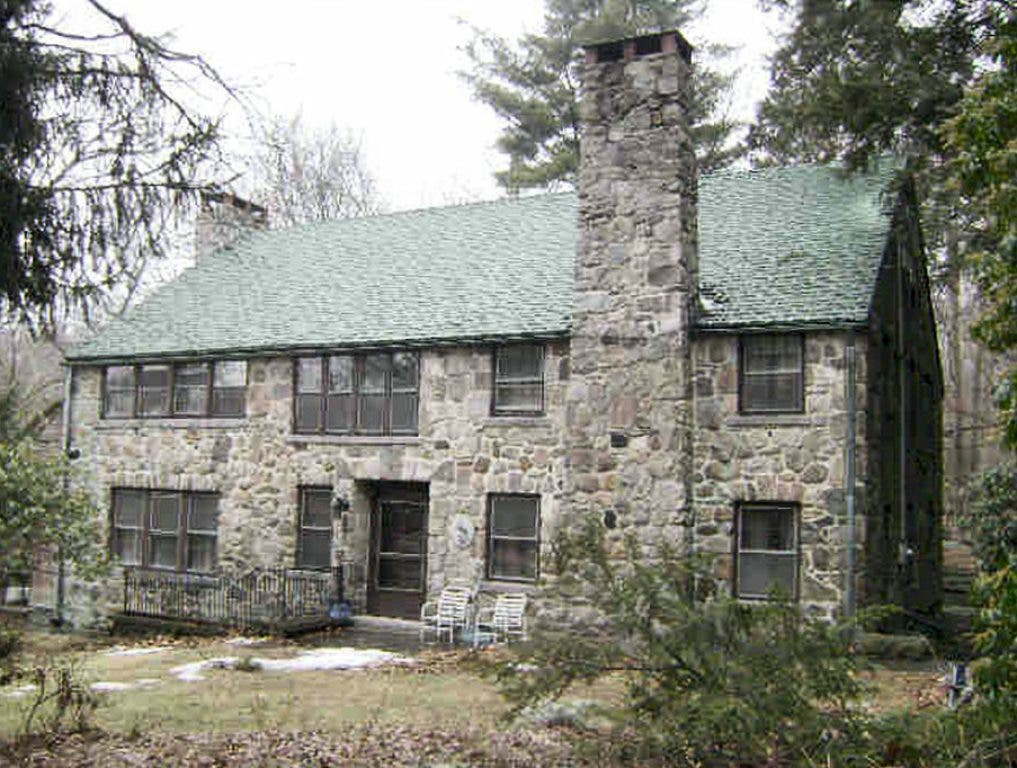
In 1939, Wilson built a home on Chestnut Tree Hill Extension. Here she offered training on "Charm," where wealthy women, attracted by Wilson's beauty and fame, stayed and took lessons in manners, grace, and charm. (See photos) She advertised the programs in the New York newspaper and in various other national publications. Eventually, she gave up her Oxford residence and returned to California.
Wilson died at age 89 in a nursing home in Arcadia, Ca., on Jan 21, 1986. Married three times, she was survived by three grandchildren and two great-grandchildren. She was cremated and her ashes interred at Rosedale Mortuaries of Los Angeles.