Business & Tech
Shelton-based TranSwitch Intros New Video Interface Solution
Dubbed HDwire, the solution improves signal throughput and control between the video processor and the display panel controller in today's flat panel TVs and video monitors.
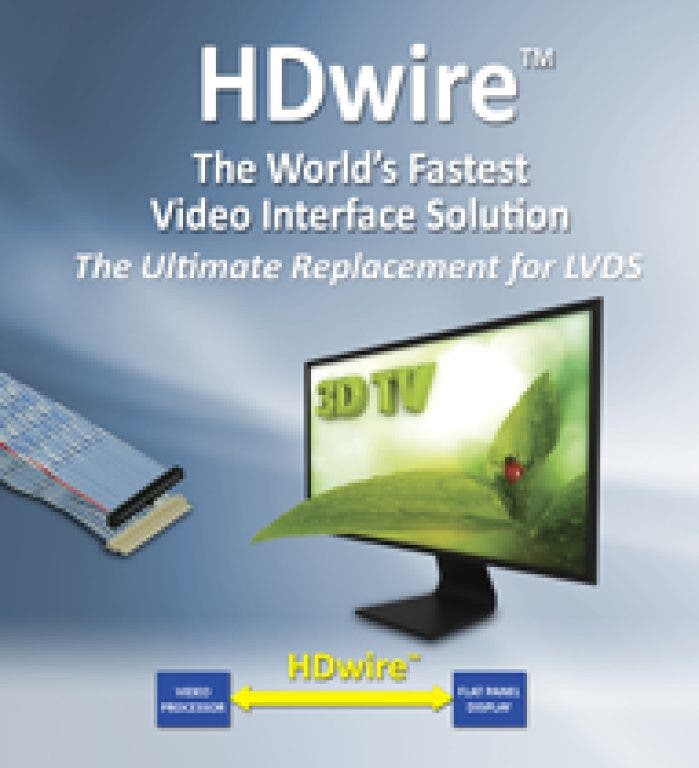
Shelton-based TranSwitch Corporation has reportedly introduced a new video interface solution, dubbed HDwire, that improves signal throughput and control between the video processor and the display panel controller in today’s flat panel TVs and video monitors.
Today’s video displays use Low-Voltage Differential Signaling (LVDS) TV internal interfaces between the video processor and the panel, company officials explained in a press release. As demand for HDTV and 3DTV services increases, it is resulting increased demand in set functionality and resolution. This, in turn, has resulted in an increase in the number of cables required to connect the two interfaces, which in turn has lead to increased system complexity, while doing nothing to improve link capacity.
“With the ever increasing size, resolution, refresh rate, and color depth of new LCD/LED panels, the number of LVDS cables required is rapidly increasing, thus driving up the cost and complexity of TV’s and computer monitors,” TranSwitch said in its release announcing the new product. “TranSwitch’s HDwire transceiver is designed to support the needs of emerging displays without the need for multiple, expensive cables and connectors.”
Find out what's happening in Shelton-Derbyfor free with the latest updates from Patch.
TransSwitch claims because HDwire enables faster throughput (up to 5Gbps per link) with fewer cables it thus helps manufacturers deliver to market TVs and monitors with “crystal-clear video” and “low power consumption and low system design cost.”
TranSwitch, which makes semiconductor solutions for the consumer electronics and telecommunications markets, is initially offering HDwire as licensable intellectual property cores and plans to offer IC’s in the future, according to the release. The company says it hopes the new design will ultimately replace the current LVDS internal interfaces.