Politics & Government
SURPRISE: Here's Why You'll Soon Pay More For These Grocery Items
A new tax is broader than originally anticipated and means that certain items at the grocery store are going to cost more.


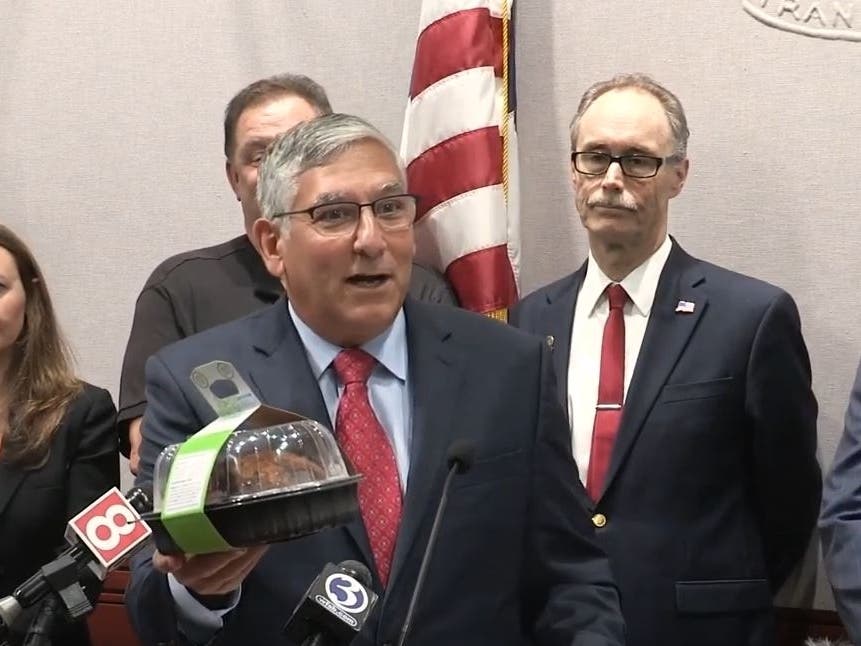
HARTFORD, CT — The upcoming “prepared food” tax is going to be a bigger tax hit for consumers than initially anticipated. Some shoppers are in for sticker shock come Oct. 1 when a new tax goes into effect on restaurant and prepared foods sold at grocery stores. A new one percent tax is being added on top of the 6.35 percent sales tax for restaurant meals, but the bigger surprise is that items that haven’t been taxed before at grocery stores will now be hit with a new 7.35 percent tax.
Legislative Republicans appeared at a press conference with an assortment of prepared items including rotisserie chicken and salad. Senate Republican leader Len Fasano said the scope of what qualifies as “prepared food” has changed dramatically since the time the law was passed.
A new Department of Revenue Service document revealed the tax is broader in scope and applies to things like pre-cut fruit and vegetables, small packages of lettuce and meal replacement bars.
Find out what's happening in Southburyfor free with the latest updates from Patch.
The new DRS guidance has also sent grocery stores into a frenzy to update their systems for the new tax. Hundreds of items at each grocery store need to be changed by Oct. 1, Connecticut Food Association President Wayne Pesce told CT News Junkie.
A new Office of Fiscal Analysis projection released Friday shows the tax bringing in 40 percent more revenue over the current fiscal year and next than initially projected, according to the CT Mirror. The tax is expected to cost consumers $90 million annually in the first full fiscal year it is in effect.
Find out what's happening in Southburyfor free with the latest updates from Patch.
Fasano criticized the tax and said it was regressive and will hurt middle class families.
“It’s mind boggling. This tax is going to hurt the working parents picking up dinner for their family,” Fasano said in a statement. “It’s going to hurt seniors on fixed incomes who may not always feel up to cooking a full meal but who can’t afford to go out to eat or get takeout. It’s a regressive tax increase that will be most harmful to those who are already struggling the most.”
The extra tax also applies to drinks that are typically sold at bars and soda fountains.
Gov. Ned Lamont spokesman Max Reiss criticized Republicans and said that it’s easier for them to criticize than create their own budget.
Examples of items subject to the new tax according to the Department of Revenue Service include, but not limited to:
· Sandwiches, grinders, and wraps;
· Popsicles, ice cream cones, cups, sundaes, and other individual servings of frozen desserts unless sold in factory prepackaged multi-unit packs; ·
Ice cream, frozen yogurt, and other frozen desserts sold in containers of less than one pint; · Salads sold at salad bars;
· Lettuce or greens-based salads sold in containers of 8 ounces or less;
· Salads that are not greens-based (macaroni, potato, pasta, fruit, etc.) sold in containers of 8 ounces or less; · Donuts, muffins, rolls, bagels, and pastries (5 or fewer);
· Cookies sold loose (5 or fewer when cookies are sold by quantity, or less than 8 ounces when cookies are sold by weight);
· Pies or cakes by the slice;
· Prepackaged or factory-sealed bags or packages of 5 ounces or less of chips, popcorn, kettle corn, nuts, trail mix, crackers, cookies, snack cakes, or other snack foods, unless sold in factory prepackaged multi-unit packs; · Pizza, whole or by the slice; · Cooked chicken sold by the piece, including buckets of chicken, and whole cooked chickens;
· Cooked ribs sold by the piece or portion and whole racks of ribs;
· Hot dogs served on a bun or heated;
· Bagels that are individually prepared; · Soup sold in containers of 8 ounces or less, unless sold in factory prepackaged units;
· Smoothies;
· Meal replacement bars;
· All beverages provided with the sale of a taxable meal;
· Food sold at a hot buffet;
· Food that is cooked to order;
· Popcorn, kettle corn, nuts and any other snack foods that are kept warm for purchase; and
· Items such as salads, side dishes, and rolls, when sold as part of family pack meals typically including, whole chickens or buckets of chicken, when prepared and sold for immediate consumption, even when the items exceed the weight or quantity limits specified above.
Get more local news delivered straight to your inbox. Sign up for free Patch newsletters and alerts.