Community Corner
CT DEEP Asking Residents For Help With Finding Bobcat Collars
The DEEP is asking residents to be on the lookout for bobcat ... collars.


CONNECTICUT — The Connecticut Department of Energy and Environmental Protection is asking residents to keep an eye out for special bobcat tracking collars while spending time outdoors the rest of this month and into March.
The request is part of the agency’s ongoing Bobcat Research Project, a long-term study that began in 2017 and aims to investigate bobcat habitat use across Connecticut.
From November 2018 through March 2019, 50 bobcats were live-trapped throughout the state and fitted with global positioning system monitoring collars to track their movements. The collars do not harm the animals and are programmed to fall off after being worn for 300 days, according to DEEP officials.
Find out what's happening in South Windsorfor free with the latest updates from Patch.
The last of the 2018-2019 monitoring season collars are expected to fall off over the next month or so. Once the collars detach from the bobcats, they continue to transmit a signal until they are recovered by DEEP Wildlife Division staff. In some cases, collared bobcats in Connecticut have moved across state lines into New York, Massachusetts and Rhode Island.
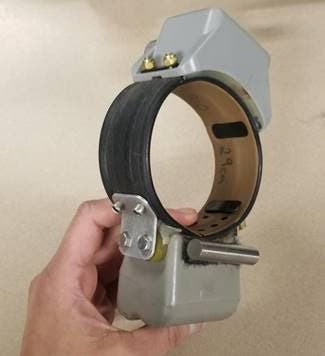
(Michelle Ruszczyk/CT DEEP Wildlife)
Find out what's happening in South Windsorfor free with the latest updates from Patch.
Anyone happening to find a collar in a or while walking in the woods before Wildlife Division staffers can recover it, please contact the Wildlife Division at 860-424-3045 or deep.ctwildlife@ct.gov.
Biologists will use the GPS collar data to compare the State's bobcat populations in rural and suburban areas.
"The information gained from this research will aid in the future conservation and management of bobcats in Connecticut and elsewhere," explained Jason Hawley, the DEEP wildlife biologist leading the project.
DEEP staff members are particularly interested in looking at how successful bobcats are at reproduction and survival in different environments.
Residents are also encouraged to report any observations of bobcats, especially ones that have been marked with yellow ear tags (include the numbers on the tags if visible). Reports can be made on the DEEP website , via the Connecticut Fish and Wildlife Facebook page, or by emailing deep.ctwildlife@ct.gov.
Get more local news delivered straight to your inbox. Sign up for free Patch newsletters and alerts.